
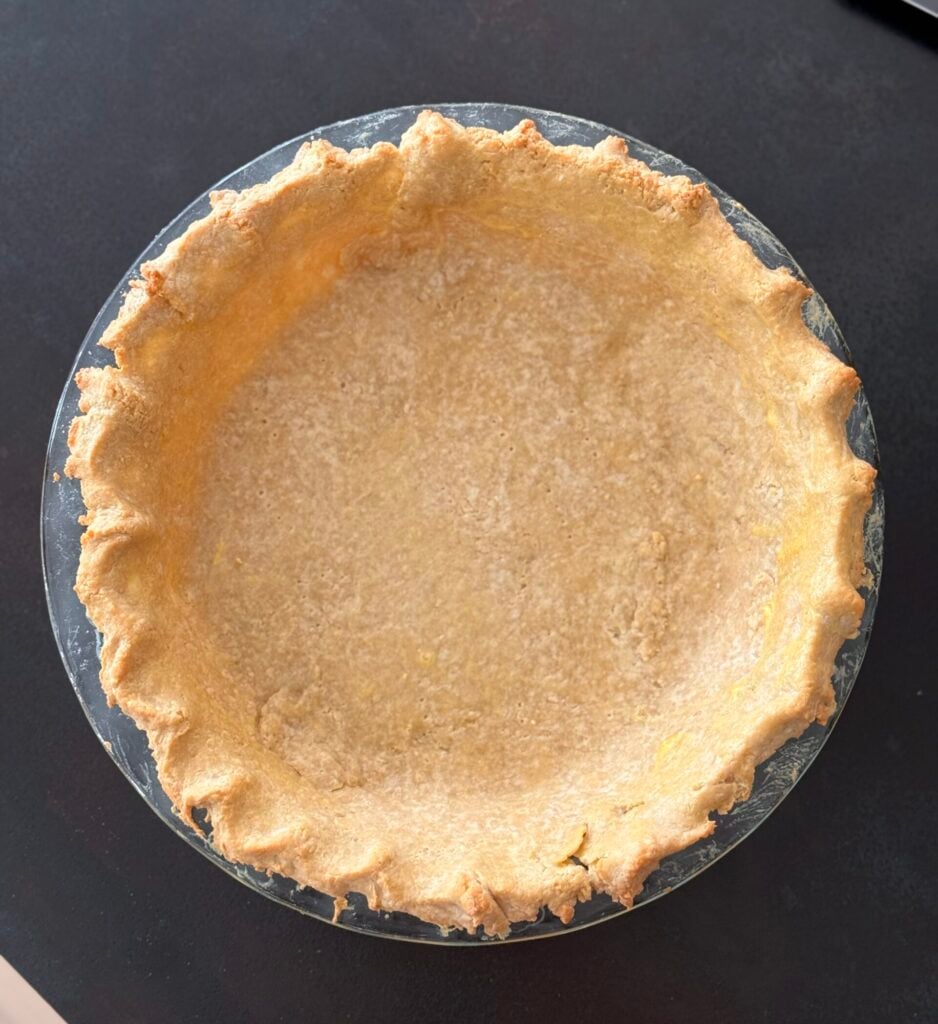
I wanted a pie crust that had more protein without turning into one of those dry, chalky “fitness” crusts that barely feels like pie.
This version uses a blend of Fit Flour and regular all-purpose flour. The Fit Flour brings the protein up, while the all-purpose flour keeps the dough easier to roll and gives the baked crust a more traditional texture.
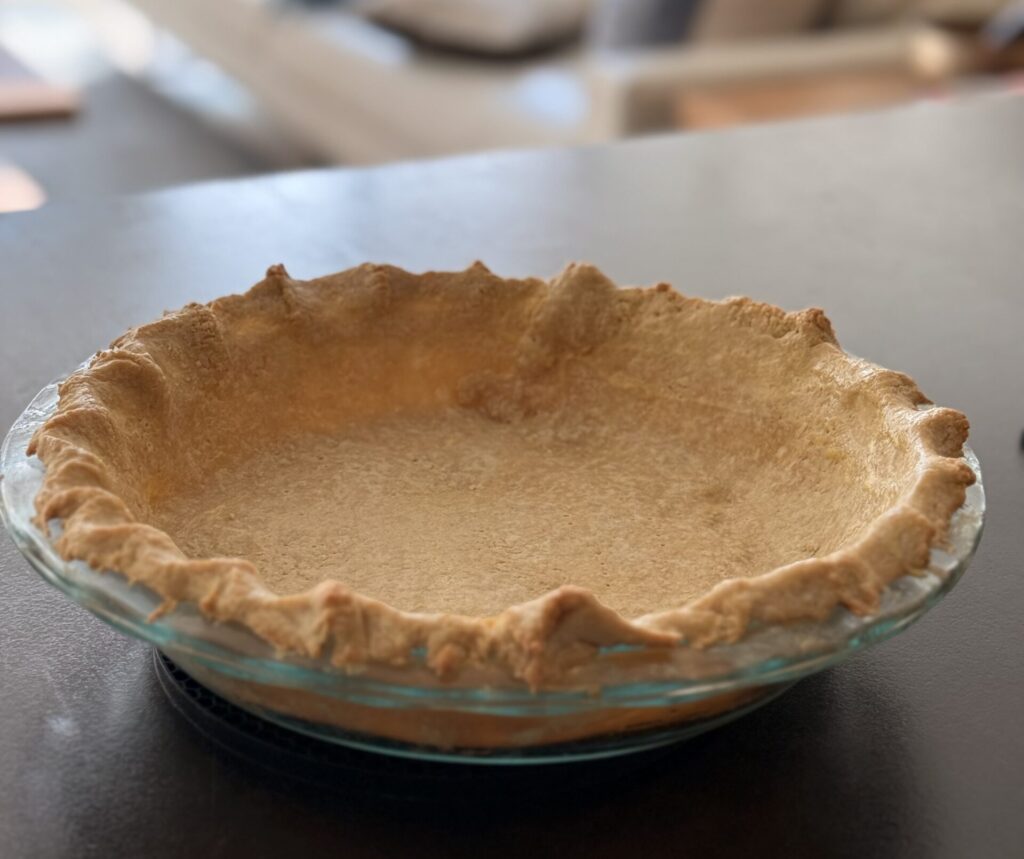
Each slice comes out to about 80 calories with 9 grams of protein, 5.5 grams of net carbs, and 4.3 grams of fat, depending on how you divide the pie. It still uses real butter, so you get the flaky texture and flavor you actually want from a pie crust.
Try These Next
If you like baking with protein flour, my The Easiest Zucchini Bread Recipe (High-Protein Recipe) also uses a blend of Fit Flour and regular flour to keep the texture closer to traditional baking.
Why You'll Love This Recipe
Higher Protein: Fit Flour adds significantly more protein than a traditional all-purpose flour crust.
Still Tastes Like Pie Crust: The combination of regular flour and cold butter keeps the crust from tasting like protein dough.
Easy to Use: Roll it out and use it anywhere you would normally use a standard 9-inch pie crust.
Macro-Friendly: At around 80 calories per slice, it gives you more room for whatever filling you are using.
Simple Ingredients: You only need flour, butter, egg, salt, and water.
Ingredients
- ¾ cup Fit Flour
- ½ cup all-purpose flour
- ¼ teaspoon salt
- 4 tablespoons cold unsalted butter, cut into small pieces
- 1 large egg
- Approximately 5–6 tablespoons ice water, as needed
Ingredient Notes
Fit Flour
Fit Flour is what gives this crust most of its protein boost.
I do not use it for 100% of the flour because protein flour behaves differently from regular flour. It can absorb more moisture and can become dense when too much is used.
Blending it with all-purpose flour gives you a much more forgiving dough while still significantly increasing the protein.
You can get Fit Flour here and use code BAKEDLEAN for 10% off.
All-Purpose Flour
The regular flour helps the dough roll, stretch, and bake more like a traditional pie crust.
This is the same basic idea I use in some of my other protein baking recipes: instead of replacing every bit of flour with a high-protein alternative, I use both so the final texture still feels familiar. My high-protein zucchini bread uses the same hybrid approach.
Cold Butter
Keep the butter cold.
Those small pieces of butter remain separate in the dough and melt while the crust bakes, which helps create a more tender and flaky texture.
Cut the butter into small cubes before adding it.
Egg
The egg helps bind the higher-protein dough and gives it enough structure to roll and transfer into the pie dish.
Ice Water
Add the water gradually.
Protein flour can change how much moisture the dough needs, so I would not automatically pour in all six tablespoons.
Start lower and add more only until the dough comes together.
Why This High-Protein Pie Crust Works
The biggest thing I did not want to do was replace all of the flour with protein flour.
That may sound better on paper for the macros, but it can quickly make pie dough dry, stiff, and difficult to roll.
Using ¾ cup Fit Flour with ½ cup all-purpose flour gives the crust a meaningful protein boost while the regular flour still helps with the familiar pastry texture.
The butter is also important. I did not try to remove it completely just to save calories. Four tablespoons gives the dough enough fat to behave like pie crust without using the much larger amount found in many traditional recipes.
Equipment
Food Processor
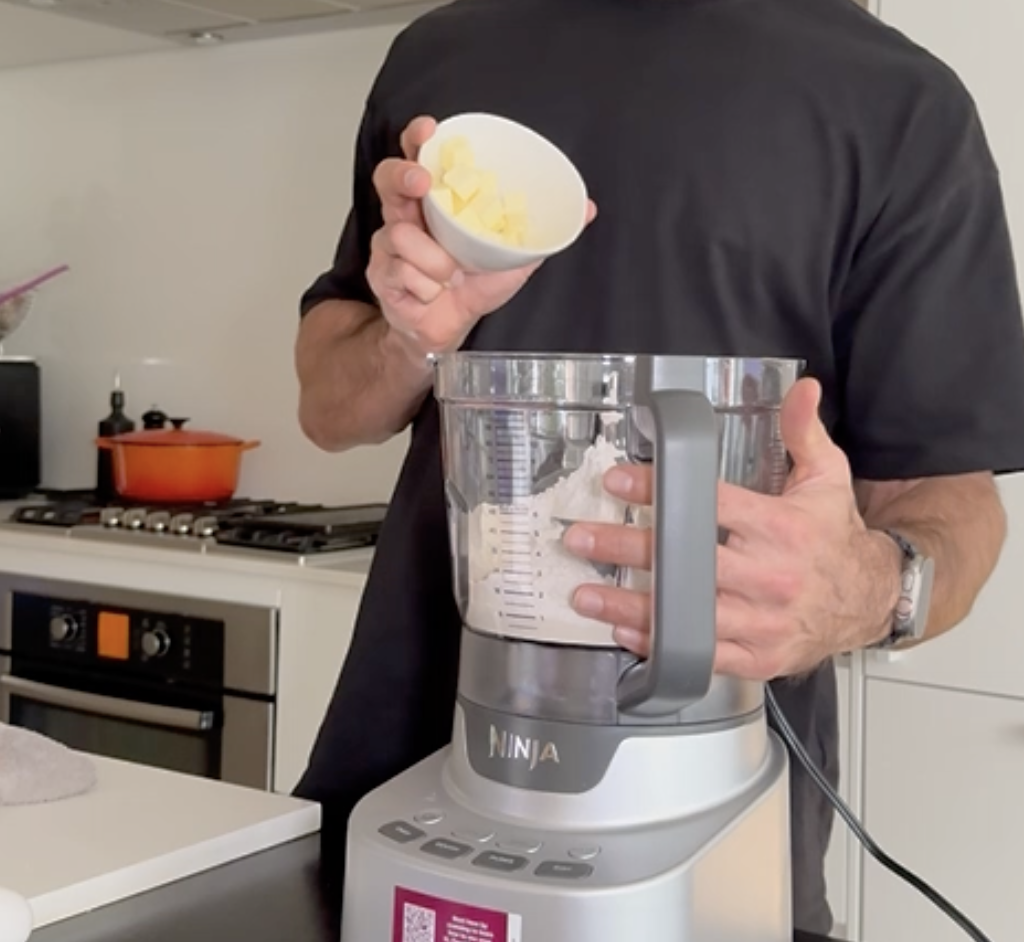
A food processor makes it easy to cut the cold butter into the flour without warming it too much with your hands.
You can also make the dough manually in a mixing bowl.
Digital Kitchen Scale
A kitchen scale is especially helpful with Fit Flour because small measurement differences can change how much water the dough needs.
Silicone Spatula Set
A silicone spatula is useful for scraping the processor and bringing any dry flour into the dough before chilling.
9-Inch Pie Dish
This recipe is sized for one standard 9-inch pie crust.
Tools I Use for This Recipe

Ninja Professional Plus 9-Cup Food Processor
Cuts the cold butter into the flour quickly while limiting heat from your hands, which helps keep the crust tender.

Etekcity Digital Kitchen Scale
Helps measure the specialty flour and butter accurately, where small weight differences can change the dough.

OXO Good Grips Glass Pie Plate
A clear pie plate makes it easier to monitor browning along the bottom and sides while the crust bakes.
This post contains affiliate links. As an Amazon Associate, I earn from qualifying purchases.
How to Make High-Protein Pie Crust
1. Combine the Dry Ingredients
Add the Fit Flour, all-purpose flour, and salt to a food processor or large mixing bowl.
Pulse or stir briefly until evenly combined.
2. Add the Cold Butter
Add the cold butter pieces.
Pulse the food processor until the butter is broken into small pieces throughout the flour mixture.
If making it by hand, use a pastry cutter or your fingertips to work the butter into the flour without letting it become warm.
3. Add the Egg and Water
Add the egg.
Begin adding ice water gradually while mixing.
Start with about 5 tablespoons and add additional water only as needed.
The finished dough should be stiff but should hold together when pressed.
Do not keep adding water once the dough comes together.
4. Chill the Dough
Bring the dough together into a disk and wrap it tightly in plastic wrap.
Refrigerate for at least 1 hour.
This gives the flour time to hydrate and firms the butter back up before rolling.
5. Roll Out the Crust
Lightly flour your work surface and rolling pin.
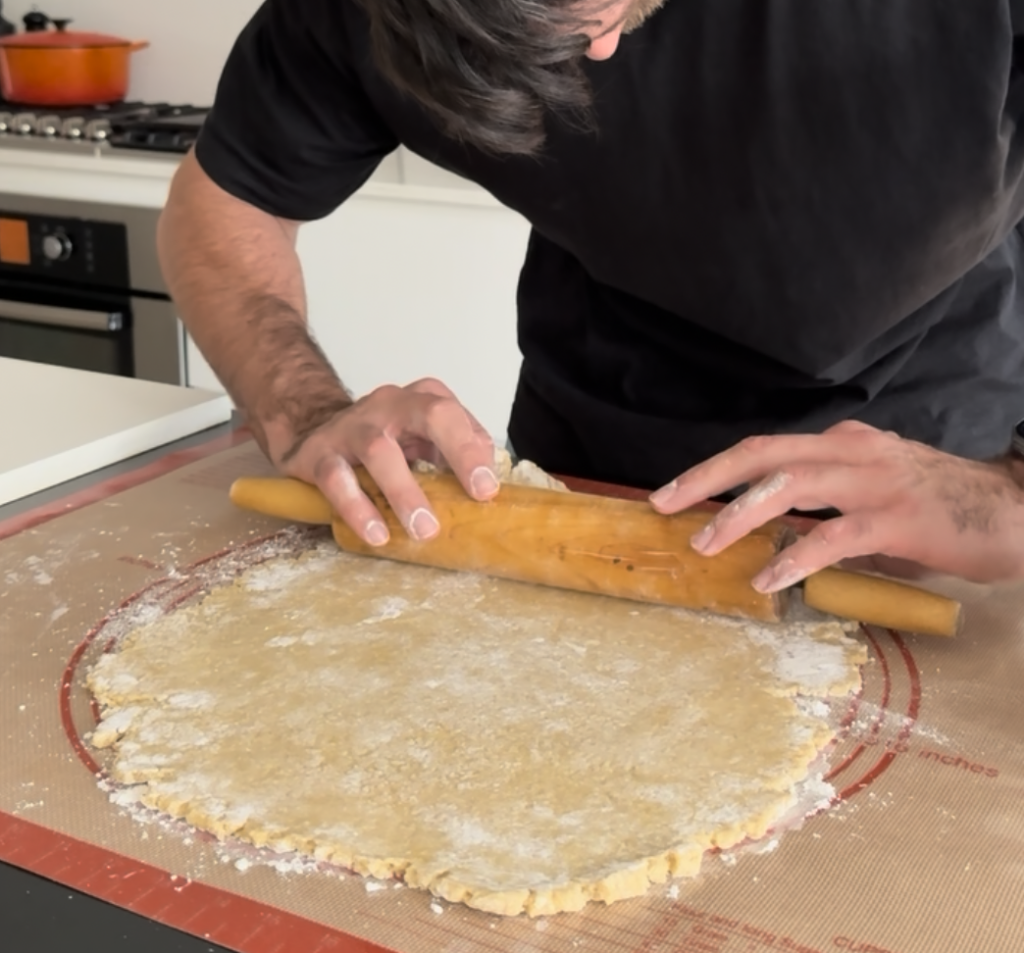
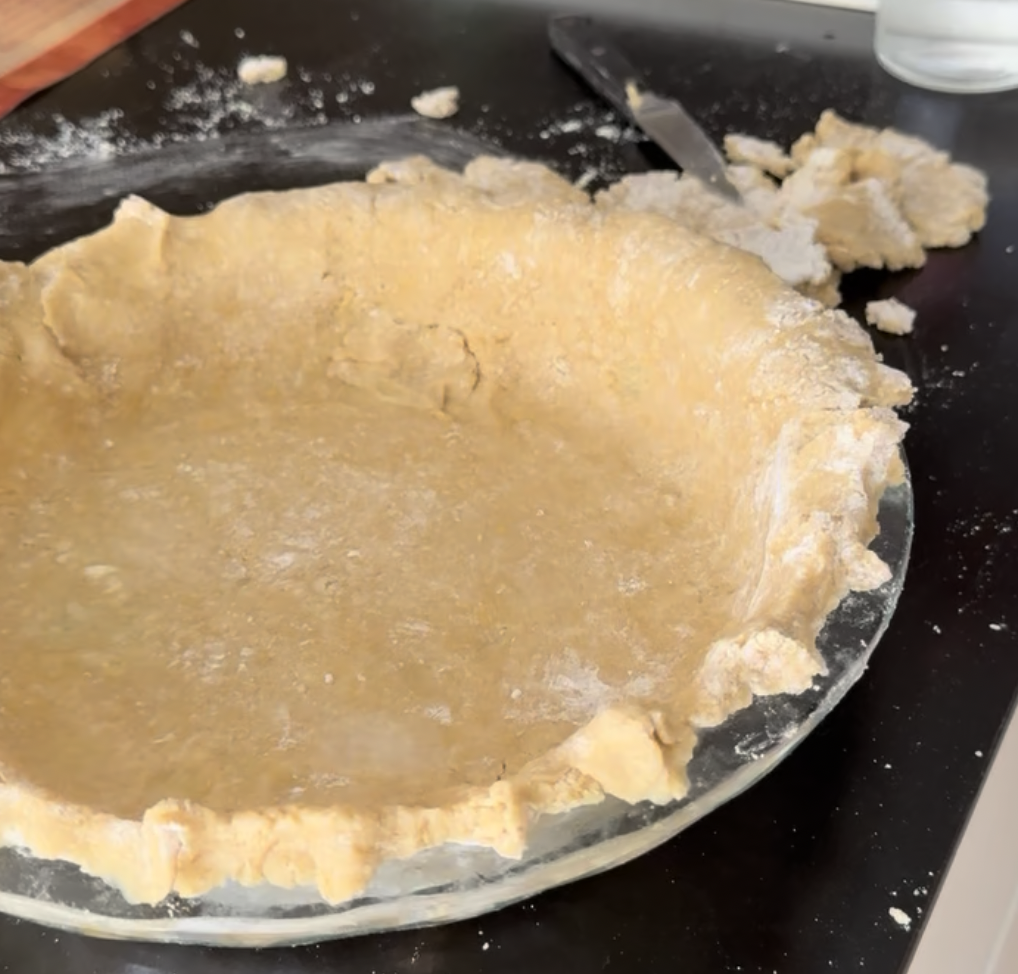
Roll the chilled dough into a circle large enough to fit your 9-inch pie dish.
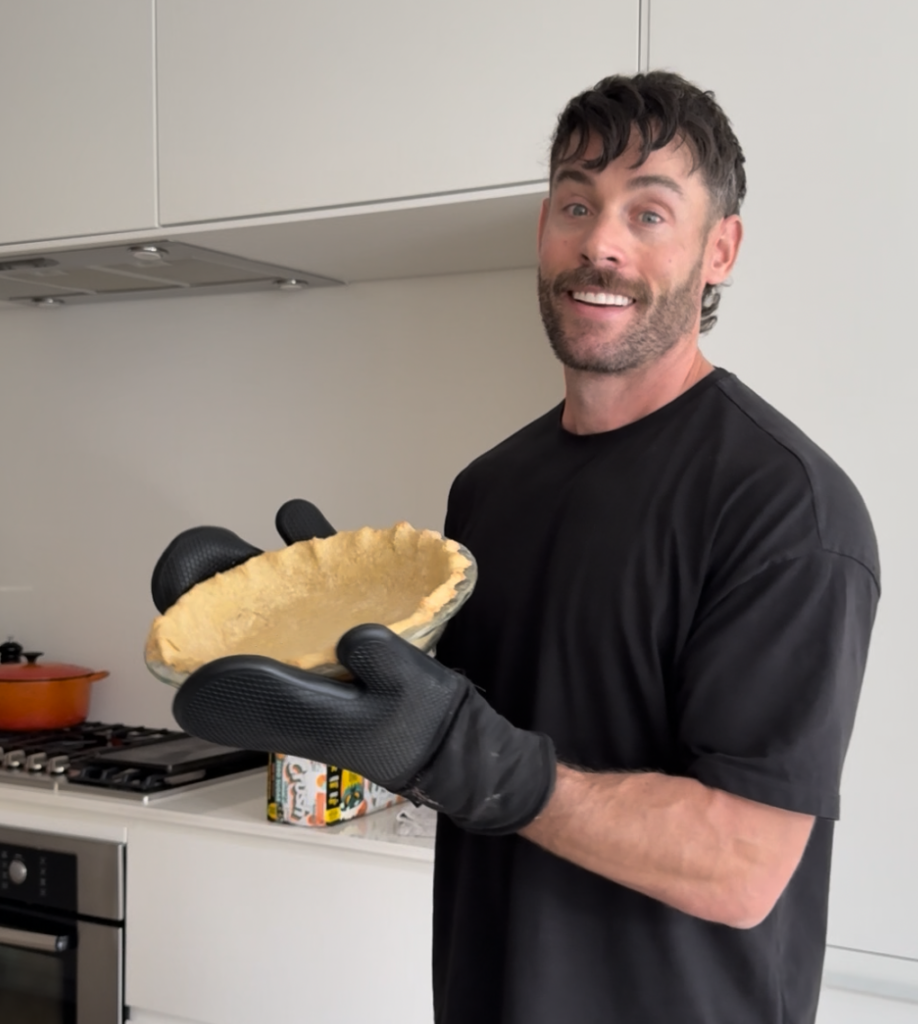
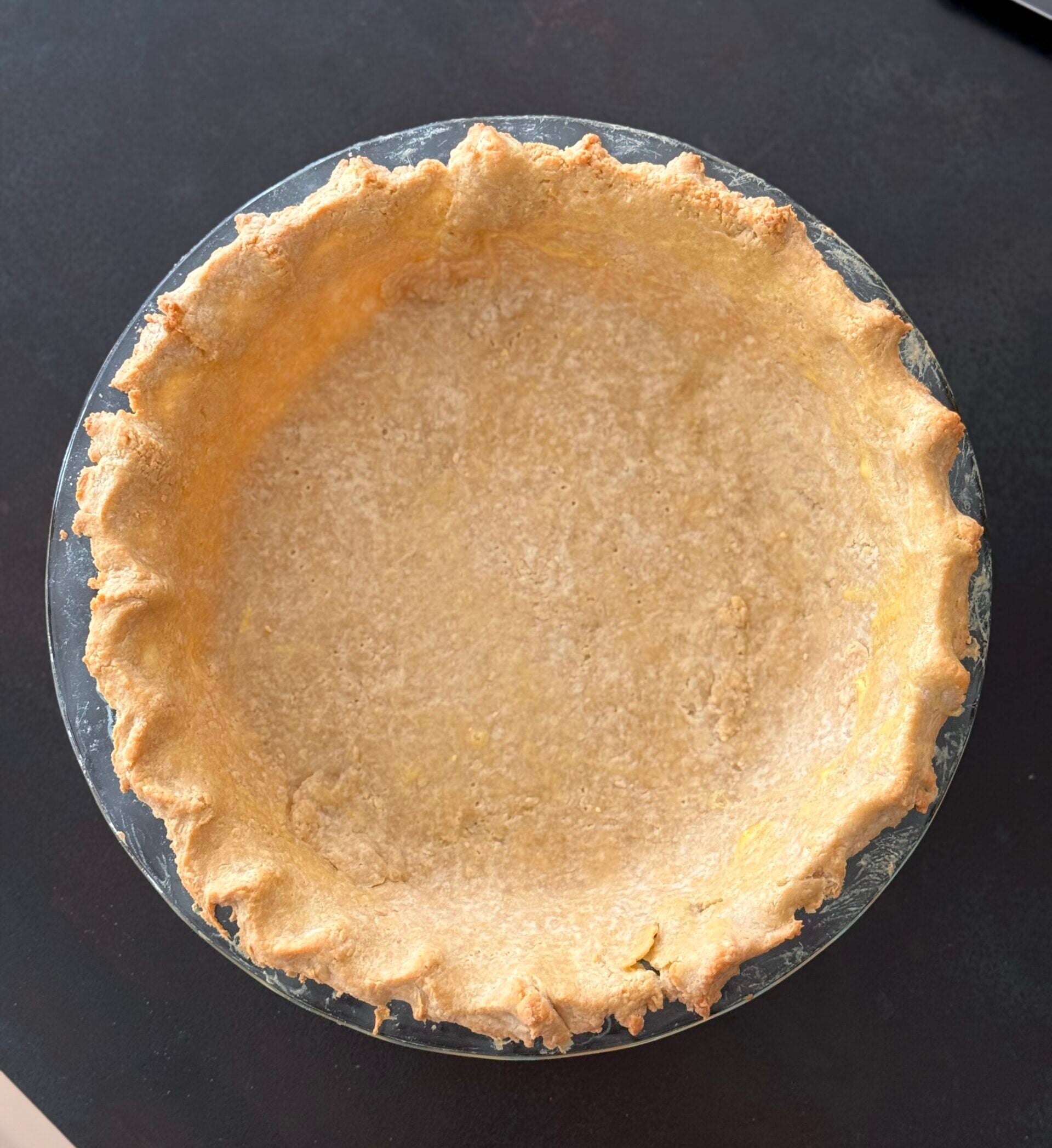
Transfer it carefully into the dish and press it gently across the bottom and sides.
Trim or fold the excess dough and crimp the edges.
6. Bake According to Your Pie Recipe
How you bake the crust depends on the filling you are using.
Some pies will require the crust to be blind baked first, while others can be filled and baked together.
Follow the baking instructions for the specific pie you are making.
Expert Tips
Keep Everything Cold
Cold butter is one of the most important parts of pie dough.
If the dough becomes soft or greasy while you are working with it, put it back in the refrigerator for 10–15 minutes before continuing.
Add Water Slowly
Do not treat 5–6 tablespoons as an amount you automatically have to use.
Start with less and stop once the dough holds together.
Do Not Overwork the Dough
Mix only until everything comes together.
Overworking the dough can make the finished crust tougher.
Chill Before Rolling
The one-hour chilling period makes this dough substantially easier to handle.
It also gives the Fit Flour and all-purpose flour time to evenly absorb moisture.
Flour the Surface Lightly
Use enough flour to keep the crust from sticking, but do not keep working large amounts of extra flour into the dough.
That can dry it out.
Can I Use This for Any Pie?
Yes, this is meant to work as a basic high-protein pie crust.
Use it for sweet pies, protein pies, fruit pies, custard pies, or another filling that normally uses a standard pastry crust.
The exact baking method may change depending on the filling.
For a no-bake filling, you will generally need to fully bake and cool the crust first.
For a filling that bakes in the oven, follow that specific recipe's directions for whether the crust needs to be partially baked beforehand.
Can I Make the Dough Ahead of Time?
Yes.
Wrap the prepared dough tightly and keep it refrigerated until you are ready to roll it out.
You can make it a day or two ahead, which is useful when you are preparing a pie for a holiday or dinner.
Let very cold dough sit at room temperature for a few minutes before rolling if it is too firm.
Storage
Unbaked pie dough can be wrapped tightly and kept in the refrigerator for a couple of days.
For longer storage, wrap it well and freeze it.
Thaw frozen dough overnight in the refrigerator before rolling.
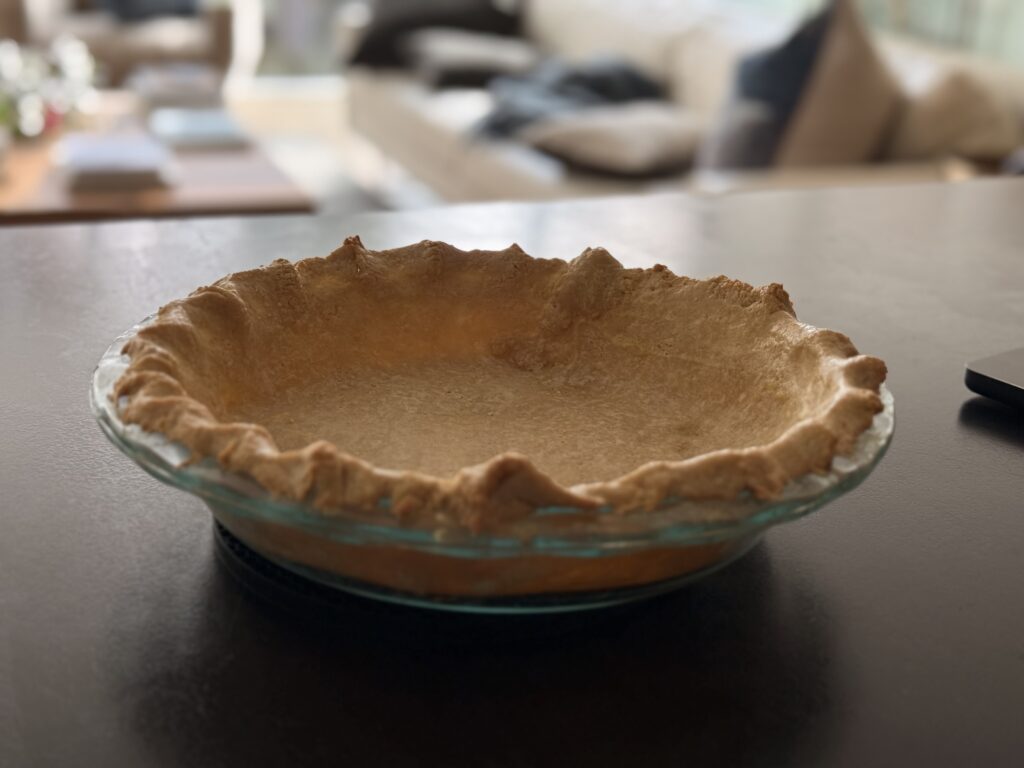
A fully baked empty crust can be kept covered at room temperature for a short period or refrigerated when your filling requires refrigeration.
Frequently Asked Questions
Does Protein Pie Crust Taste Like Protein Powder?
This crust does not use protein powder.
The extra protein comes from Fit Flour, which helps keep the flavor and texture much closer to a regular flour-based crust.
Why Mix Fit Flour With Regular Flour?
Using both gives you the protein benefit without relying entirely on protein flour.
The all-purpose flour helps make the dough more flexible and keeps the baked crust from becoming overly dense.
Why Is My Dough Crumbly?
It probably needs a little more water.
Add ice water about one teaspoon at a time and gently work it into the dough until the mixture holds together when pressed.
Why Is My Dough Sticky?
It may contain slightly too much water or it may have become warm.
Chill it again before adding more flour. A cold dough is much easier to roll.
Can I Make This Without a Food Processor?
Yes.
Whisk the dry ingredients together in a bowl, cut the cold butter in with a pastry cutter or your fingers, and then mix in the egg and ice water.
Do I Need to Blind Bake It?
That depends on the pie.
A no-bake or very wet filling may require a fully baked crust, while other pies bake the raw crust and filling at the same time.
Follow the instructions for your specific filling.
Final Thoughts
This is the kind of recipe I wanted because I did not want to completely reinvent pie crust just to make the macros better.
The Fit Flour gives it a big protein boost, but keeping some regular flour and real butter means it still rolls, crimps, and eats like pie crust.
Use it as the base for whatever pie you are already making instead of settling for a dry protein crust that tastes nothing like the real thing.
BAKE THIS NEXT
High-Protein Pie Crust
Ingredients
- 0.75 cup Fit Flour
- 0.5 cup all-purpose flour
- 0.25 teaspoon salt
- 4 tablespoons cold unsalted butter cut into small pieces
- 1 large egg
- 5-6 tablespoons ice water adjusted as needed
Equipment
- 9-Inch Pie Dish
Method
- Combine the Fit Flour, all-purpose flour, and salt in a food processor or large bowl. Pulse briefly to mix.
- Add the cold butter and pulse or cut it into the flour until small, pea-sized pieces remain throughout.
- Add the egg and pulse to combine.
- Gradually add ice water, one tablespoon at a time, pulsing until a stiff dough forms and holds together when pressed. Do not overmix.
- Shape the dough into a disk, wrap tightly in plastic wrap, and refrigerate for at least 1 hour.
- Roll the chilled dough on a lightly floured surface into a circle large enough for a 9-inch pie dish.
- Transfer the dough to the pie dish, press it gently into place, and crimp the edges. Bake according to the requirements of your specific pie filling.
Nutrition
Notes
High-Protein Pie Crust Tips & Expert Strategy
KEEP IT COLD: The butter and the water must be ice cold. If the butter melts before baking, you will lose the flaky texture. ADD WATER SLOWLY: Protein flour absorbs moisture differently based on the brand and humidity. Start with less water and only add more until the dough holds together when you squeeze it. DONT OVERWORK IT: Mix the dough just enough to bring it together. Overworking develops the gluten in the all-purpose flour too much, making the crust tough. CHILL BEFORE ROLLING: Do not skip the fridge time. It lets the flour fully hydrate and firms the butter back up so it's much easier to roll out.Tried this recipe?
Mention or tag @bakedlean!One response to “High-Protein Pie Crust (Macro-Friendly Recipe)”

What is fit flour?


Leave a Reply