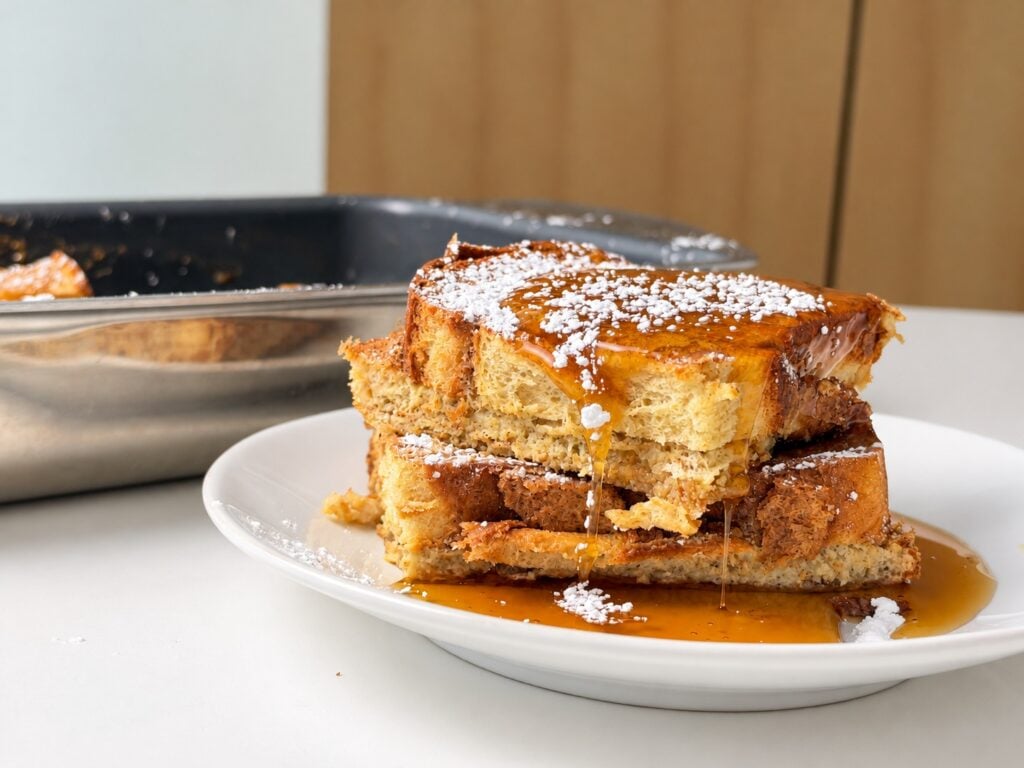
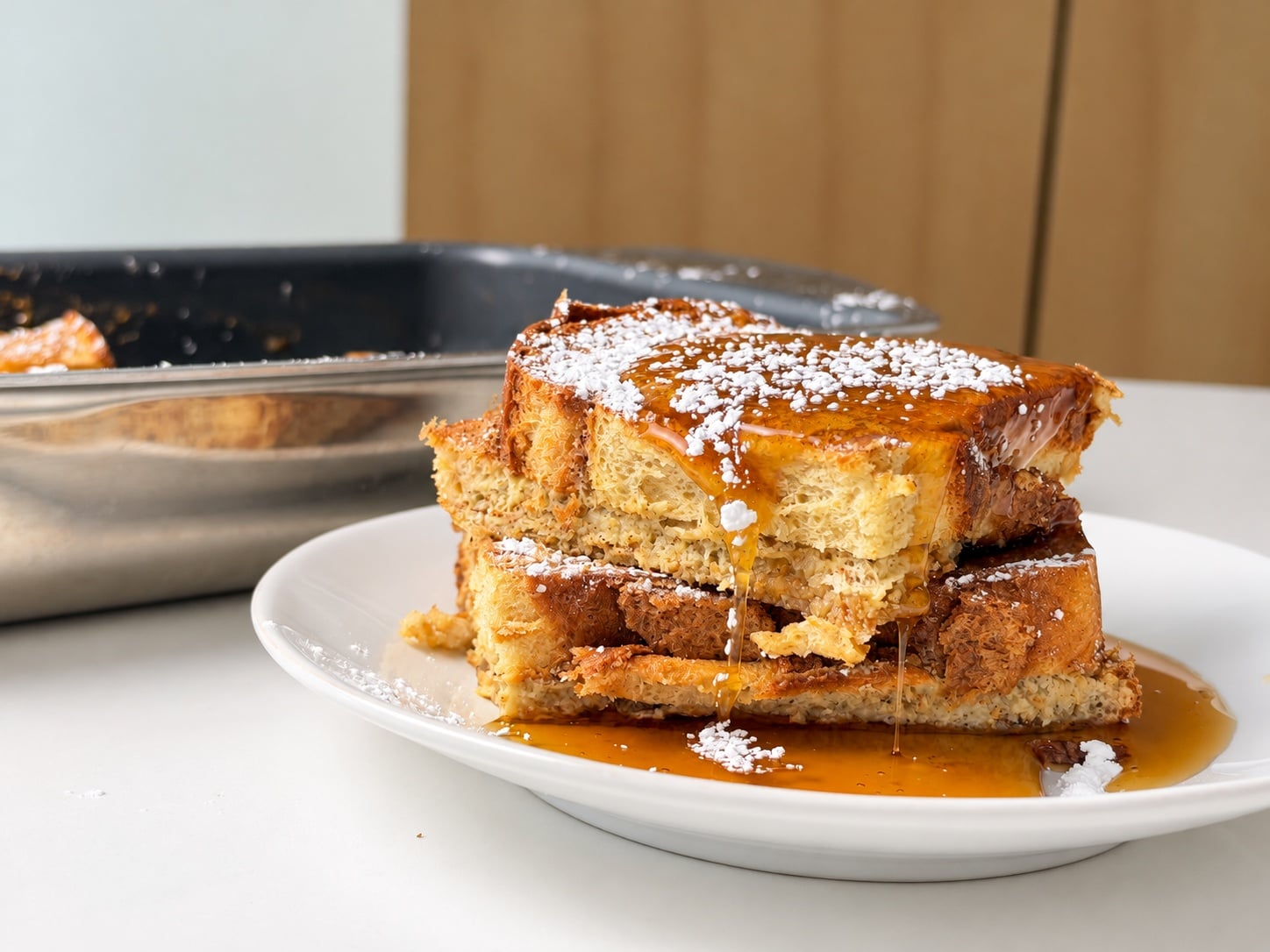
This healthy French toast casserole turns 12 slices of protein bread into one easy make-ahead breakfast. I layer the bread in a 9×13-inch pan, soak it in cinnamon-vanilla protein custard, and refrigerate it before baking.
Cut into six large servings, each portion has 306 calories, 40.2 grams of protein, 20 grams of carbohydrates, and 6.8 grams of fat before toppings. The middle stays soft while the exposed edges brown in the oven.
Nutrition is calculated per 1 of 6 servings and may vary depending on the bread, liquid, protein powder, and toppings used.
Tested Recipe Details
This is the exact setup I used for the casserole:
- Pan: 9×13-inch baking dish
- Bread: 12 slices Nature's Own Life Protein Plus Wheat Bread
- Liquid: 11 fluid ounces vanilla protein shake or milk
- Protein powder: 2 scoops vanilla protein powder
- Soak time: At least 2 hours, preferably overnight
- Oven temperature: 350°F
- Bake time: 45–55 minutes
- Doneness: Golden top, set center, and an internal temperature of 160°F
- Yield: 6 large servings or 8 smaller servings
- Nutrition per large serving: 306 calories and 40.2 grams of protein before toppings
The exact bake time can change slightly depending on the protein powder, liquid, baking dish, and how cold the casserole is when it goes into the oven.

Try These Next
- For another oven-baked breakfast, try my High Protein Strawberry Baked Pancake.
- When you want crisp edges instead, make my High Protein Blueberry Waffles.
Why You'll Love This Recipe
- 40.2 grams of protein: Protein bread, eggs, your chosen liquid, and protein powder all contribute.
- Made for overnight prep: Assemble it the night before and bake it in the morning.
- No flipping: One pan replaces several rounds at the skillet.
- Soft center and browned edges: The two-layer method creates contrast in every serving.
- Lower-added-sugar base: The custard uses a cup-for-cup sugar alternative.
- Easy to serve: One pan makes six large portions or eight smaller portions.
What Makes This a Healthier French Toast Casserole?
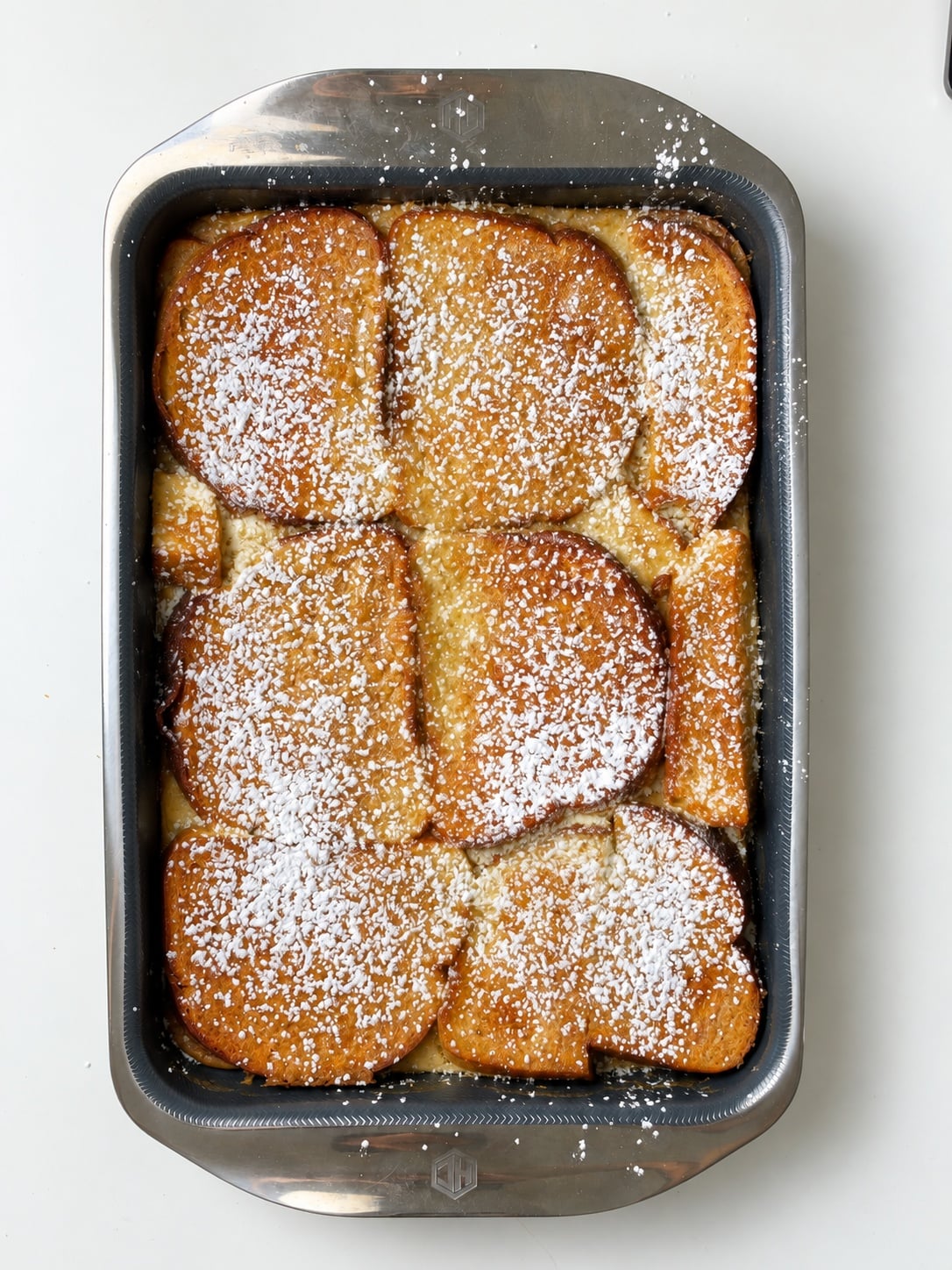
“Healthy French toast” can mean different things, so here is what changes in this version: it uses protein bread, a vanilla protein shake or milk, a zero-calorie sweetener, and vanilla protein powder. That creates a higher-protein, lower-added-sugar breakfast than a traditional casserole made with standard white bread and a brown-sugar topping.
It still contains whole eggs and melted butter. Those ingredients help the custard set and keep the high-protein bread from tasting dry.

The Two-Layer Soak Strategy
The two bread layers are what make this feel like a French toast casserole instead of twelve separate slices baked in the same pan.
I pour half of the custard over the first six slices before adding the second layer. That gives the bottom bread direct contact with the liquid instead of expecting all of the custard to soak down from the top.
Once the second layer is added, I pour over the remaining custard and gently press the bread down. Don't crush it into a solid block—you just want both layers touching the liquid.
The refrigerator soak matters because protein bread is fairly dense, and the custard also contains protein powder. Give it at least two hours. Overnight is even better because the custard has more time to move through the center of both layers.
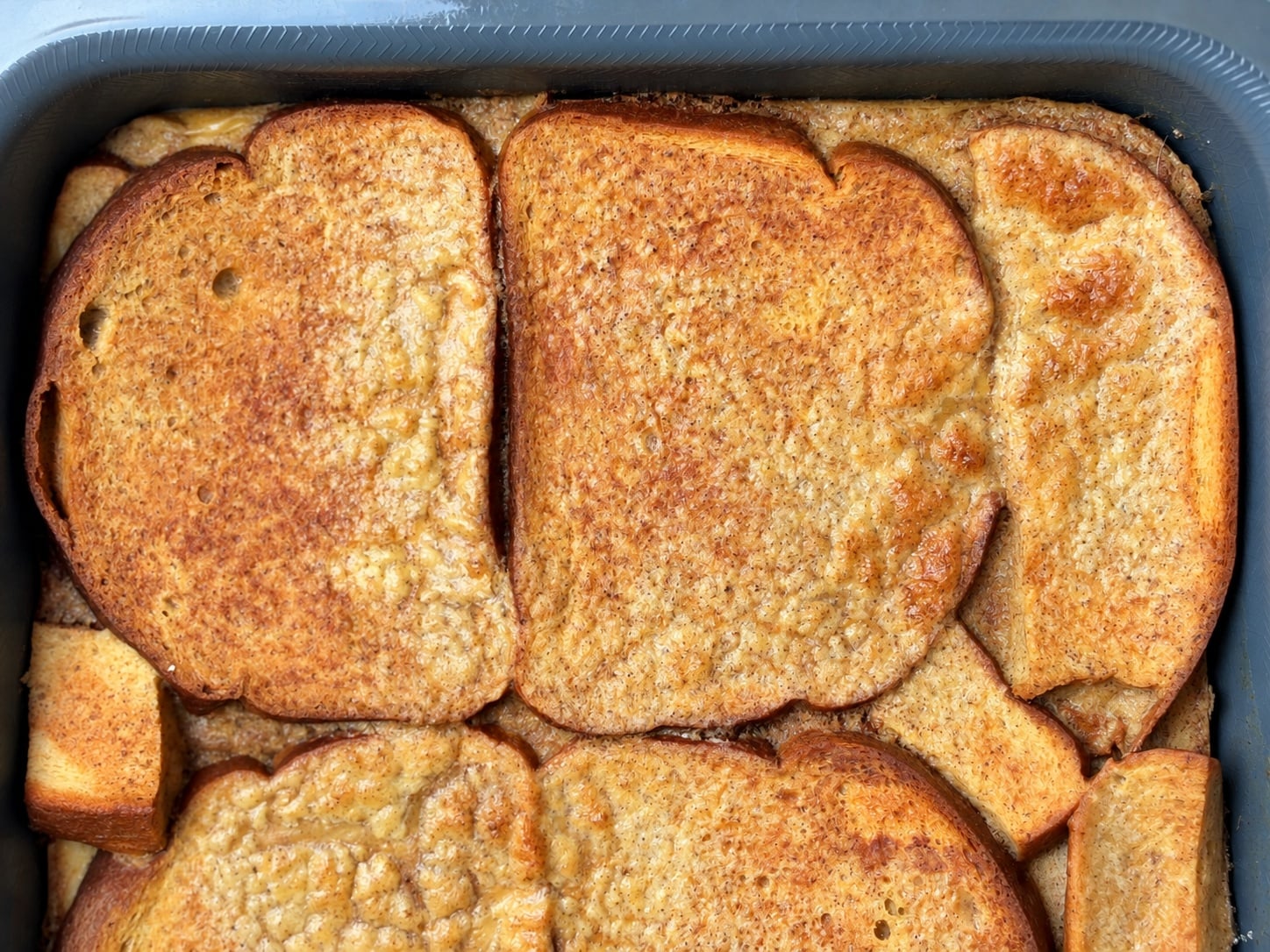
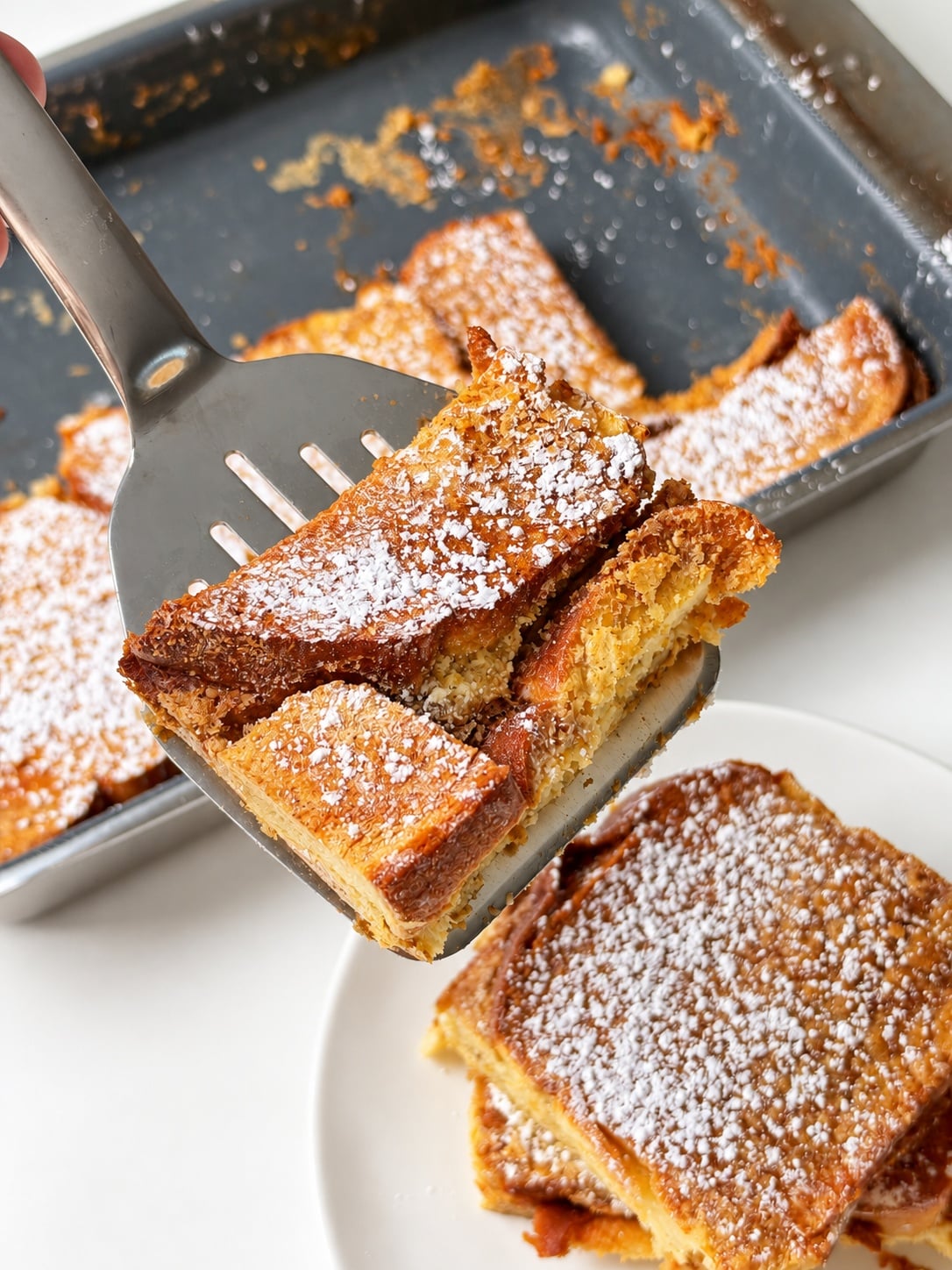
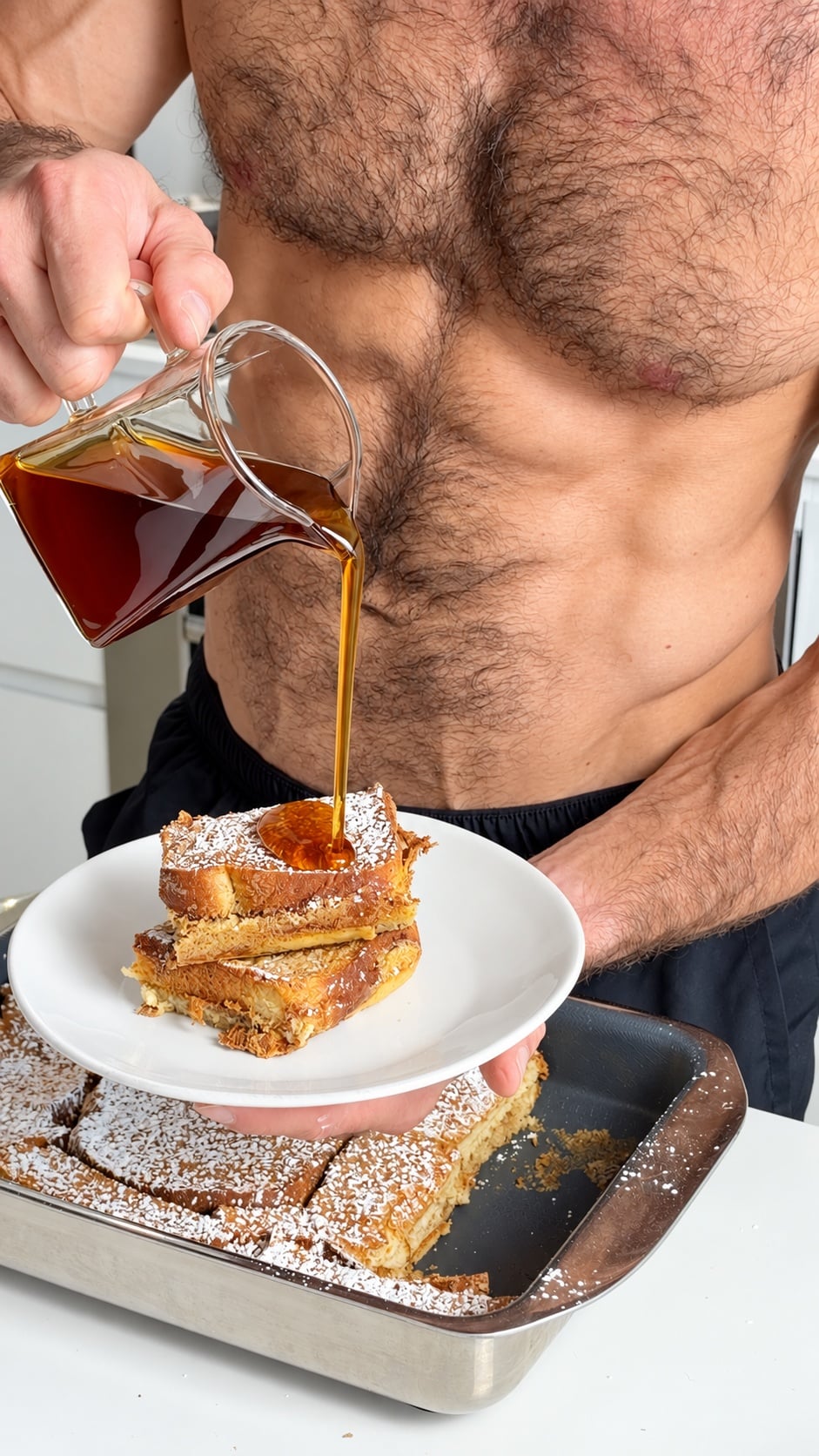
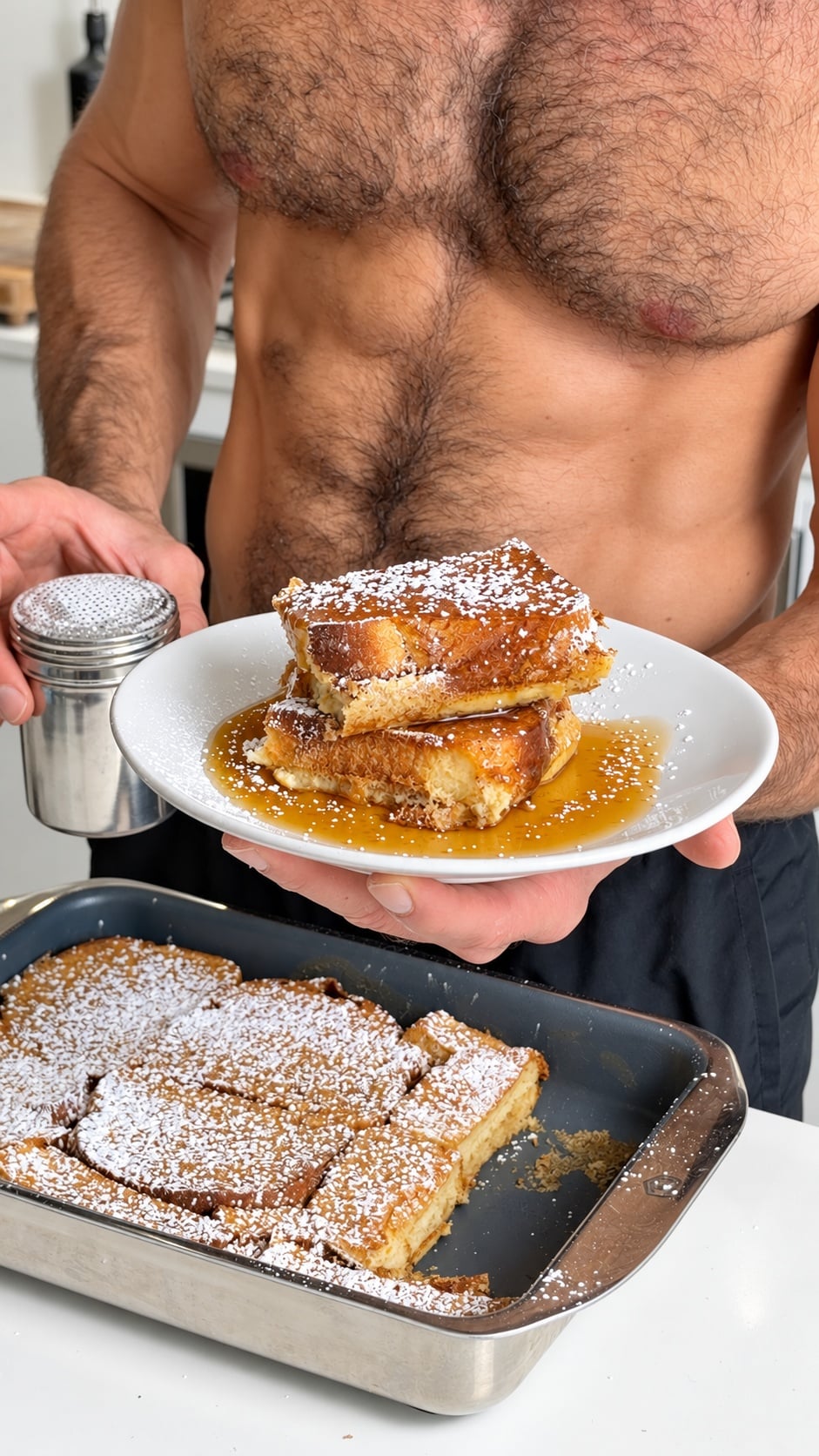
After baking, the exposed top and outer edges should be golden, while the middle stays soft but fully set.
Ingredients
- 12 slices Nature's Own Life Protein Plus Wheat Bread
- 5 large eggs
- 11 fluid ounces vanilla protein shake or milk
- 2 scoops vanilla protein powder
- ½ cup granulated cup-for-cup sugar alternative
- ¼ cup unsalted butter, melted and slightly cooled
- 1 tablespoon ground cinnamon
- 1–2 teaspoons vanilla extract
- ¼ teaspoon salt
- Cooking spray
Ingredient Notes
Protein bread: Nature's Own currently lists 22 grams of protein per two slices for its Life Protein Plus Wheat Bread. Use the label on your package if the formula differs.
Vanilla protein shake or milk: Use 11 fluid ounces of either option. A ready-to-drink vanilla protein shake adds flavor and protein; the same amount of milk also works.
Vanilla protein powder: Use a powder that blends smoothly. Nutricost Protein Powder is a budget-friendly option; absorption and sweetness vary by brand.
Sugar alternative: Use a granulated cup-for-cup product, not a concentrated liquid or powdered sweetener.
Cinnamon and vanilla: One tablespoon of cinnamon is intentional for a full 9×13-inch pan. Use two teaspoons of vanilla for a more noticeable vanilla flavor.
Equipment
- 9×13-inch baking dish
- Blender
- Silicone spatula
- Measuring cups and spoons
- Food thermometer
Tools I Use for This Recipe


This post contains affiliate links. As an Amazon Associate, I earn from qualifying purchases.

How to Make Healthy French Toast Casserole
1. Prepare the pan
Lightly coat a 9×13-inch baking dish with cooking spray. If the bread is very soft and fresh, let it sit uncovered while you make the custard.
2. Add the first bread layer
Arrange six slices across the bottom of the dish. Trim or slightly overlap the bread as needed.
3. Blend the custard
Add the eggs, vanilla protein shake or milk, protein powder, sugar alternative, cinnamon, vanilla, and salt to a blender. Blend until smooth. With the blender running on low, slowly stream in the melted and slightly cooled butter.
Pro Tip: Blend until the two scoops of protein powder are fully incorporated and the custard is smooth.
4. Soak both layers
Pour about half the custard over the first six slices, lifting the corners so some liquid reaches underneath. Add the remaining six slices, pour the rest of the custard over the top, and press gently so both layers make contact with the liquid.
5. Refrigerate
Cover and refrigerate for at least two hours, preferably overnight. Before baking, spoon custard from the sides over any dry areas on top.
6. Bake
Preheat the oven to 350°F. Remove the casserole from the refrigerator while the oven heats, then uncover and bake for 45–55 minutes. It is ready when the top is golden, the center is set, and the middle reaches 160°F.
If the top browns before the center sets, loosely cover the pan with foil for the remaining bake time.
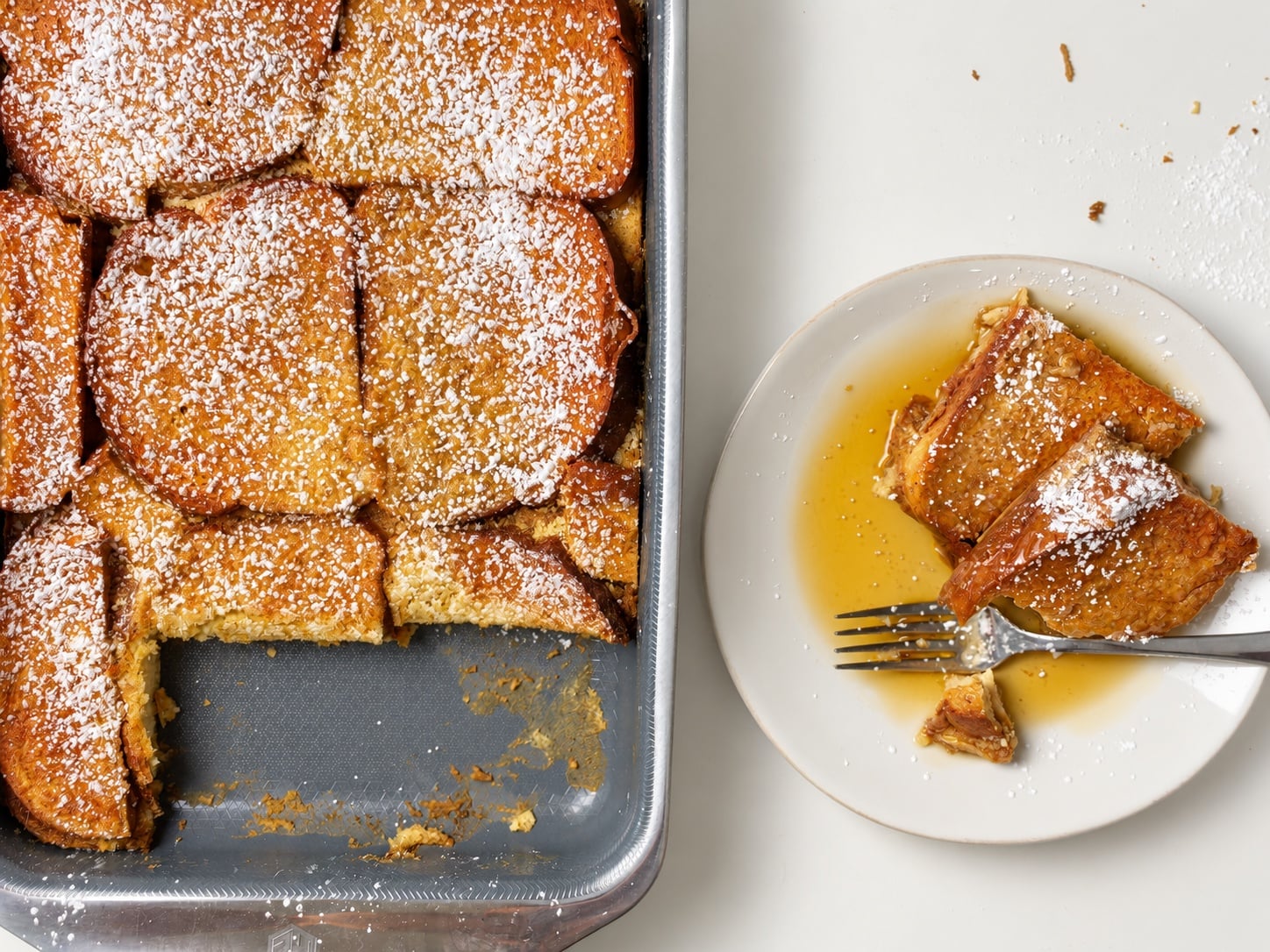
7. Rest and serve
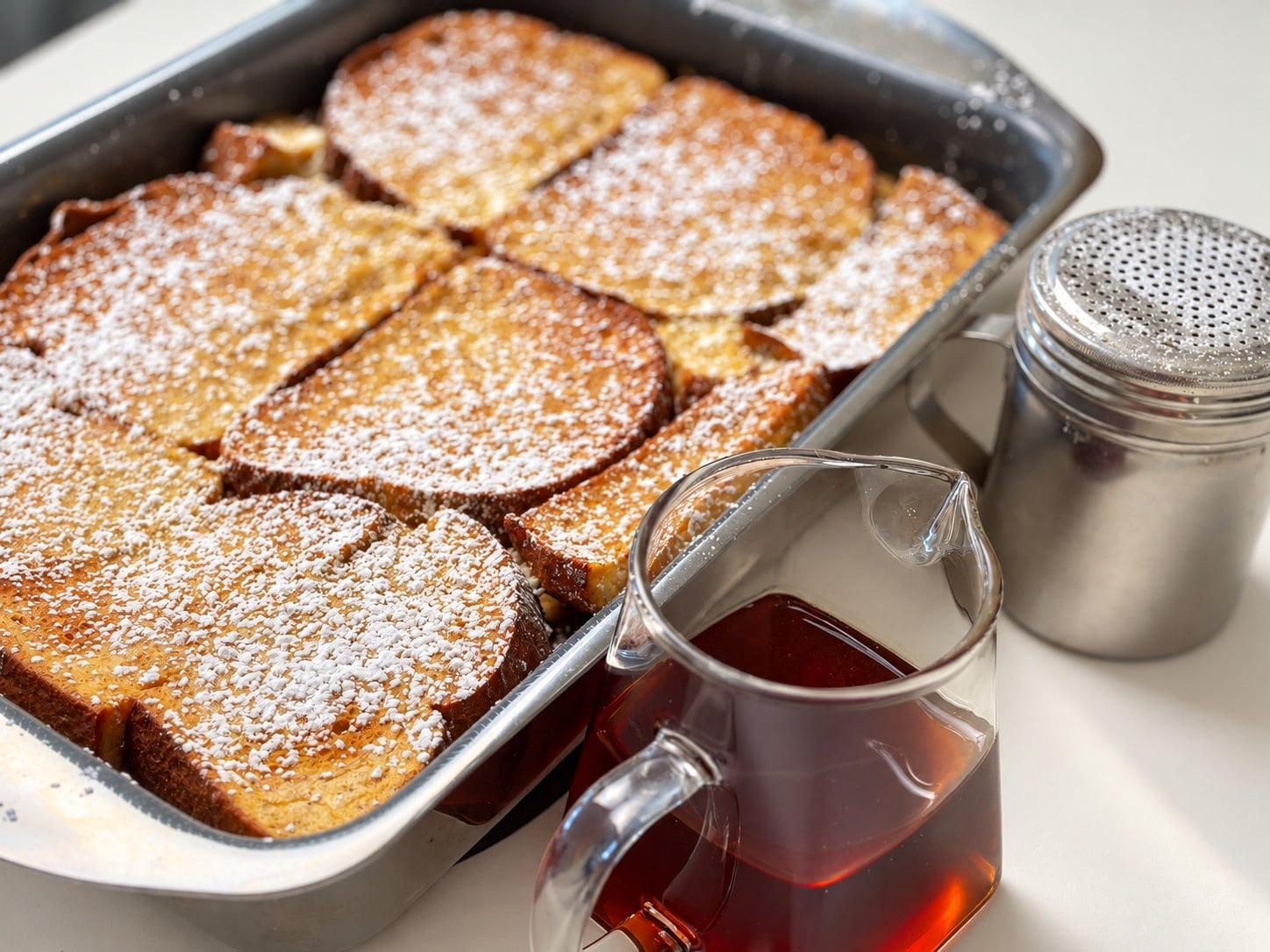
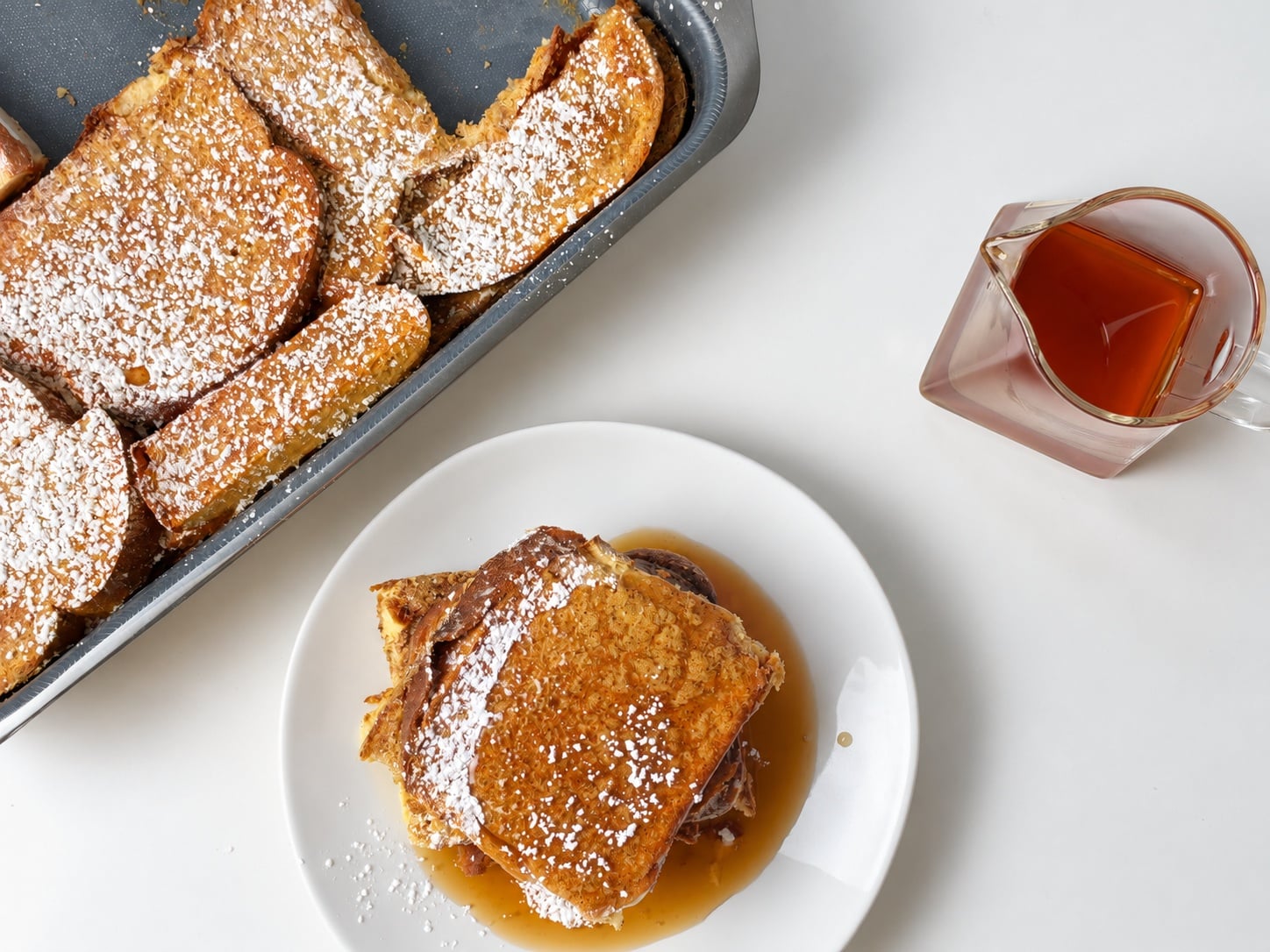
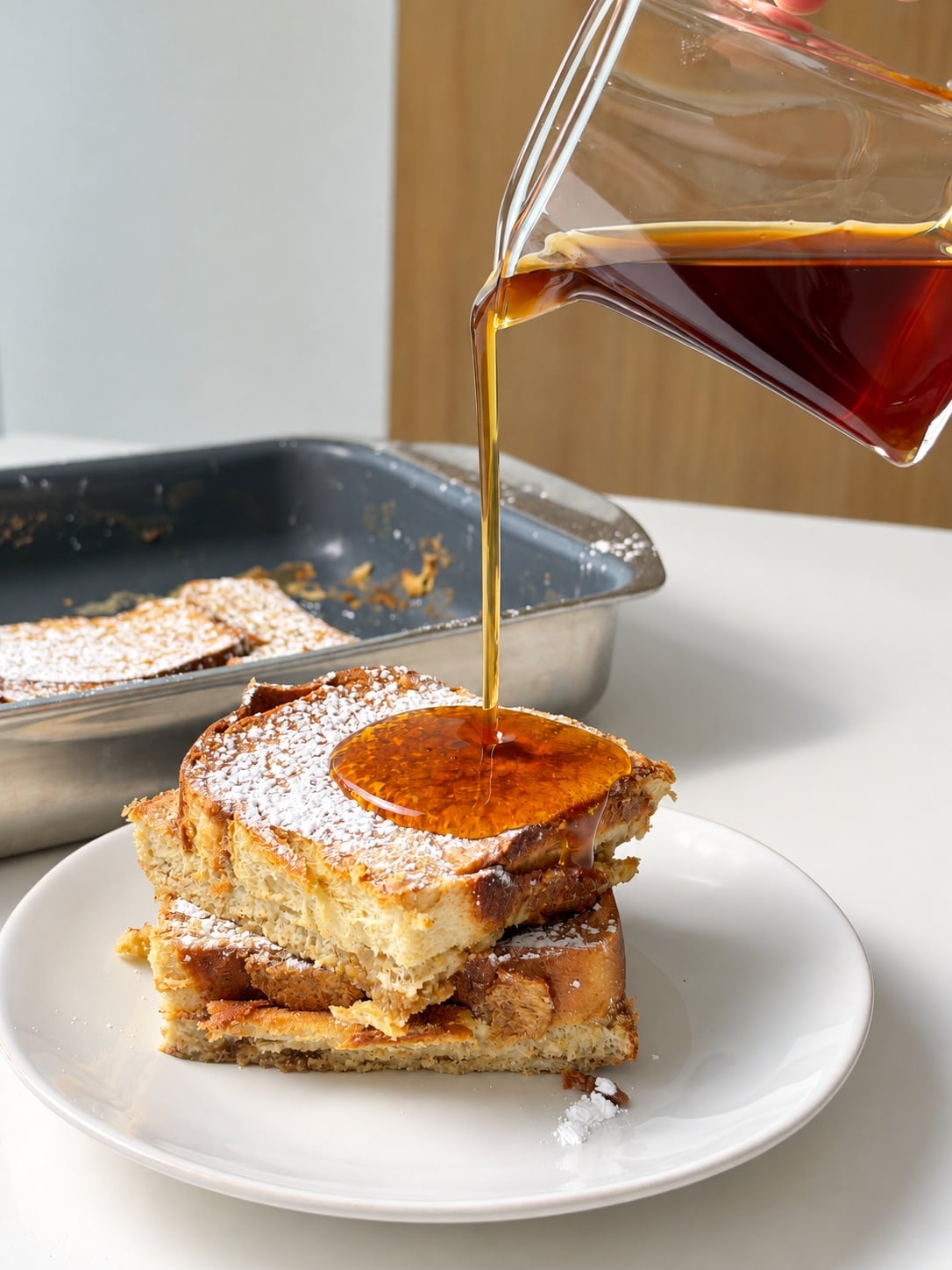
Let the casserole rest for 10–15 minutes before cutting it into six large portions. Serve warm with sugar-free syrup, fruit, Greek yogurt, or powdered sweetener, tracking toppings separately if you calculate macros.
Expert Tips
- Measure the liquid. Use 11 fluid ounces of vanilla protein shake or the same amount of milk so both bread layers soak evenly.
- Blend the custard. This prevents dry protein-powder pockets.
- Do not skip the soak. Two hours is the minimum; overnight gives the liquid more time to reach the center.
- Press gently. The top bread needs contact with the custard without being crushed into a dense layer.
- Check the middle. Brown edges do not automatically mean the center is finished.
- Rest before slicing. The pieces hold together better after 10–15 minutes.
Variations and Suggested Substitutions
These are suggested substitutions rather than changes to the tested formula. Results may vary by brand or product, and small adjustments to moisture, timing, or texture may be needed.
- Liquid choice: Use 11 fluid ounces of a vanilla protein shake or the same amount of milk. The macros and custard texture can vary by product.
- Protein powder: Cinnamon or neutral protein powder can replace vanilla if you adjust flavoring to taste.
- Sweetener: Regular granulated sugar can replace the cup-for-cup alternative.
- Spice: Pumpkin pie spice or apple pie spice can replace some or all of the cinnamon.
- Fruit: Add a modest layer of blueberries, diced apples, or sliced strawberries between the bread layers so the center does not become watery.
- Nuts: Add chopped pecans or walnuts over the top before baking.
Storage and Reheating
Cool leftovers promptly and refrigerate them in a covered container for 3–4 days. Reheat individual portions in the microwave until hot, or warm them in a covered baking dish in a low oven. For longer storage, wrap individual portions and freeze them, then thaw in the refrigerator before reheating.
Frequently Asked Questions
Can I use milk instead of a vanilla protein shake?
Yes. Use the same 11-fluid-ounce amount of milk. The final flavor, texture, and nutrition can vary depending on the milk or protein shake you choose.
Why is my custard so thick?
Protein powder varies widely by brand. Blend the custard thoroughly so the two scoops dissolve evenly into the 11 fluid ounces of liquid.
Do I have to soak it overnight?
No, but give it at least two hours. Overnight soaking provides the most even absorption.
Can I use regular bread?
Yes, but the protein will drop significantly and the bread may absorb the custard differently.
Can I divide it into eight servings?
Yes. Six servings are large; eight portions are smaller and provide about 230 calories and 30.2 grams of protein each before toppings.
You Might Also Like
- The Best Cheese Egg Casserole
- High Protein Blueberry Baked Pancake Bowl
- High Protein Carrot Cake Baked Oatmeal
Final Thoughts
This is the version of French toast I would make when I want breakfast ready for several people without cooking one slice at a time. The biggest things are measuring the 11 fluid ounces of liquid, giving the bread time to soak, and baking until the middle is fully set.
If you make it, leave a rating and tell me which toppings you added.
BAKE THIS NEXT
Healthy French Toast Casserole
Ingredients
- 12 slices Nature's Own Life Protein Plus Wheat Bread
- 5 large eggs
- 11 fluid ounces vanilla protein shake or milk Use the same amount of either.
- 2 scoops vanilla protein powder
- 1/2 cup granulated cup-for-cup sugar alternative
- 1/4 cup unsalted butter melted and slightly cooled
- 1 tablespoon ground cinnamon
- 1 to 2 teaspoons vanilla extract
- 1/4 teaspoon salt
- Cooking spray
Equipment
- 1 9 x 13-inch baking dish
- 1 Blender
- 1 Food thermometer
Method
- Lightly coat a 9 x 13-inch baking dish with cooking spray. If the bread is very soft and fresh, let it sit uncovered while you make the custard.
- Arrange six slices across the bottom of the dish. Trim or slightly overlap the bread as needed.
- Add the eggs, vanilla protein shake or milk, protein powder, sugar alternative, cinnamon, vanilla, and salt to a blender. Blend until smooth. With the blender running on low, slowly stream in the melted and slightly cooled butter.
- Pour about half the custard over the first six slices, lifting the corners so some liquid reaches underneath. Add the remaining six slices, pour the rest of the custard over the top, and press gently so both layers make contact with the liquid.
- Cover and refrigerate for at least 2 hours, preferably overnight. Before baking, spoon custard from the sides over any dry areas on top.
- Preheat the oven to 350°F. Remove the casserole from the refrigerator while the oven heats, then uncover and bake for 45 to 55 minutes. It is ready when the top is golden, the center is set, and the middle reaches 160°F. If the top browns before the center sets, loosely cover the pan with foil for the remaining bake time.
- Let the casserole rest for 10 to 15 minutes before cutting it into six large portions. Serve warm.