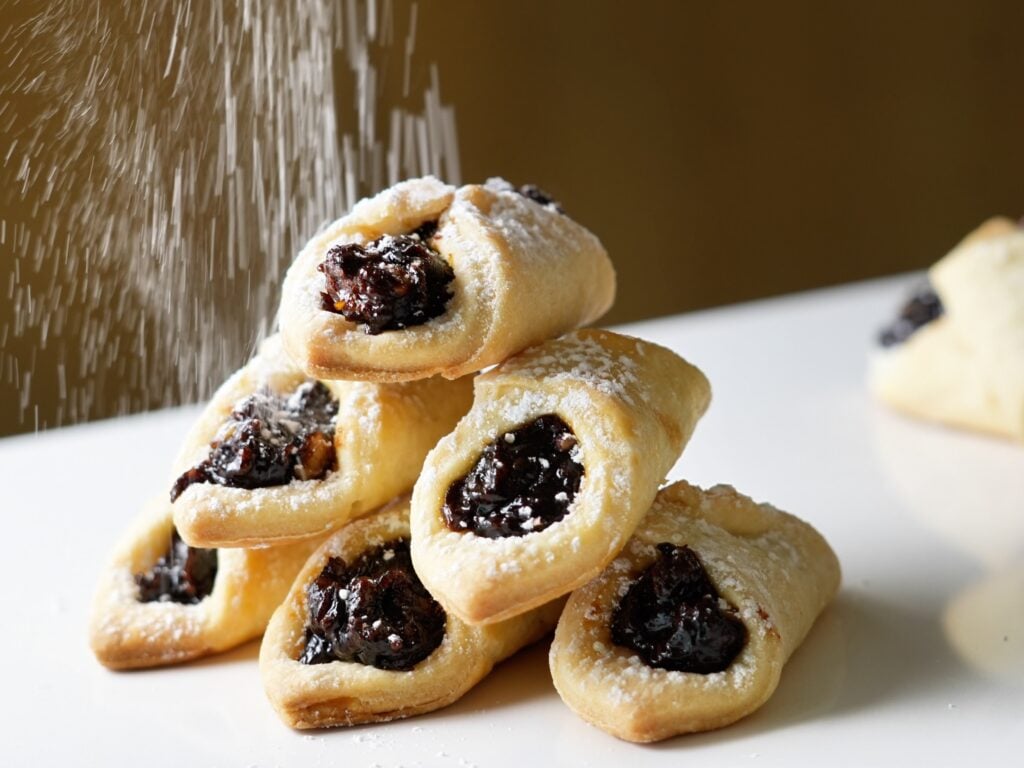
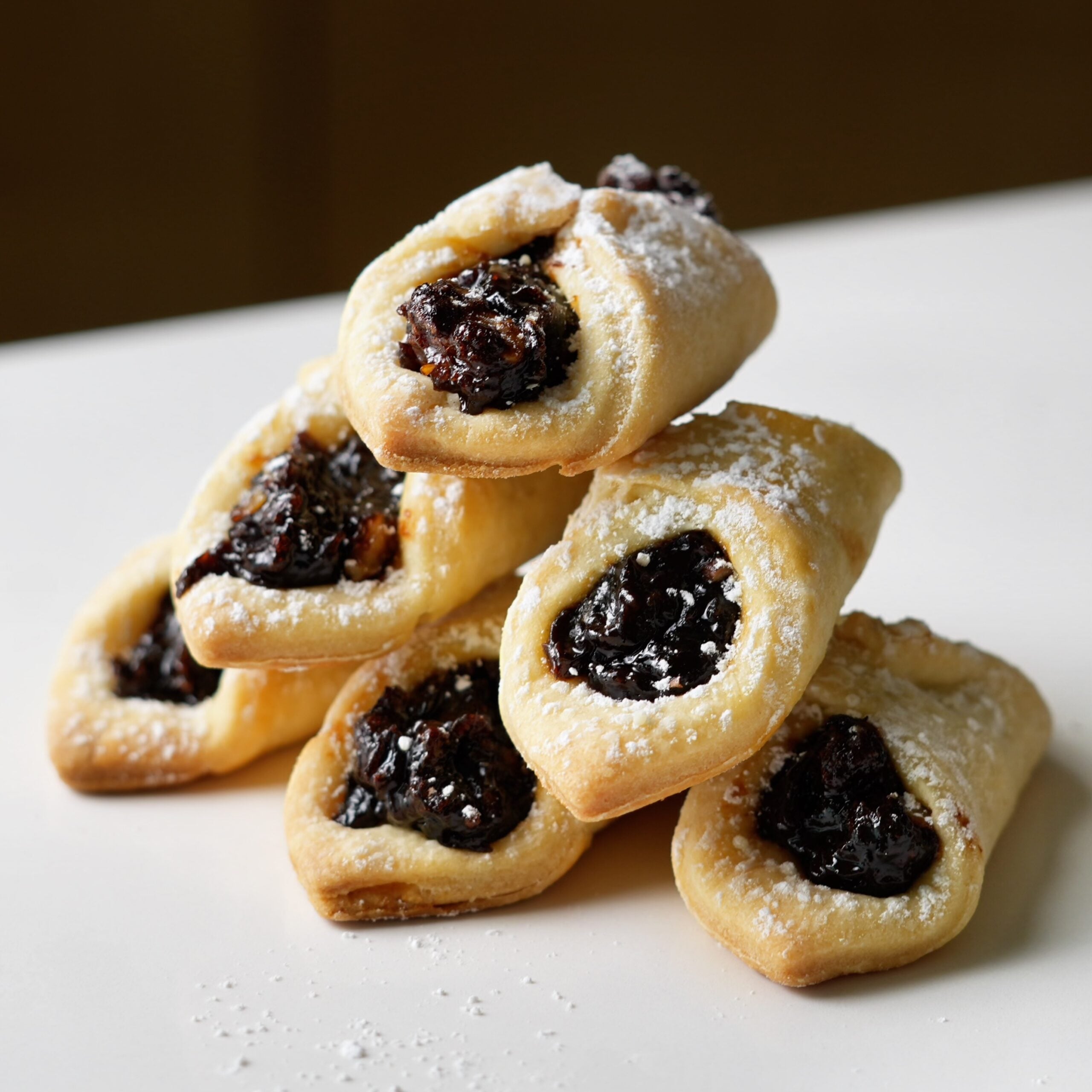
These filled cookies with lekvar and nuts come from my great-grandmother's recipe card. Depending on your family, you might know them as Hungarian kiffles, lekvar cookies, kolache cookies, prune filled cookies, or just old-fashioned filled cookies.
Her recipe card calls them Filled Cookies with Lekvar and Nuts, so that is the family name I am keeping. The dough is made with flour, butter, sugar, salt, baking powder, and sour cream. It gets rolled thin on a lightly floured surface, cut into squares, filled with thick lekvar and nuts, then folded so the opposite corners meet over the center.
I made a homemade date-style lekvar for this batch by cooking dates with water, a little vinegar, and honey until thick. You can also use traditional prune lekvar, plum butter, apricot preserves, or another thick fruit filling.
The main trick is keeping the dough cold, using thick filling, and sealing the corners well. I brushed the dough with egg white before folding, and that helped the cookies stay closed while baking.
These are tender, old-fashioned holiday cookies with a sweet fruit-and-nut center. They belong on a Christmas cookie tray with the kind of recipes that get passed down, rewritten, and made a little differently in every family.
If you love vintage holiday cookies, try these next:
- Old-Fashioned Raisin Filled Cookies
- Grandmas Sand Tarts Pa Dutch Style
- Grandmas 7 Layer Cookies Magic Bars
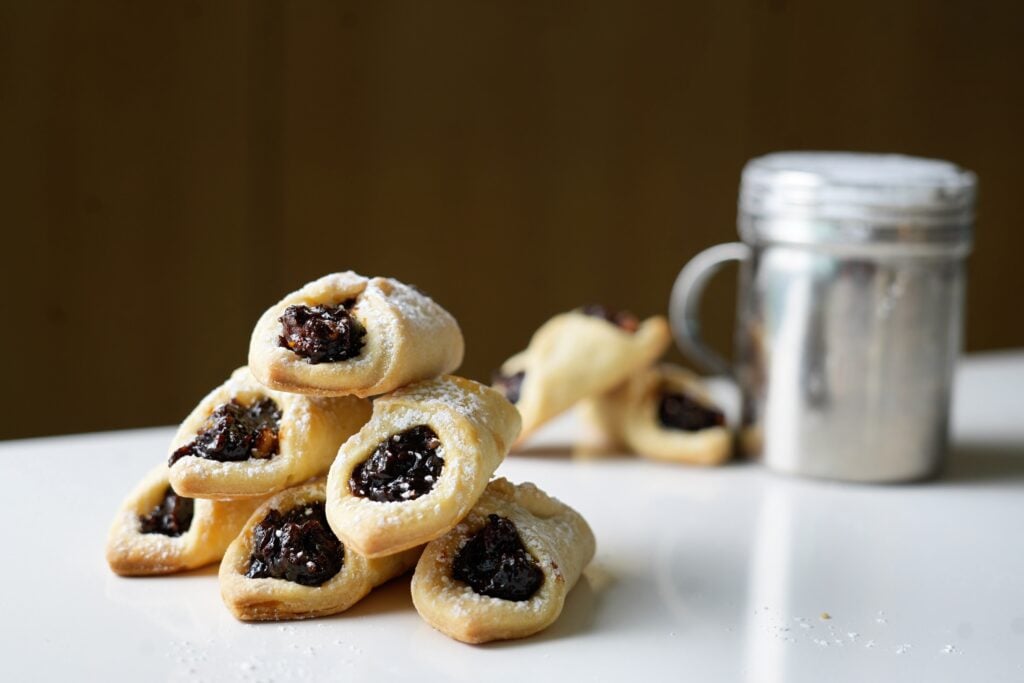
Hungarian Kiffles with Lekvar and Nuts
These cookies are part of the same family of old-fashioned Hungarian cookies often called kiffles, kifli, kolacky, kolache cookies, or filled cookies.
Some kiffles are made with cream cheese dough, but this family version uses sour cream. The sour cream gives the cookie dough a soft, tender texture and makes it easier to roll once chilled.
Traditional fillings can include prune lekvar, apricot preserves, walnut filling, poppy seed filling, or thick fruit preserves. This version uses lekvar and nuts, which gives the cookies a thick, sweet center with a little texture.
They look delicate, but the ingredient list is simple. The most important part is the method: chill the dough, roll it thin, use a thick filling, fold the opposite corners, and bake until lightly golden.
What Exactly Is Lekvar?
Lekvar is a thick fruit filling most often made from prunes or plums. It is common in Hungarian cookies, kiffles, kolacky, hamantaschen, and other old-fashioned filled pastries.
Traditional prune lekvar is cooked down until it becomes thick, smooth, and spoonable. That thickness is what makes it different from loose jam. In a filled cookie, you need a filling that can sit in the center without running all over the baking sheet.
My version uses a homemade date-style lekvar made with dates, water, a little vinegar, and honey. It is not the most traditional prune filling, but it gives the cookies the same thick, sweet, jammy center.
You can use prune lekvar, plum butter, date filling, apricot preserves, or another thick fruit filling. Just avoid thin jam unless you cook it down first.
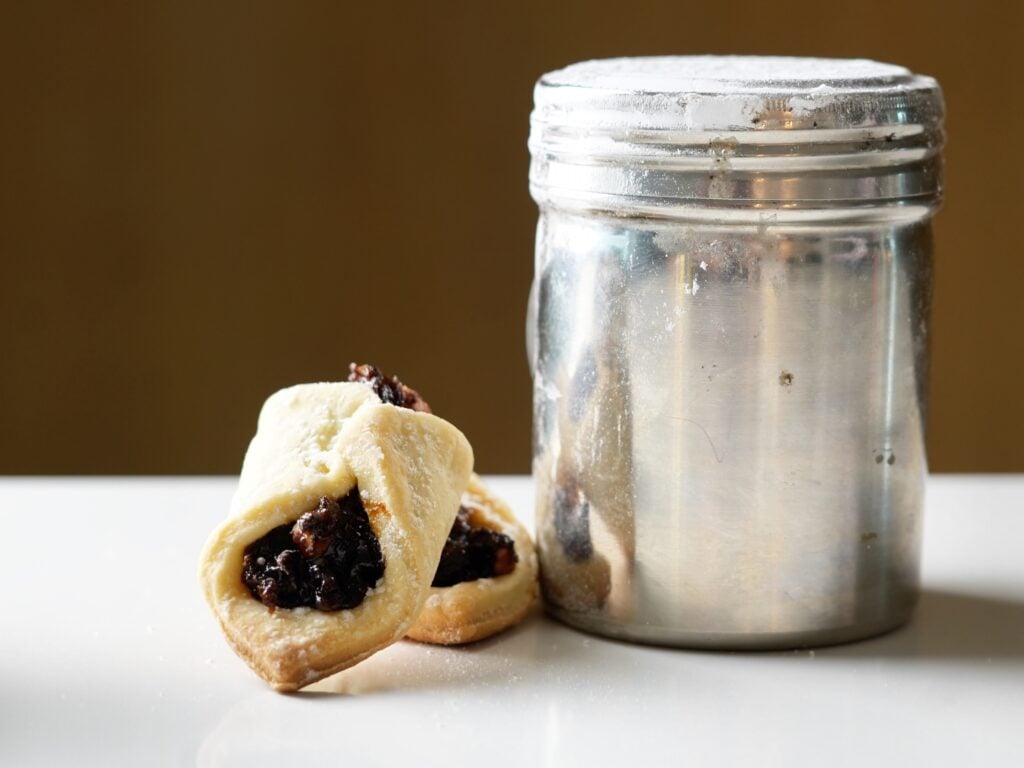
Is Lekvar the Same as Jam?
Lekvar is similar to jam, but it is usually thicker. That thickness matters for cookies.
Jam can be loose and runny, especially once it heats in the oven. Lekvar is cooked down into more of a thick fruit paste or fruit butter. That helps it stay inside the dough instead of leaking onto the cookie sheet.
If you only have preserves or jam, you can still use them, but choose a thick one. If it looks too loose, cook it down for a few minutes or stir in finely chopped dried fruit to make it thicker.
Is Prune Butter the Same as Lekvar?
Prune butter and prune lekvar are very similar. Both are thick prune-based fruit spreads used in baking.
Some families call it prune butter, some call it lekvar, and some just call it prune filling. For these kiffles, the name matters less than the texture. You want a thick filling that can be spooned into the center of the dough without running.
Plum butter is also close to lekvar and can work well in this recipe.
Are Kiffles and Kolaches the Same?
They are similar, but the names can vary by family and region. Kiffles usually refer to small filled cookies or pastries made with a tender dough and sweet filling.
Kolaches or kolacky can also refer to filled pastries, and in American holiday baking, people often use the names loosely. You may see these called Hungarian kiffles, kolache cookies, lekvar cookies, prune filled cookies, or cream cheese filled cookies.
No matter what your family calls them, the idea is the same: thin dough, thick filling, folded corners, and a powdered sugar finish after baking.
What Does Kifli Mean?
Kifli is a Hungarian word often used for crescent-shaped rolls or pastries. In American family baking, kiffles are usually small filled cookies made with a rich dough and a sweet filling.
Some families fold them into crescent shapes. Others cut squares and fold opposite corners over the filling. This family recipe uses the folded square style.
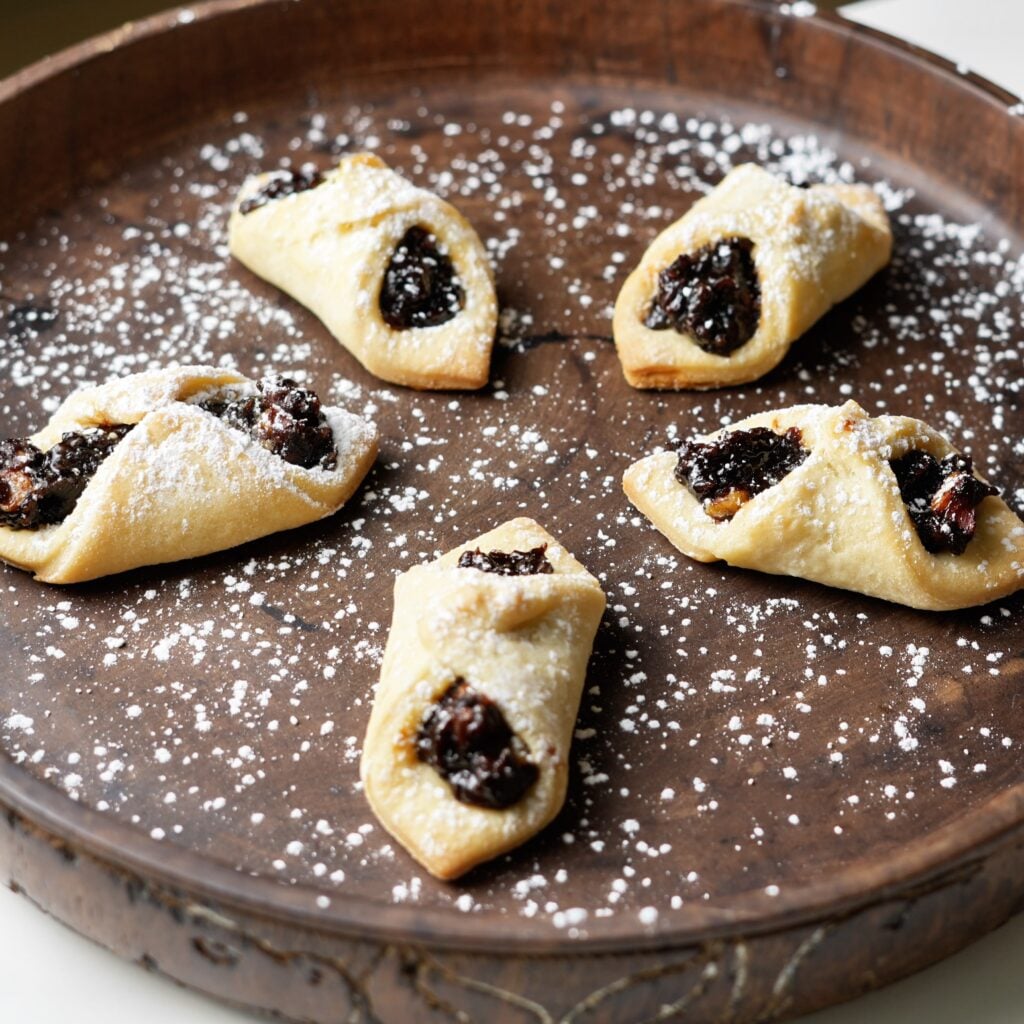
Sour Cream Dough vs Cream Cheese Dough
Many Hungarian kiffle recipes use cream cheese dough made with butter, cream cheese, flour, and salt. This recipe is different because it uses sour cream instead of cream cheese.
The sour cream keeps the dough tender and gives it a softer bite. It also makes the dough easy to roll once it has chilled in the refrigerator.
Cream cheese dough can be flakier, while sour cream dough is a little more tender and old-fashioned. Both versions work, but this is the version from my great-grandmother's recipe card.
The Cold Dough Strategy
The biggest trick with these cookies is keeping the dough cold enough to handle.
This is a butter and sour cream dough, so it softens as it sits at room temperature. If the dough gets too warm, it becomes harder to roll, harder to cut, and much harder to fold around the filling.
Wrap the dough in plastic wrap and chill it before rolling. Work with one piece of dough at a time and keep the rest in the refrigerator. If your kitchen is warm or the dough starts sticking, put it back in the fridge for 10 to 15 minutes before continuing.
You want the dough soft enough to fold, but not so soft that it stretches, tears, or sticks to the rolling pin.
The Thick Lekvar Filling Strategy
The filling needs to be thick. Thin jam or runny preserves will leak out of the cookies while they bake.
For my version, I cooked dates with water, a little vinegar, and honey until the mixture softened and thickened. It took about 5 to 10 minutes.
Once the fruit is soft, mash or blend it into a thick paste. Let it cool before filling the cookies. Warm filling can soften the dough and make the cookies open in the oven.
If you use store-bought lekvar, choose one that is thick and spoonable, not loose or runny.
Why You'll Love This Recipe
- Vintage Family Recipe: This comes from my great-grandmother's handwritten recipe for filled cookies with lekvar and nuts.
- Classic Hungarian Cookie Style: These fit the same holiday cookie family as kiffles, kolacky, and prune filled cookies.
- Tender Sour Cream Dough: The butter and sour cream make a soft dough that bakes up tender.
- Thick Fruit Filling: Lekvar gives each cookie a jammy center that does not run like thin jam.
- Nutty Center: Chopped nuts add texture and balance the sweetness of the filling.
- Christmas Cookie Tray Ready: These look beautiful with a sprinkle of powdered sugar.
- Make-Ahead Friendly: The dough and filling can both be made ahead.
What Makes Filled Cookies with Lekvar and Nuts Special?
These cookies sit somewhere between a cookie and a tiny pastry. The dough is not a standard sugar cookie dough. It is softer, richer, and more tender because of the butter and sour cream.
The filling is what makes them memorable. Thick lekvar adds sweetness and chew, while the nuts give the center a little texture.
They look simple, but the finished cookie feels old-fashioned and special. This is the kind of recipe that makes sense on a holiday table because it takes a little time and feels like something passed down.
Key Equipment
Rolling Pin: Helps roll the dough evenly before cutting it into squares.
Sharp Knife or Pastry Cutter: Use this to cut clean 2.5-inch squares.
Baking Sheets: Standard baking sheets work well for these cookies.
Parchment Paper: Helps prevent sticking and makes cleanup easier.
Small Saucepan: Used for cooking homemade lekvar-style filling.
Pastry Brush: Helpful for brushing egg white onto the dough so the folded edges stay closed.
Plastic Wrap: Needed for wrapping the dough before chilling in the refrigerator.
Wire Rack: Lets the cookies cool fully before adding powdered sugar.
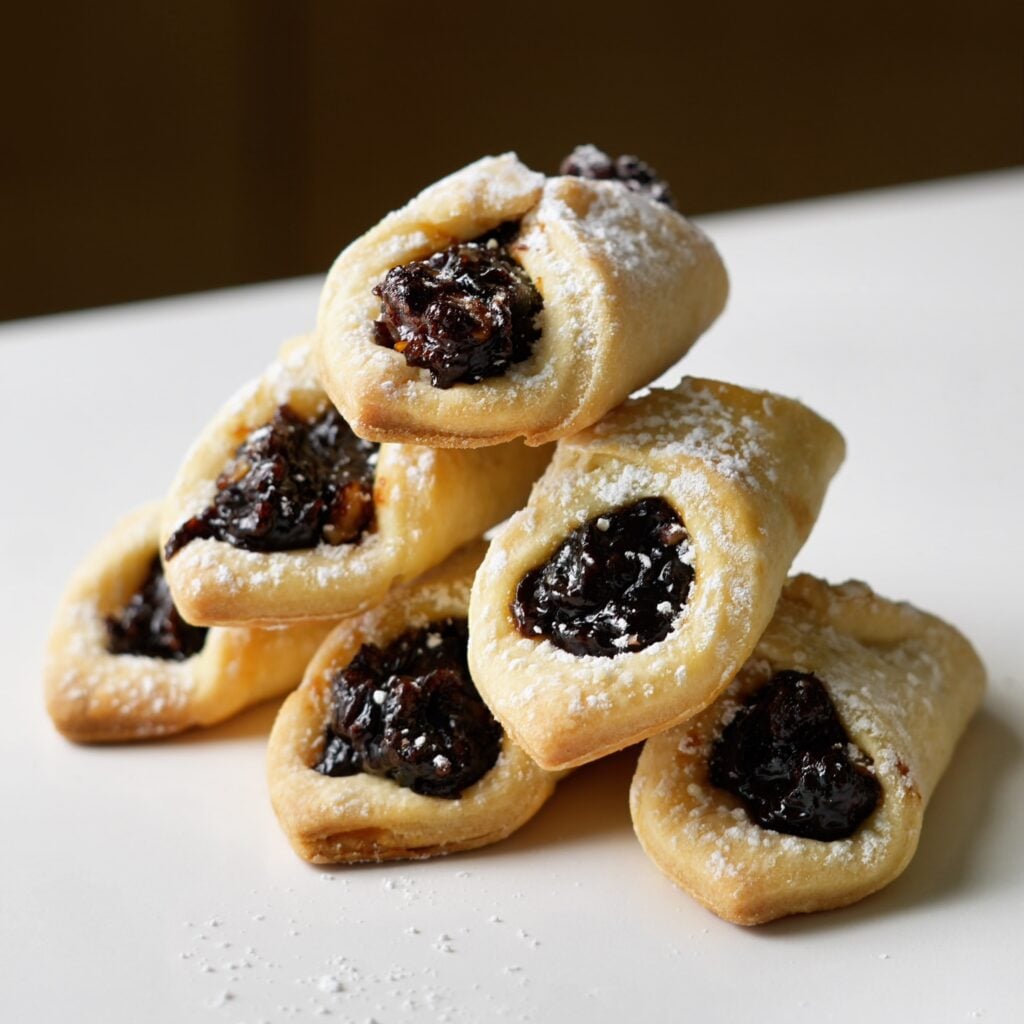
Ingredient Deep Dive & Strategy
All-Purpose Flour: Forms the base of the dough and gives the cookies structure.
Butter: Adds richness and tenderness. The butter also means the dough needs to stay chilled while you work.
Sugar: Adds a little sweetness to the dough without making it overly sweet.
Salt: Balances the butter and the sweet fruit filling.
Baking Powder: Gives the dough a little lift so the cookies bake tender instead of heavy.
Sour Cream: Adds moisture and gives the cookie dough its soft, old-fashioned texture.
Lekvar Filling: The thick fruit center. Traditional lekvar is usually prune or plum, but a thick date filling also works.
Nuts: Add texture and help balance the sweetness of the fruit filling.
Egg White: Not in the original card, but useful for sealing. A light brush helps the folded corners stay closed while baking.
Powdered Sugar: Optional, but classic. Sprinkle it on after the cookies cool.
Filled Cookies with Lekvar and Nuts Step-by-Step Instructions
1. Make the lekvar filling
Add the dates and water to a small saucepan. Add a splash of vinegar and honey to taste.
Cook over medium heat for 5 to 10 minutes, stirring often, until the dates soften and the mixture thickens.
Mash or blend into a thick paste, then let the filling cool completely before using.
Pro Tip: The filling should be thick, not runny. If it looks loose, cook it a few minutes longer.
2. Make the dough
In a large bowl, combine the flour, butter, sugar, salt, baking powder, and sour cream.
Mix until a soft dough forms.
Wrap the dough in plastic wrap and chill it in the refrigerator until firm enough to roll.
3. Roll the dough
On a lightly floured surface, roll the dough to about 1/8 to 1/4 inch thick.
Cut into squares about 2.5 inches wide.
Pro Tip: Work with one section of dough at a time. Keep the rest chilled so it does not get too soft.
4. Fill the cookies
Add a small spoonful of cooled lekvar filling to the center of each square.
Add a small amount of chopped nuts over the filling.
Do not overfill. Too much filling makes the cookies harder to close and more likely to leak.
5. Fold the opposite corners
Brush a little egg white on the corners you plan to fold.
Fold two opposite corners over the filling so the edges meet or overlap slightly. Press firmly to seal.
Pro Tip: The egg white helps act like glue. This is especially helpful with kiffles that like to open while baking.
6. Bake
Place the cookies on parchment-lined baking sheets.
Bake at 350°F for about 20 minutes, or until the cookies are set and lightly golden.
7. Cool and finish
Let the cookies cool on the baking sheet for a few minutes, then move them to a wire rack.
Once fully cooled, sprinkle with powdered sugar if you want the classic holiday look.
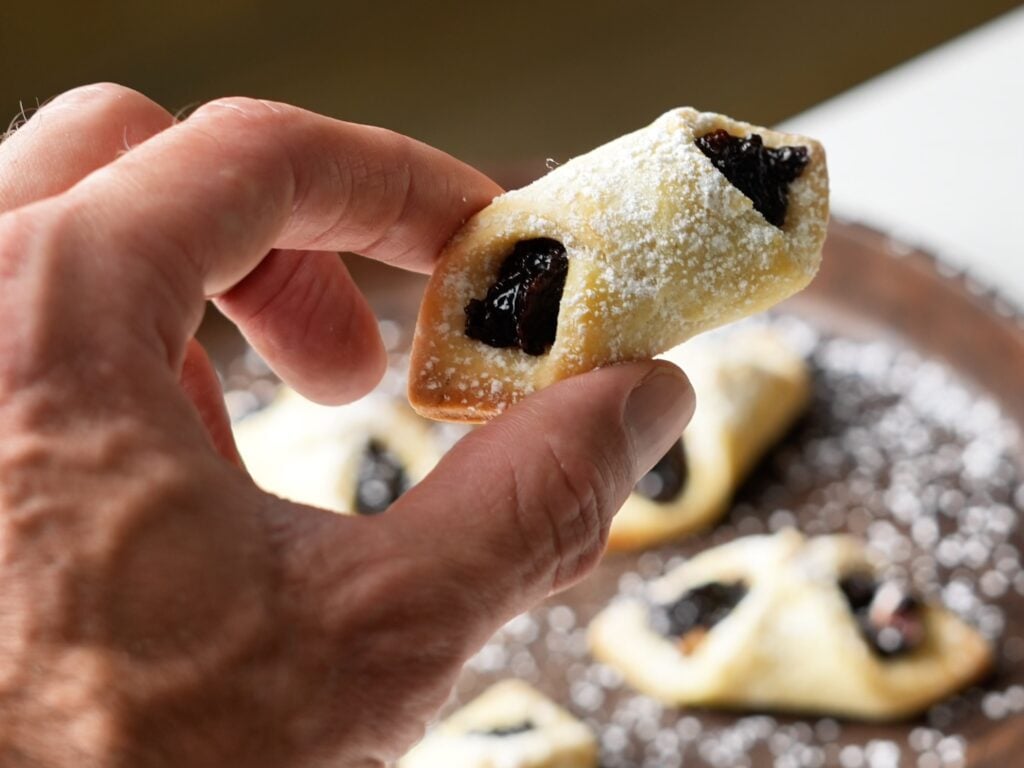
How To Keep Kiffles From Opening While Baking
The most common problem with kiffles is that the opposite corners open while the cookies bake. This usually happens because the dough is too warm, the filling is too loose, or there is too much filling in the center.
Here is what helped me:
- Keep the dough chilled until you are ready to roll it.
- Work with one small section of dough at a time.
- Roll the dough on a lightly floured surface.
- Cut the dough into 2.5-inch squares.
- Use thick lekvar or prune filling, not runny jam.
- Do not overfill the center.
- Brush the corners with egg white before folding.
- Fold the opposite corners over the filling so they touch or slightly overlap.
- Press the seam firmly.
- Place the cookies on parchment-lined baking sheets.
- Chill the shaped cookies for 10 minutes if the dough feels soft before baking.
The egg white wash made a big difference for me. It works like glue and helps the folded corners stay together as the cookies bake.
A few opened cookies are normal with this style of vintage cookie, but cold dough, thick filling, and a firm seal make a big difference.
Powdered Sugar Finish
Powdered sugar is optional, but it gives these cookies the classic Christmas cookie look.
Wait until the cookies are completely cool before dusting them. If you add powdered sugar while the cookies are warm, it can melt into the dough and disappear.
If you are storing or freezing the cookies, wait to sprinkle powdered sugar until right before serving.
Troubleshooting & FAQ
What exactly is lekvar?
Lekvar is a thick fruit filling most often made from prunes or plums. It is commonly used in Hungarian kiffles, kolacky, prune filled cookies, and other old-fashioned pastries.
What is lekvar made of?
Traditional lekvar is usually made from cooked prunes or plums. Some versions include sugar, lemon juice, honey, or spices. For this recipe, I made a date-style lekvar with dates, water, vinegar, and honey.
What does lekvar mean?
Lekvar refers to a thick fruit preserve or fruit butter. In Hungarian and Eastern European baking, it is often used as a filling for cookies and pastries.
What does lekvar taste like?
Prune lekvar tastes sweet, deep, and fruity, almost like a thick plum jam. Date lekvar tastes sweeter and more caramel-like. Both work well with nuts in filled cookies.
Is lekvar the same as jam?
Not exactly. Lekvar is usually thicker than jam. That matters because thin jam can leak out of filled cookies while they bake.
Is prune butter the same as lekvar?
Prune butter and prune lekvar are very similar. Both are thick prune-based fillings. Either can work in kiffles as long as the texture is thick and spoonable.
Is plum butter the same as lekvar?
Plum butter is very close to lekvar. Traditional lekvar is often made with plums or prunes cooked down into a thick fruit spread.
Can I use preserves instead of lekvar?
Yes, but use thick preserves. Thin preserves or loose jam can run out of the cookies in the oven. If your preserves are too thin, cook them down first or mix in finely chopped dried fruit to thicken them.
What is a good substitute for jam?
For filled cookies, the best substitute is a thick fruit butter, lekvar, prune filling, date filling, apricot filling, or thick preserves. The goal is to use something thick enough to stay inside the dough while baking.
What are Hungarian kiffles?
Hungarian kiffles are small filled cookies or pastries made with a tender dough and sweet filling. They are often filled with prune lekvar, apricot preserves, walnut filling, poppy seed filling, or other thick fruit fillings.
What nationality are kiffles?
Kiffles are strongly associated with Hungarian and Eastern European baking traditions, though many American families know them through old Christmas cookie trays, church cookbooks, and family recipe cards.
Are kolacky and kiffles the same?
They are very similar, and many families use the names differently. Both usually refer to small filled cookies or pastries made with tender dough and fruit or nut filling.
What does kifli mean in Hungarian?
Kifli generally refers to a crescent-shaped pastry or roll. In American holiday baking, kiffles often refer to small filled cookies made with a rich dough and sweet filling.
What is a kuffle?
“Kuffle” is usually a misspelling or mishearing of kiffle. The cookie is more commonly spelled kiffle, kifli, kiflie, or kiffles.
Is kerfuffle related to kiffles?
No. Kerfuffle is a separate English word that means a fuss or commotion. It is not related to kiffle cookies, even though search engines sometimes confuse the words.
Is lekvar vegan friendly?
Lekvar itself is usually fruit-based and can be vegan if it is made only with fruit, water, sugar, lemon juice, or spices. This cookie recipe is not vegan because the dough uses butter, sour cream, and an egg white wash.
Which jam is good for diabetics?
That depends on the person's nutrition plan. For baking, a lower-sugar or no-sugar-added preserve may be an option, but these cookies still contain flour, butter, sour cream, and sweet filling. If you are managing diabetes or blood sugar, use your own nutrition plan or ask your medical provider.
Is jam good for heart patients?
That depends on the person's overall diet and medical needs. Jam and fruit fillings can contain sugar, and these cookies also contain butter and flour. If you are following a heart-health plan, check with your medical provider or dietitian.
How long does lekvar last?
Homemade lekvar can usually be kept in the refrigerator for several days in an airtight container. For longer storage, freeze it. Store-bought lekvar should be stored according to the package directions.
Can you freeze lekvar?
Yes. Lekvar freezes well. Store it in a freezer-safe container, thaw it in the refrigerator, and stir before using.
How long do kiffles stay fresh?
Kiffles are best within 2 to 3 days at room temperature or up to 5 days in the refrigerator. Store them in an airtight container with parchment or wax paper between layers.
How do you store kiffles?
Let the cookies cool completely, then layer them in an airtight container. If adding powdered sugar, wait until right before serving so it does not melt into the cookies.
Can you freeze kiffles?
Yes. Freeze cooled kiffles in a single layer first, then move them to a freezer-safe container with parchment between layers. Dust with powdered sugar after thawing.
What happens if you do not refrigerate cookie dough?
The dough can become soft, sticky, and harder to roll. Chilling helps the butter firm up, which makes the dough easier to cut, fill, and fold.
How long can pastry dough stay out of the fridge?
Only keep out the portion you are actively rolling. If the dough starts sticking or stretching, put it back in the refrigerator for 10 to 15 minutes before continuing.
Substitutions & Variations
| Component | Swap Options |
|---|---|
| Butter | Margarine, though butter gives the best flavor |
| Sour Cream | Full-fat Greek yogurt, though texture may change |
| Lekvar Filling | Prune lekvar, plum butter, apricot filling, or date filling |
| Dates | Prunes if you want a more traditional prune filling |
| Nuts | Walnuts, pecans, or finely chopped almonds |
| Egg White Seal | Water or milk, though egg white holds better |
| Powdered Sugar | Skip it or use a light dusting right before serving |
| Shape | Folded squares, half-moons, or small pastry pockets |
Storage & Freezing
Store filled cookies in an airtight container at room temperature for 2 to 3 days, or in the refrigerator for up to 5 days.
If dusting with powdered sugar, add it right before serving for the cleanest look.
To freeze, place cooled cookies in a single layer until firm, then transfer to a freezer-safe container with parchment between layers. Freeze for up to 2 months.
Let frozen cookies thaw at room temperature before serving.
You Might Also Like
If you love vintage holiday cookies, these are worth making next:
- Old-Fashioned Raisin Filled Cookies
- Grandmas Sand Tarts Pa Dutch Style
- Vintage Italian Wedding Cookies
The Final Verdict & Share
These filled cookies with lekvar and nuts are tender, old-fashioned, and straight from my great-grandmother's recipe card. The sour cream butter dough wraps around a thick fruit-and-nut filling, and the egg white seal helps keep the folded cookies together. Make them once for your Christmas cookie tray, sprinkle them with powdered sugar, and tag me if you try them.
Tools I Use for This Recipe

Suggested Amazon Basics French Rolling Pin
A tapered rolling pin helps roll the chilled dough evenly without bulky handles getting in the way.

Suggested USA Pan Nonstick Half Sheet Pan
Provides plenty of space for arranging the filled cookies with room between them for even baking.

Suggested MMmat Half-Sheet Silicone Baking Mats
A reusable nonstick surface helps release the delicate filled cookies cleanly after baking.
This post contains affiliate links. As an Amazon Associate, I earn from qualifying purchases.
BAKE THIS NEXT
Filled Cookies with Lekvar and Nuts
Ingredients
- 3 cups all-purpose flour
- 1/2 pound butter
- 3 tablespoons sugar
- 1 teaspoon salt
- 1 teaspoon baking powder
- 1/2 pint sour cream
- 1 pound dates For Homemade Date Lekvar-Style Filling
- 1 cup water For Homemade Date Lekvar-Style Filling
- 1 splash vinegar For Homemade Date Lekvar-Style Filling
- to taste honey For Homemade Date Lekvar-Style Filling
- finely chopped nuts
- 1 egg white lightly beaten
- powdered sugar for serving
Method
- Make the filling first. Add dates, water, vinegar, and honey to a saucepan. Cook over medium heat for 5 to 10 minutes, stirring often, until thick and soft. Mash or blend into a thick paste, then cool completely.
- Make the dough by mixing flour, butter, sugar, salt, baking powder, and sour cream until a soft dough forms.
- Wrap the dough in plastic wrap and chill in the refrigerator until firm enough to roll.
- Roll dough on a lightly floured surface to 1/8 to 1/4 inch thick.
- Cut into roughly 2.5-inch squares.
- Add a small spoonful of cooled lekvar filling and chopped nuts to the center of each square.
- Brush the folding corners with egg white.
- Fold two opposite corners over the filling so the edges meet or overlap. Press firmly to seal.
- Place on parchment-lined baking sheets.
- Bake at 350°F for about 20 minutes, or until set and lightly golden.
- Cool completely before serving.
- Sprinkle with powdered sugar right before serving if desired.