
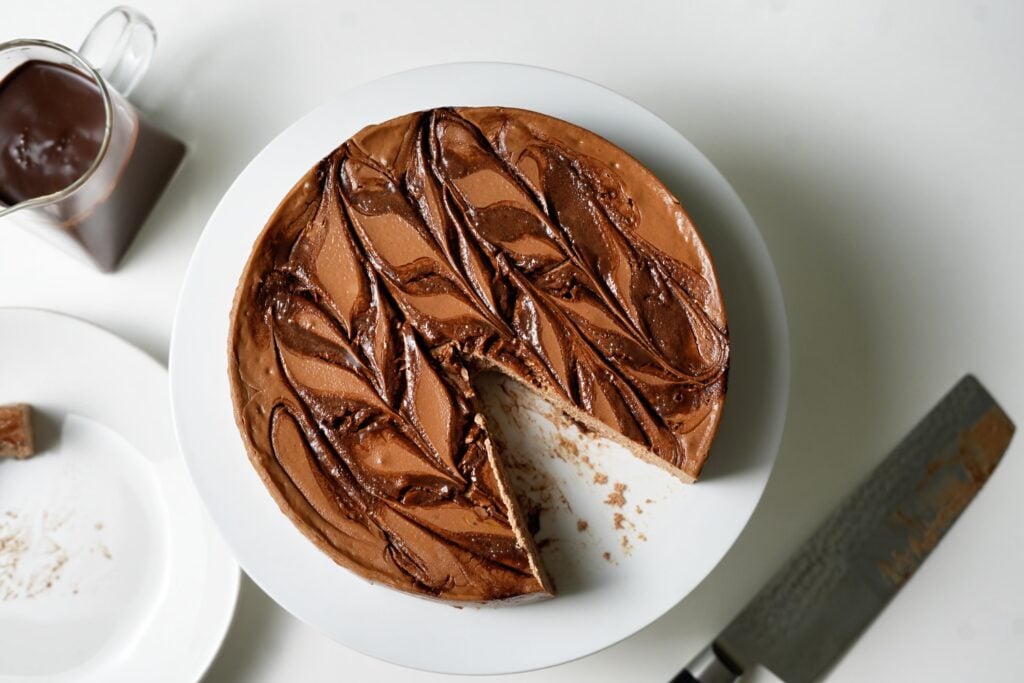
This double chocolate high protein cheesecake is rich, creamy, and made with low-fat cream cheese, blended cottage cheese, large eggs, chocolate protein powder, cocoa powder, sweetener, and a chocolate frosting swirl.
It has the texture of a baked chocolate cheesecake, but with more protein and lighter ingredients than a traditional version made with heavy cream, full-fat cream cheese, and a sugar-heavy crust.
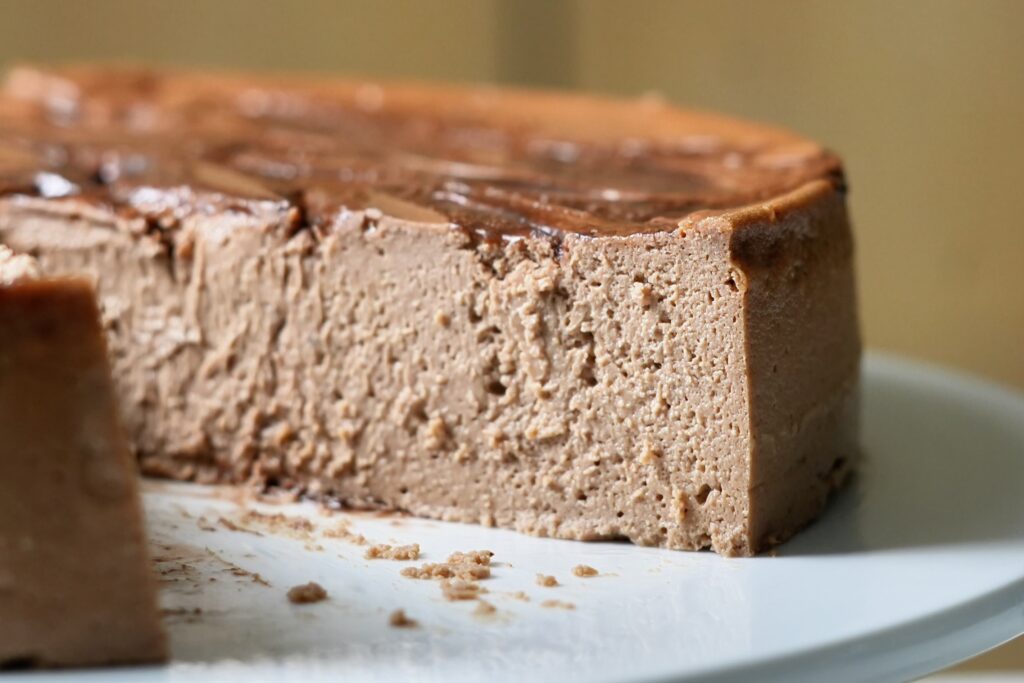
I tested this recipe two ways because protein cheesecake can go dry, grainy, or rubbery if the batter is not blended well. The first batch had a few small curds because the cottage cheese was not fully smooth. The better version came from blending the cottage cheese with the cream cheese until the cheesecake filling looked completely silky before baking.
The batter may look thinner than a classic cheesecake filling when you pour it into the pan, but that is normal. Once it bakes, cools slowly in the oven, and chills in the fridge, it sets into a dense chocolate cheesecake that slices cleanly.
Each slice has about 278 calories and 20g of protein, depending on your exact ingredients.
If you like high-protein cheesecake recipes, try these next:
- Single Serve Oreo Cottage Cheese Cheesecake
- High Protein Peanut Butter Cheesecake
- Guava Cranberry Cheesecake
Why You'll Love This Recipe
- Rich Chocolate Cheesecake Flavor: Cocoa powder and chocolate protein powder give the filling a deep chocolate taste.
- High Protein: Cottage cheese, cream cheese, eggs, and protein powder bring the protein up.
- Creamy Texture: Blended cottage cheese helps keep the cheesecake filling smooth.
- No Heavy Cream Needed: You still get a creamy cheesecake texture without using heavy cream.
- No Water Bath: The slow cooling method helps the cheesecake set without extra steps.
- Easy To Slice: Once chilled, it cuts into clean slices for meal prep or dessert.
- Optional Crust: Keep it crustless or add an almond flour crust if you want more of a classic cheesecake base.
Ingredients You Need
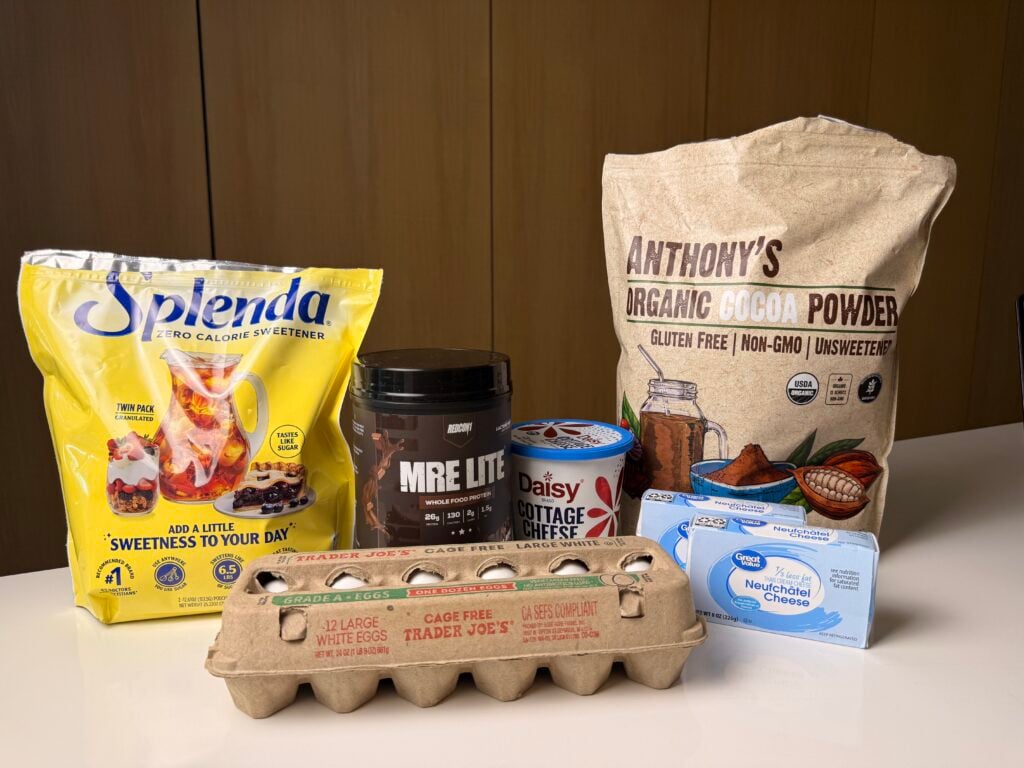
Low-Fat Cream Cheese: Cream cheese gives this chocolate cheesecake its classic tang and structure. I recommend block-style cream cheese instead of tub-style spread because it creates a thicker filling.
Fat-Free Cottage Cheese: Cottage cheese adds protein and creaminess. It needs to be blended until completely smooth so the finished cheesecake is not grainy.
Large Eggs: Eggs help the cheesecake set in the oven. This recipe uses 4 large eggs to hold the filling together while keeping the center creamy.
Granulated Sweetener: Splenda, monk fruit blends, erythritol, allulose, or regular sugar can work. Use the sweetener you prefer.
Chocolate Protein Powder: This adds protein and chocolate flavor. A whey/casein blend usually works best in baked protein desserts, but use a chocolate protein powder you like.
Cocoa Powder: Cocoa powder deepens the chocolate flavor so the cheesecake tastes more like a real chocolate dessert.
Salt: A small pinch balances the sweetness and makes the chocolate flavor stronger.
Chocolate Frosting: A small amount of melted chocolate frosting gets swirled on top for a glossy double chocolate finish. You can also use melted chocolate chips.
Optional Crust
This recipe is written as a crustless chocolate high protein cheesecake, but you can add a crust if you want a more traditional cheesecake.
A simple almond flour crust would work well:
- 1 cup almond flour
- 2 tablespoons melted light butter or coconut oil
- 1 to 2 tablespoons sweetener
- Pinch of salt
Mix the crust ingredients together, press into the bottom of the springform pan, and bake for 8 to 10 minutes at 325°F before adding the cheesecake filling.
An almond flour crust will add calories and fat, but it also makes the cheesecake feel more like a classic bakery-style slice.
Why This Chocolate Protein Cheesecake Works
This recipe works because it uses both cream cheese and cottage cheese.
Cream cheese gives the cheesecake structure, tang, and a rich texture.
Cottage cheese adds protein and moisture without needing heavy cream. Once blended smooth, it disappears into the cheesecake filling and helps create a creamy texture.
The cocoa powder gives the base a stronger chocolate flavor, while the chocolate protein powder adds sweetness, structure, and protein.
The eggs help the cheesecake bake and set.
The slow cooling step matters too. Instead of pulling the cheesecake straight from the hot oven to the counter, you turn the oven off and let the cheesecake sit inside with the door cracked open. This helps prevent sudden shrinking and cracking.
Tools I Use for This Recipe

Wilton 9-Inch Nonstick Springform Pan
A suggested 9-inch springform pan with removable sides for cleanly releasing this chilled cheesecake.
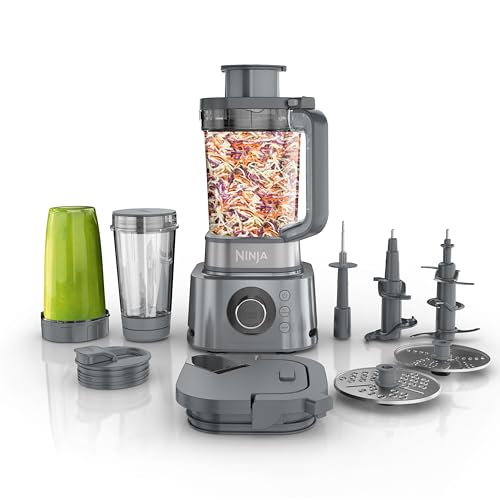
Ninja Foodi Power Blender and Processor System
A suggested high-power processor for blending the cottage-cheese filling completely smooth before baking.

Nutricost Chocolate Whey Protein Concentrate
A budget-friendly suggested chocolate protein powder; texture may vary from the whey-and-casein blend originally used.
This post contains affiliate links. As an Amazon Associate, I earn from qualifying purchases.
How To Make Double Chocolate High Protein Cheesecake
1. Prep the pan
Preheat your oven to 325°F.
Line the bottom of a 9-inch springform pan with parchment paper.
Lightly spray the sides of the pan with nonstick spray.
2. Blend the cheesecake filling
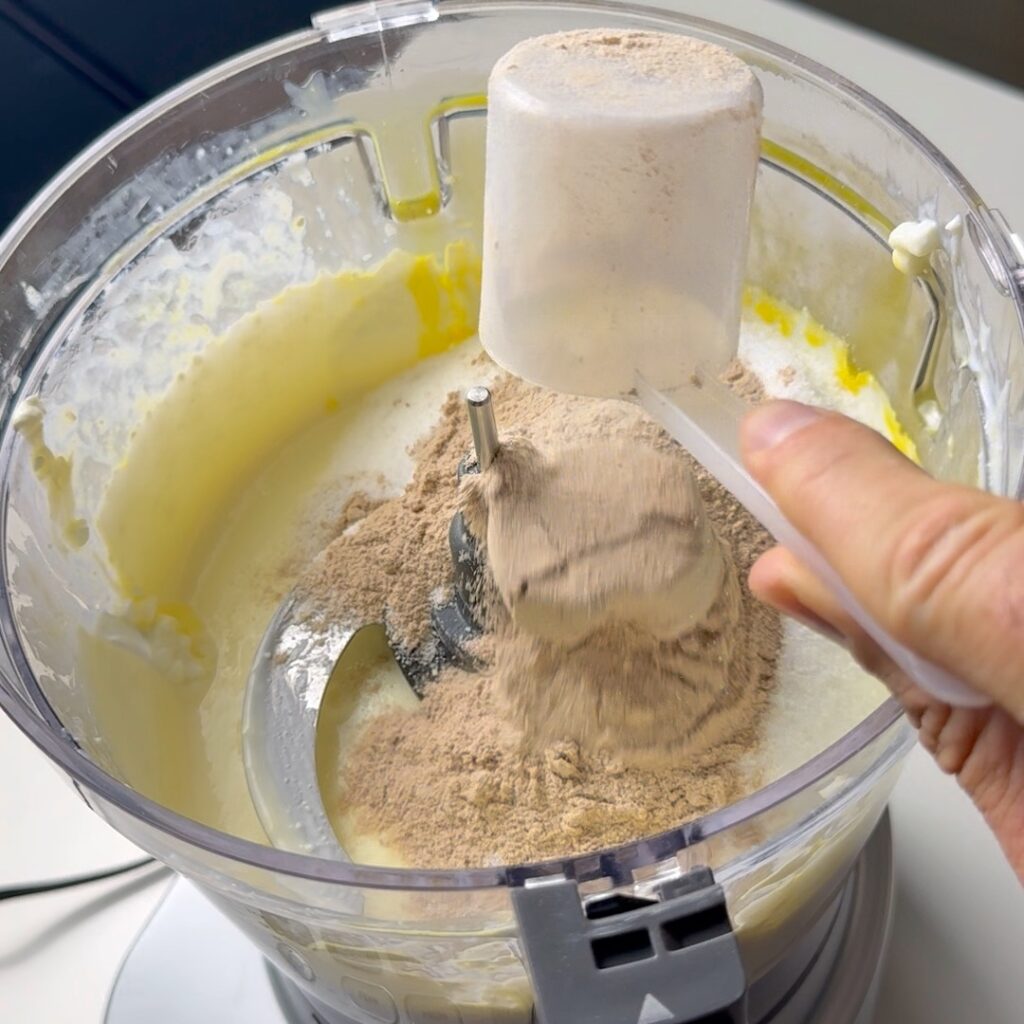
Add the low-fat cream cheese, fat-free cottage cheese, large eggs, sweetener, chocolate protein powder, cocoa powder, and salt to a food processor or high-powered blender.
Blend until the batter is completely smooth.
Stop and scrape down the sides as needed.
There should be no visible cottage cheese curds.
3. Pour into the pan
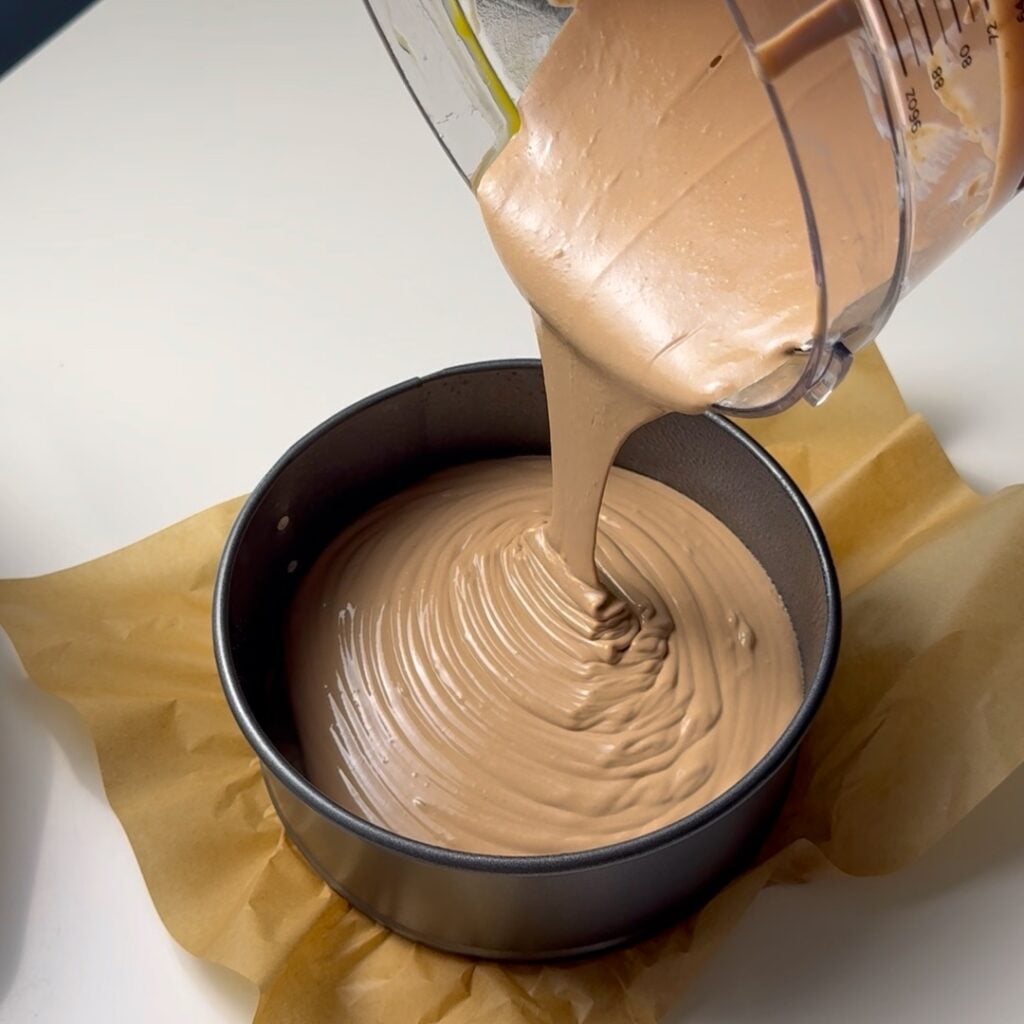
Pour the chocolate cheesecake filling into the prepared springform pan.
Smooth the top with a spatula.
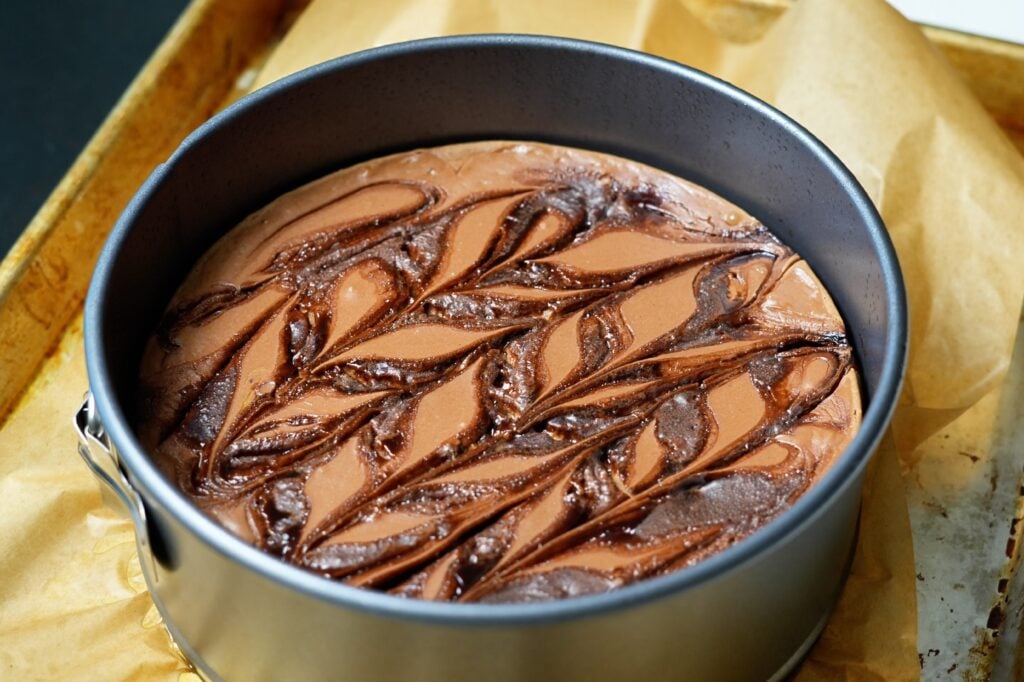
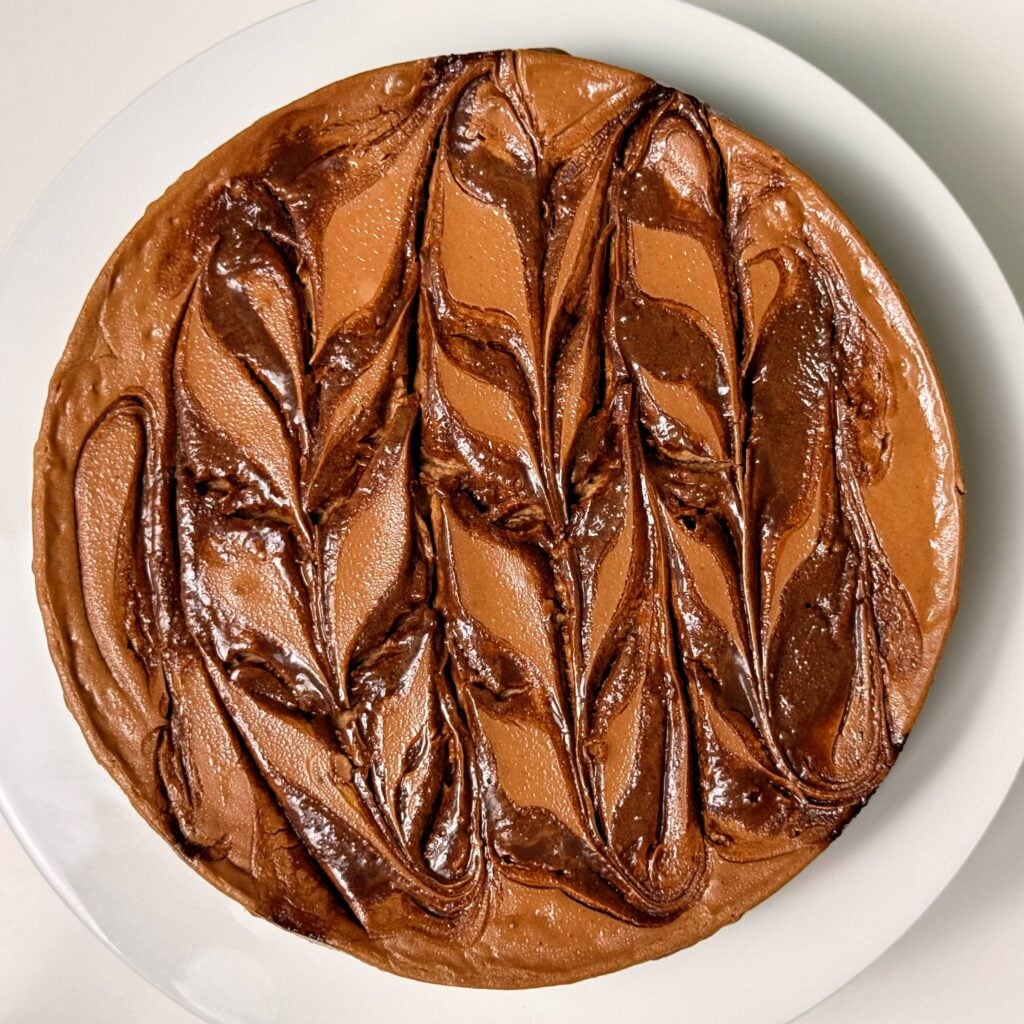
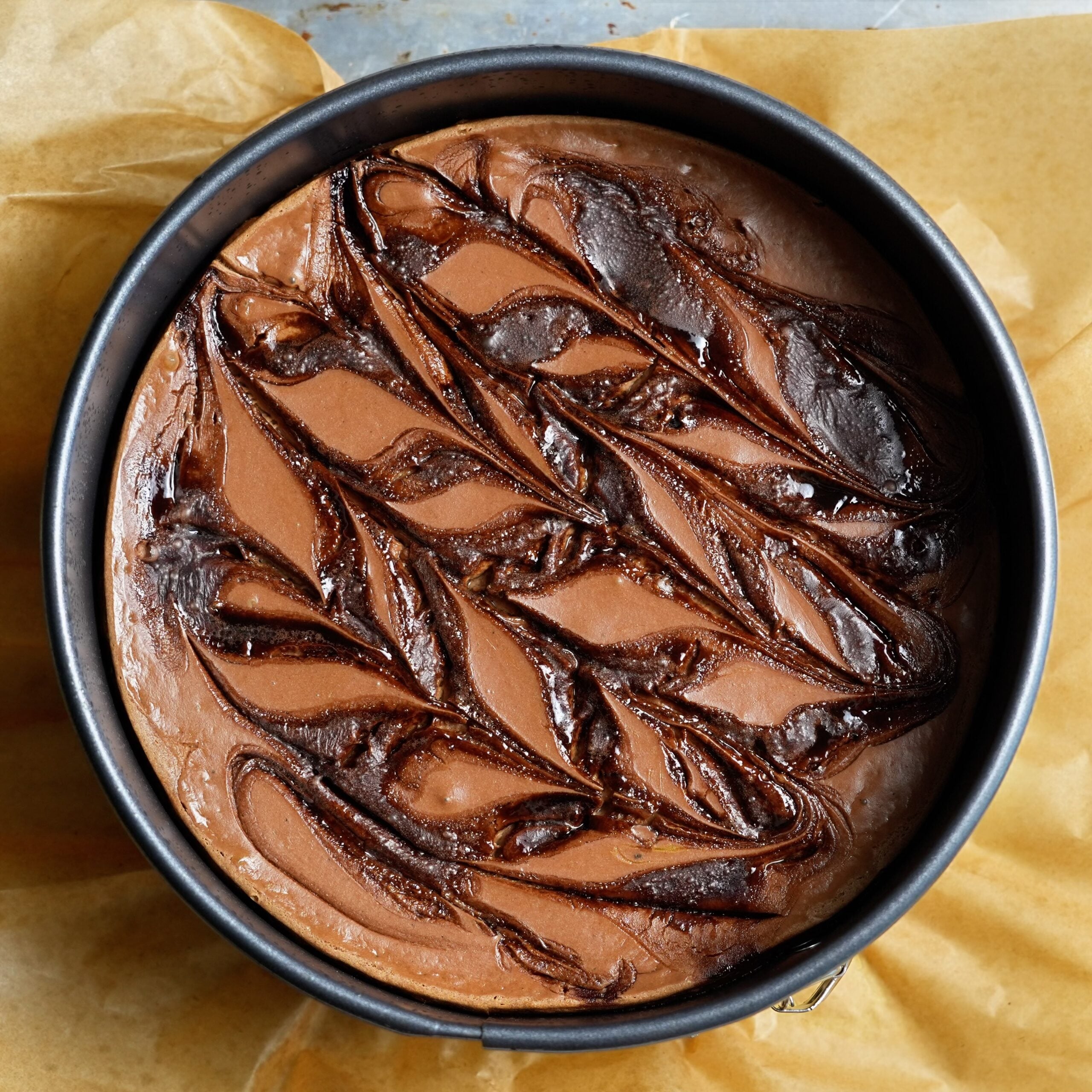
4. Make the chocolate swirl
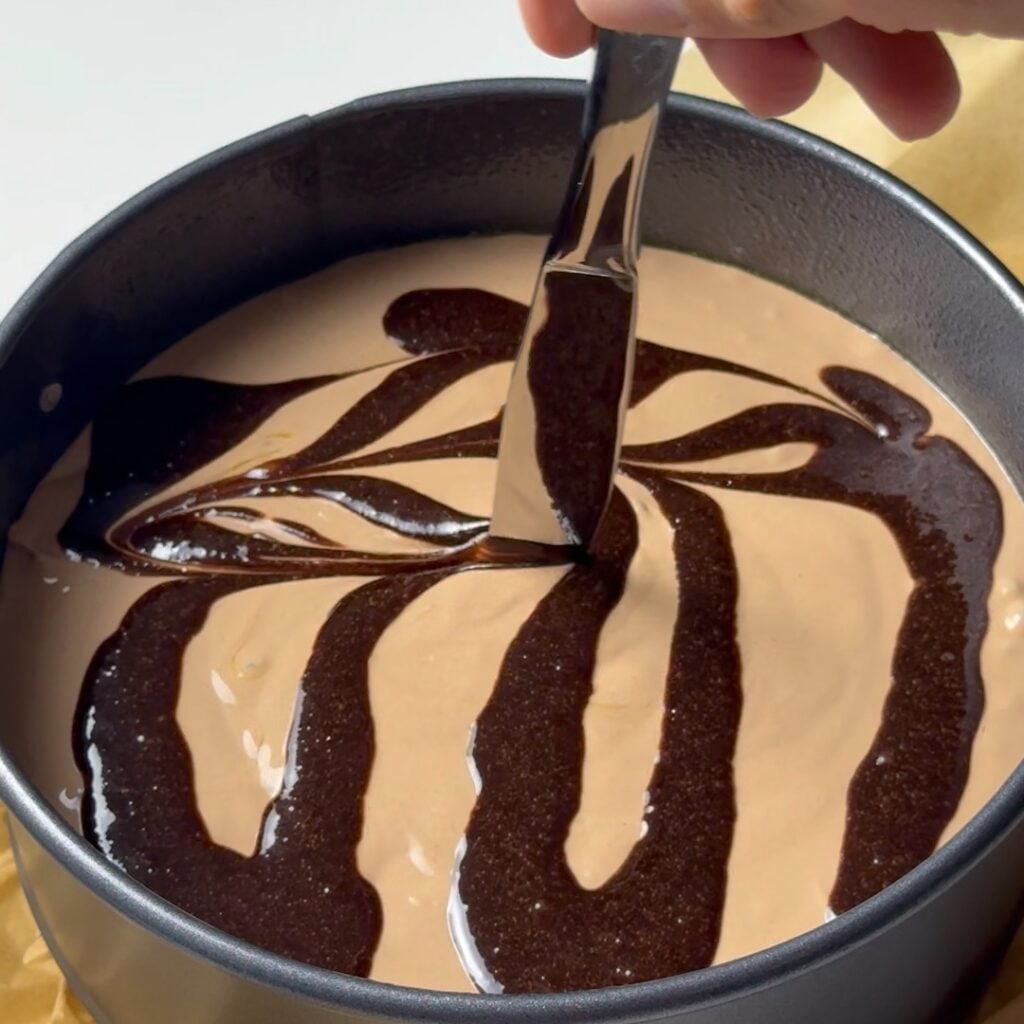
Microwave the chocolate frosting for 10 to 15 seconds, or until pourable.
Drizzle the melted frosting over the cheesecake batter in thin lines.
Use a butter knife to gently swirl the frosting into the top.
Do not overmix the swirl or the pattern will disappear.
5. Bake
Bake at 325°F for 45 to 50 minutes.
The edges should look set, but the center should still have a slight jiggle.
The exact baking time can vary depending on your oven, pan, and how cold your ingredients were.
6. Cool slowly
Turn the oven off.
Crack the oven door open and leave the cheesecake inside for 15 to 20 minutes.
This helps the cheesecake cool gradually and reduces the chance of cracks.
7. Chill in the fridge
Remove the cheesecake from the oven and let it cool at room temperature.
Cover and refrigerate for at least 6 hours, preferably overnight.
Do not slice it warm. The texture is best once fully chilled.
8. Slice and serve
Run a knife around the edge of the pan before releasing the springform.
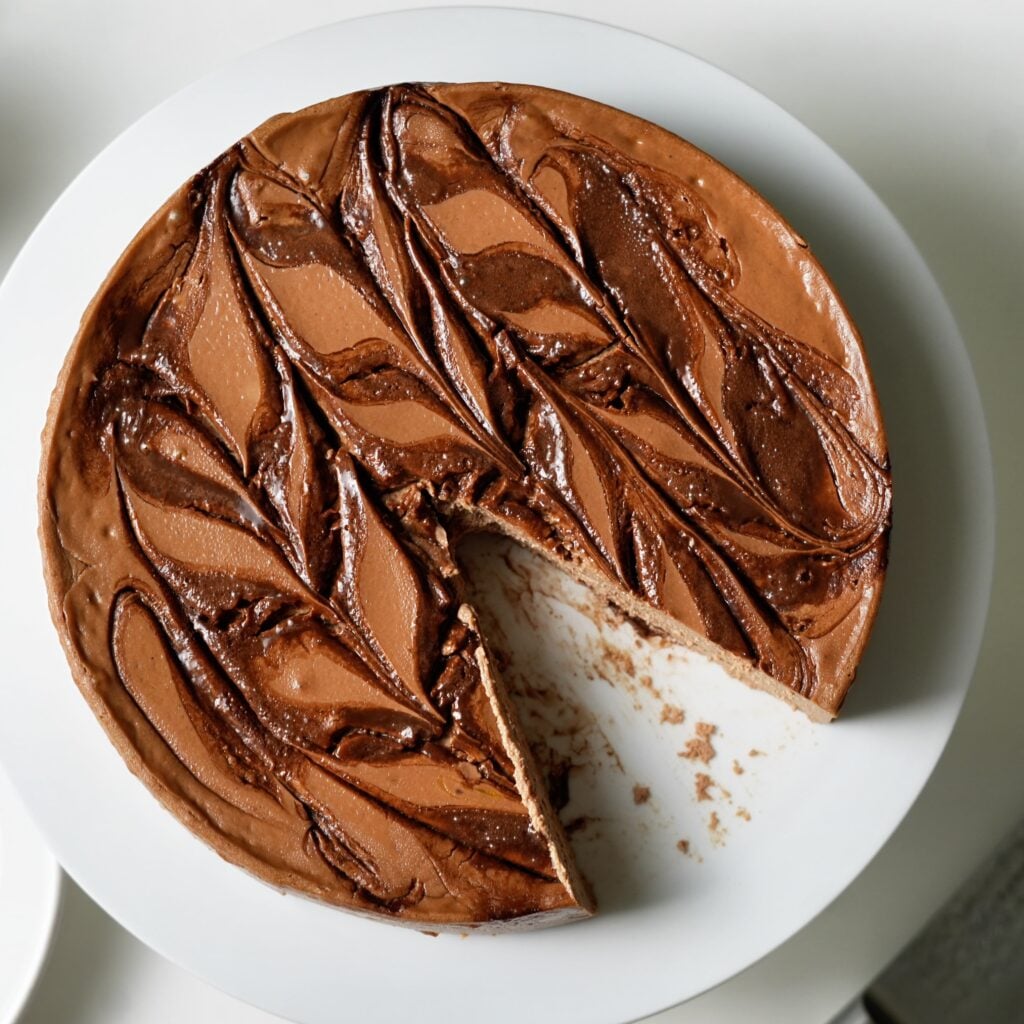
Slice into 8 pieces.
For cleaner slices, wipe the knife between cuts.
Best Baking Tips
Use softened cream cheese so the filling blends smoothly.
Blend the cottage cheese completely before baking.
Do not overbake. The center should still jiggle slightly.
Let the cheesecake cool slowly in the oven.
Chill in the refrigerator for at least 6 hours.
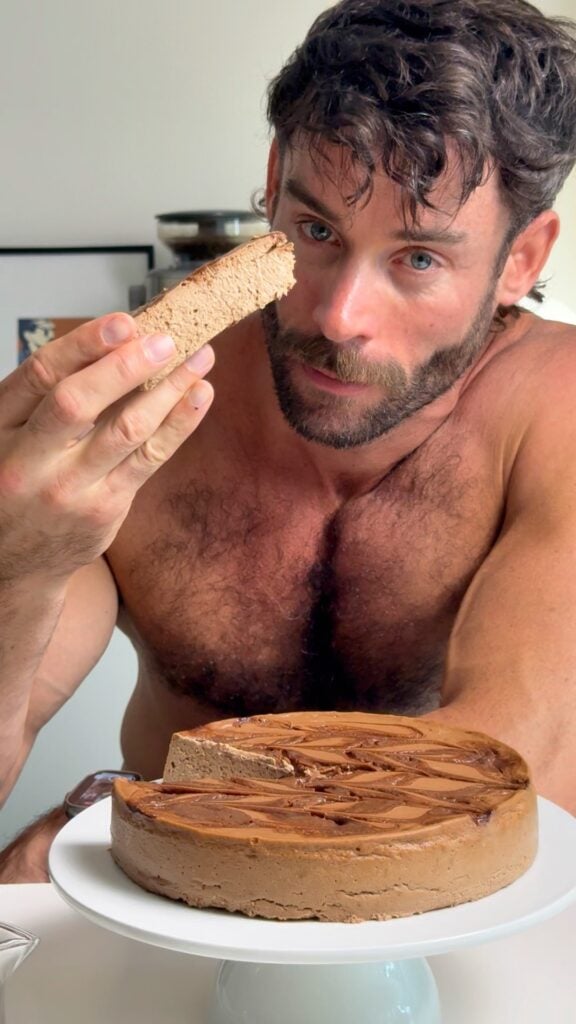
Use a sharp knife for clean slices.
If using an optional crust, bake the crust first before adding the filling.
Low Carb Option
This cheesecake can be made lower carb by using:
- Zero-calorie sweetener
- Sugar-free chocolate frosting
- No crust
- Or an almond flour crust instead of a graham cracker crust
The exact carbs will depend on your cream cheese, cottage cheese, protein powder, frosting, and whether you add a crust.
If you want the lowest carb version, keep it crustless and use a low-carb sweetener and sugar-free frosting.
Troubleshooting & FAQ
Why did my chocolate cheesecake crack?
Cheesecake usually cracks from overbaking or cooling too quickly. Bake until the edges are set and the center still has a slight jiggle, then cool it slowly in the turned-off oven.
Why is my cheesecake grainy?
The cottage cheese was probably not blended long enough. Blend until the batter is completely smooth before pouring it into the pan.
Can I use Greek yogurt instead of cottage cheese?
Yes, but the texture and flavor will change. Greek yogurt adds more tang and may make the cheesecake slightly less creamy. Cottage cheese gives a more neutral flavor once blended.
Can I add Greek yogurt to the filling?
Yes. You can replace part of the cottage cheese with plain Greek yogurt if you want a tangier cheesecake. I would start with replacing 1/2 cup cottage cheese with 1/2 cup Greek yogurt.
Can I use full-fat cream cheese?
Yes. Full-fat cream cheese will make the cheesecake richer and creamier, but the calories and fat will increase.
Can I make this without protein powder?
You can, but it will no longer be as high in protein. You may need to add a little more cocoa powder and sweetener to keep the chocolate flavor balanced.
Can I use vanilla protein powder?
Yes. Use vanilla protein powder and add extra cocoa powder for a stronger chocolate cheesecake flavor.
Can I use regular sugar?
Yes. Regular granulated sugar can replace the zero-calorie sweetener, but the calories and carbs will change.
Can I use honey?
I would not use honey as the main sweetener here because liquid sweeteners can make the batter thinner and change the baking time. A small amount can work for flavor, but granulated sweetener is better for this recipe.
Can I make this with an almond flour crust?
Yes. An almond flour crust works well and keeps the recipe more low carb than a traditional graham cracker crust.
Do I need a water bath?
No. This recipe does not require a water bath. The slow cooling method helps the cheesecake set without one.
How do I know when the cheesecake is done?
The outer edges should look set, and the center should still wobble slightly when the pan is gently moved. It will firm up in the fridge.
How long does it need to chill?
At least 6 hours, but overnight is best. The cheesecake filling needs time in the refrigerator to fully set.
Can I freeze chocolate protein cheesecake?
Yes. Slice the cheesecake, wrap individual slices well, and freeze for up to 2 months. Thaw in the refrigerator overnight.
Substitutions
| Component | Swap Options |
|---|---|
| Low-Fat Cream Cheese | Full-fat cream cheese, reduced-fat cream cheese, or neufchâtel |
| Cottage Cheese | Low-fat cottage cheese, fat-free cottage cheese, or Greek yogurt |
| Sweetener | Splenda, monk fruit blends, erythritol, allulose, or regular sugar |
| Chocolate Protein Powder | Vanilla protein powder plus extra cocoa powder |
| Cocoa Powder | Dark cocoa powder or regular unsweetened cocoa powder |
| Chocolate Frosting | Sugar-free frosting, melted chocolate chips, or ganache |
| Optional Crust | Almond flour crust, graham cracker crust, or no crust |
Storage
Store the cheesecake covered in the refrigerator for up to 5 days.
Keep it in the pan covered with plastic wrap, or slice it and store the pieces in an airtight container.
For longer storage, freeze individual slices for up to 2 months.
Thaw frozen slices in the refrigerator overnight before eating.
This cheesecake is best served cold straight from the fridge.
Nutrition Estimate
This recipe makes 8 slices.
Estimated nutrition per slice:
- Calories: 278
- Protein: 20g
- Fat: 10g
- Carbohydrates: 20g
The exact nutrition will depend on your cream cheese, cottage cheese, protein powder, cocoa powder, sweetener, frosting, and whether you add a crust.
Final Thoughts
This double chocolate high protein cheesecake is rich, creamy, and built for serious chocolate cheesecake cravings.
The cream cheese gives it structure, the cottage cheese keeps it higher in protein, the cocoa powder deepens the chocolate flavor, and the frosting swirl makes it feel like a real dessert.
Bake it gently, cool it slowly, chill it fully, and slice it cold from the fridge for the best texture.
BAKE THIS NEXT
Double Chocolate High-Protein Cheesecake
Ingredients
- 16 oz low-fat cream cheese, softened 2 blocks
- 2 cups fat-free cottage cheese
- 4 large eggs
- 1 cup Splenda or preferred sweetener
- 2 scoops chocolate protein powder whey/casein blend recommended
- 1/4 cup unsweetened cocoa powder
- 1 pinch salt
- 1/4 cup store-bought chocolate frosting
Method
- Preheat the oven to 325°F (175°C). Line the bottom of a 9-inch springform pan with parchment paper and lightly coat the sides with cooking spray.
- Add the cream cheese, cottage cheese, eggs, Splenda, chocolate protein powder, cocoa powder, and salt to a blender or food processor. Blend until completely smooth, scraping down the sides as needed to eliminate all curds.
- Pour the chocolate cheesecake batter into the prepared springform pan.
- Microwave the chocolate frosting for about 10–15 seconds in a microwave-safe bowl, just until warm and pourable.
- Drizzle the melted frosting across the top of the cheesecake in parallel lines. Using the tip of a knife, gently swirl the frosting through the batter to create a marbled pattern.
- Bake for 45–50 minutes, or until the outer edges are set and the very center still has a slight jiggle when shaken.
- Turn the oven off, crack the oven door open about two inches, and leave the cheesecake inside to cool slowly for 15–20 minutes.
- Remove from the oven and cool completely at room temperature before covering and refrigerating for at least 6 hours (preferably overnight) before slicing.
Nutrition
Notes
Double Chocolate High-Protein Cheesecake Tips & Expert Strategy
TEXTURE NOTE: The final cake should be dense, rich, and velvety like a classic NY style cheesecake. Be sure to blend your cottage cheese completely to avoid any grainy texture. SUBSTITUTION WARNING: If you substitute greek yogurt for the cottage cheese, the cheesecake will have a noticeably tangier profile. Also, ensure you use a whey/casein blend protein powder to prevent the cake from drying out. BETTER LATER: Do not rush the chilling step. This cheesecake needs at least 6 hours in the fridge to set completely and achieve its signature clean-slice texture. SERVING TIP: Slice this cake using a warm, clean knife (dipped in hot water and wiped dry between cuts) to get professional-looking bakery slices.Tried this recipe?
Mention or tag @bakedlean!One response to “Double Chocolate High Protein Cheesecake”


Super delicious and really, really easy to make


Leave a Reply