
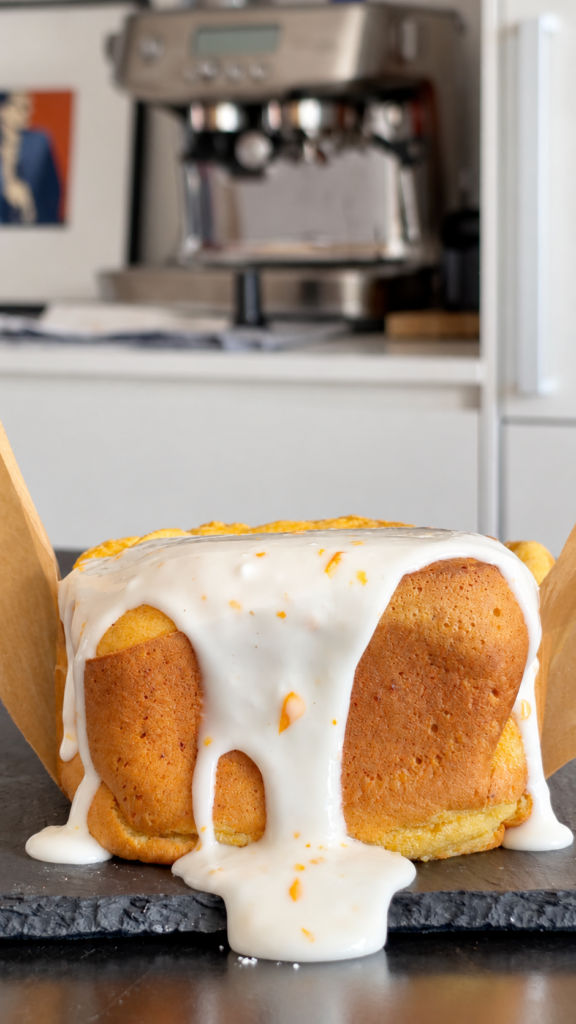
This whole orange blender cake uses the entire orange—juice, flesh, and peel—to create a bold citrus loaf with a soft, moist crumb. The batter comes together in one blender, and vanilla protein powder gives every slice a protein boost without adding oil or butter to the loaf itself.
Use all of the peel for the strongest, marmalade-like flavor, or remove half of the peel for a milder cake. The most important technique is simple: blend the orange with the wet ingredients first, then pulse in the dry ingredients only until the batter is smooth.
Estimated per slice (1 of 10, using sugar-free maple syrup and fat-free milk): 132 calories, 10g protein, 19g carbohydrates, and 2g fat. Exact nutrition varies by ingredient brand and must be calculated from the products used.

Try These Next
- Whole Orange Mini Bundt Cakes for another dessert made with an entire orange.
- High-Protein Orange Cranberry Biscotti for a crisp citrus bake to serve with coffee.
- Whole Orange Creamsicle Coffee for a drinkable whole-orange recipe.
Why You’ll Love This Whole Orange Blender Cake
- One-blender batter: The orange and wet ingredients are processed in the same blender jar.
- Bold orange flavor: Using the fruit and peel creates more citrus flavor than juice alone.
- Higher protein: Protein powder, eggs, and milk help each slice reach an estimated 10 grams of protein.
- No added oil or butter: The orange, eggs, milk, and syrup provide moisture.
- Adjustable bitterness: Use the whole peel for a bold flavor or remove half for a milder loaf.
The Whole-Orange Blender Strategy
The orange goes into the blender with the wet ingredients before the flour and protein powder are added. This order gives the blender enough time to break down the peel, flesh, and membranes.
Once the dry ingredients are added, use short pulses and stop as soon as no dry pockets remain. Overmixing flour and protein powder can make the finished loaf dense or rubbery. If the blender struggles, finish folding the batter with a silicone spatula.
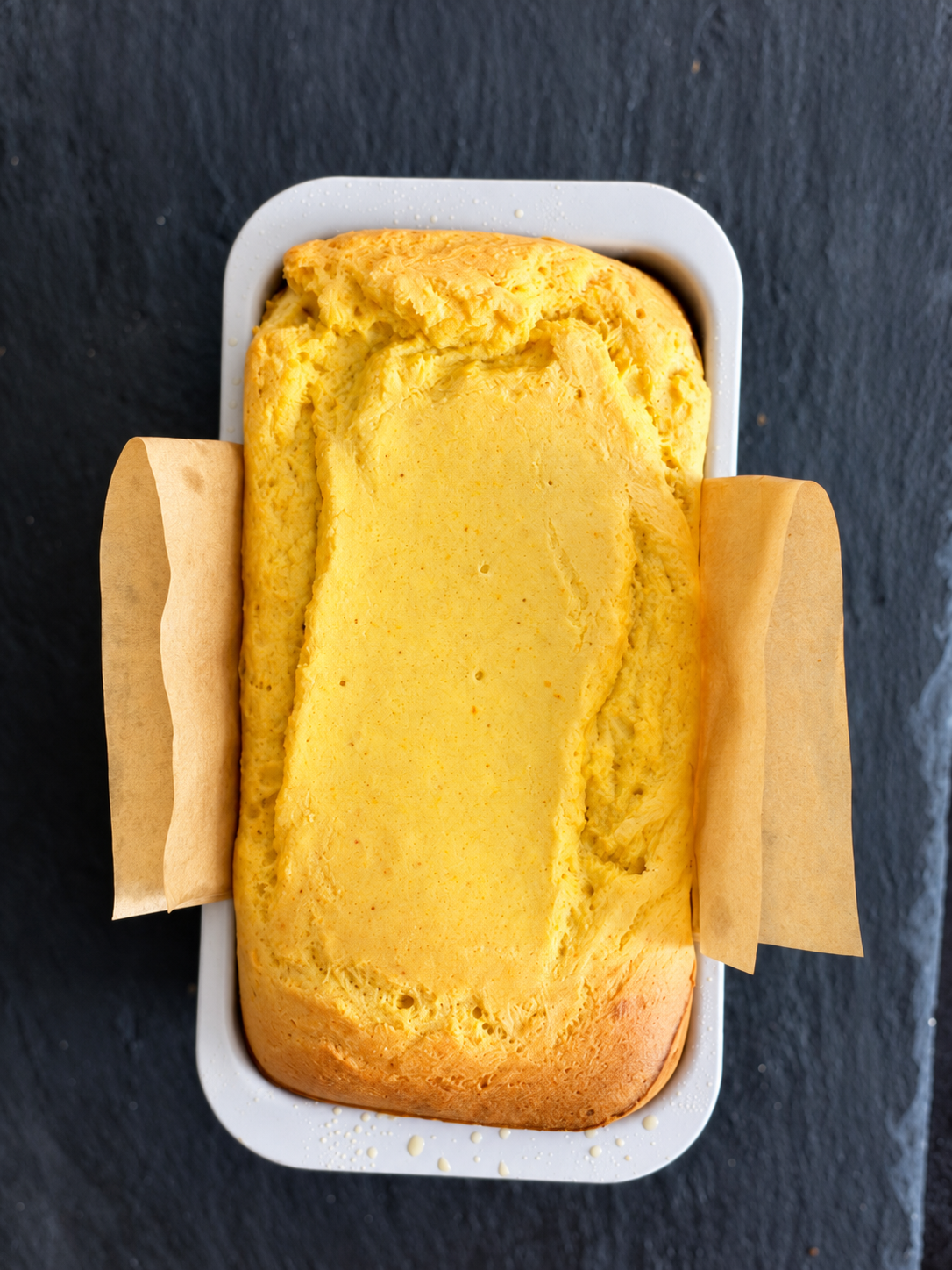
Whole Orange or Half the Peel?
Full-Peel Version
Blend the entire seeded orange when it has thin skin and you enjoy a bold, slightly bitter flavor similar to marmalade.
Half-Peel Version
Remove and discard the peel from half of the orange while keeping all the fruit. This option is best for thick-skinned oranges, less powerful blenders, or anyone who prefers a sweeter, milder citrus flavor.
Ingredients
Whole Orange Blender Loaf
- 1 medium thin-skinned orange, washed well
- 3 large eggs
- 1 cup granulated cup-for-cup sugar alternative
- ½ cup sugar-free maple syrup or regular maple syrup
- 8 fluid ounces milk of choice
- 1 teaspoon vanilla extract
- 1½ cups self-rising flour
- ½ cup vanilla protein powder, approximately 55–60 grams depending on the brand
- ½ teaspoon baking powder
- ½ teaspoon salt
- Cooking spray, for the pan
Optional Orange Glaze
- ½ cup powdered sugar or powdered sugar alternative
- 1–2 tablespoons fresh orange juice or milk
Ingredient Notes
Whole orange: The fruit supplies juice and moisture, while the peel creates the strongest citrus flavor. Remove every seed before blending.
Self-rising flour: This provides the main structure and already contains leavening. The additional baking powder helps lift the heavier protein batter.
Vanilla protein powder: Protein powders absorb moisture differently. A whey-and-casein blend is a reliable starting point for a softer baked texture, while whey-only products may bake drier. Results can vary by brand.
Sugar alternative: Use a granulated product designed to replace sugar cup for cup. Do not substitute one full cup of a concentrated sweetener.
Maple syrup: Sugar-free syrup keeps the estimated calories and carbohydrates lower. Regular maple syrup adds more sugar and changes the nutrition.
Suggested substitutions: Alternative milks, flavored protein powders, and mix-ins may work, but results can vary by product and may require small adjustments to moisture, timing, or texture.
Equipment
- High-powered blender
- 9×5-inch loaf pan
- Parchment paper
- Silicone spatula
- Wire cooling rack
Tools I Use for This Recipe


This post contains affiliate links. As an Amazon Associate, I earn from qualifying purchases.
How to Make Whole Orange Blender Cake
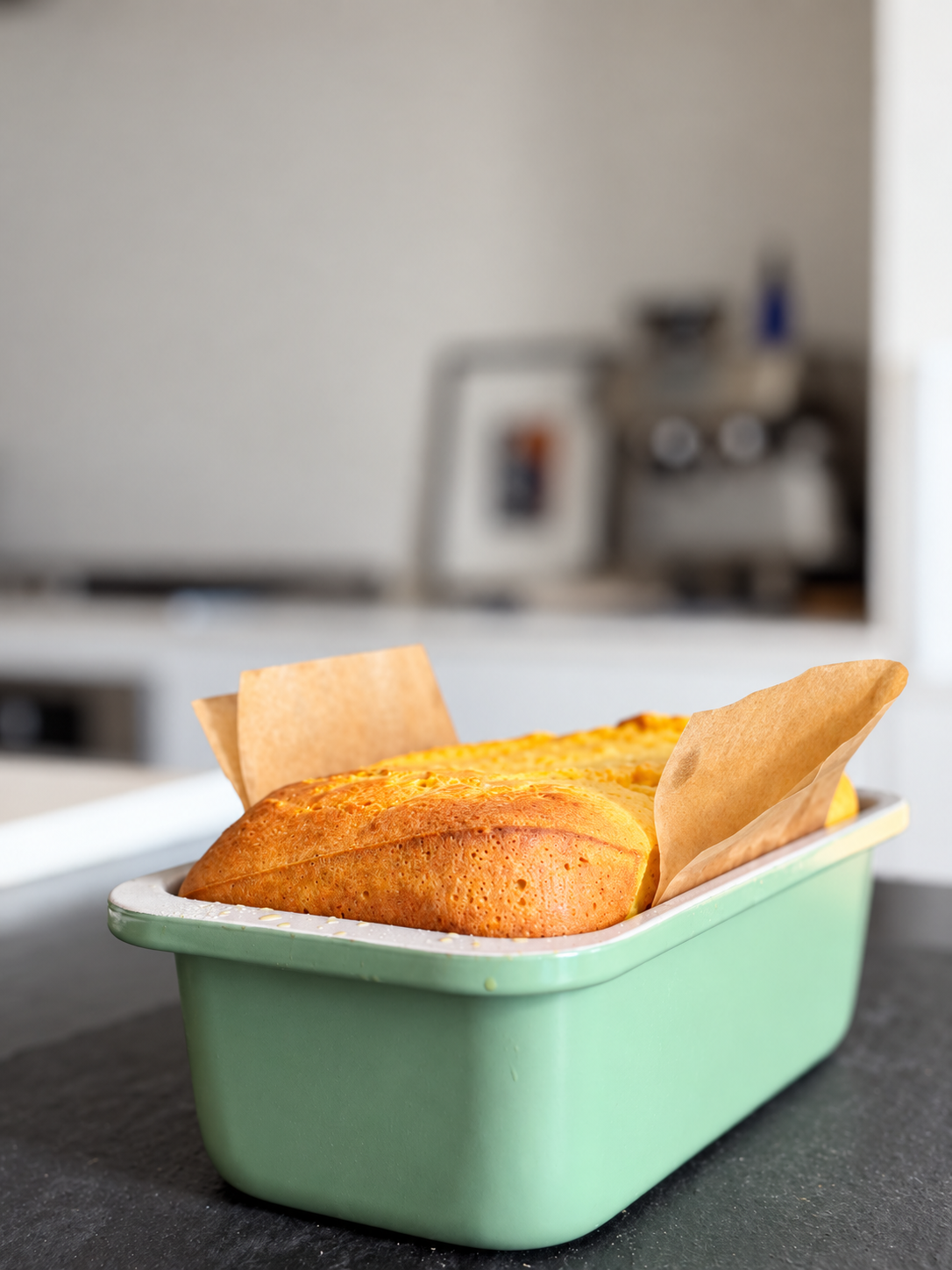
- Prepare the oven and pan. Preheat the oven to 350°F. Lightly spray a 9×5-inch loaf pan and line it with parchment paper, leaving enough overhang to lift out the loaf.
- Prepare the orange. Wash and dry the orange thoroughly. Cut off the stem end, cut the fruit into about eight pieces, and remove every seed. For a milder loaf, discard the peel from half of the orange while keeping all the fruit.
- Blend the wet ingredients. Add the orange, eggs, sugar alternative, maple syrup, milk, and vanilla to the blender. Blend until the orange is completely broken down and the mixture looks smooth, about 20–40 seconds depending on the blender.
- Add the dry ingredients. Add the self-rising flour, vanilla protein powder, baking powder, and salt.
- Pulse briefly. Use several short pulses until no flour or protein powder remains visible. If the blades stop moving easily, finish folding with a spatula.
- Fill the pan. Pour the batter into the prepared pan, scrape the blender, and smooth the top.
- Bake. Bake at 350°F for 55–65 minutes, or until a toothpick inserted into the center comes out clean. Begin checking at 55 minutes. If the toothpick shows wet batter, continue baking in 5-minute increments. Loosely cover the top with foil if it browns before the center is set.
- Cool. Let the loaf cool in the pan for 10–15 minutes. Lift it out with the parchment and cool completely on a wire rack before slicing or glazing.
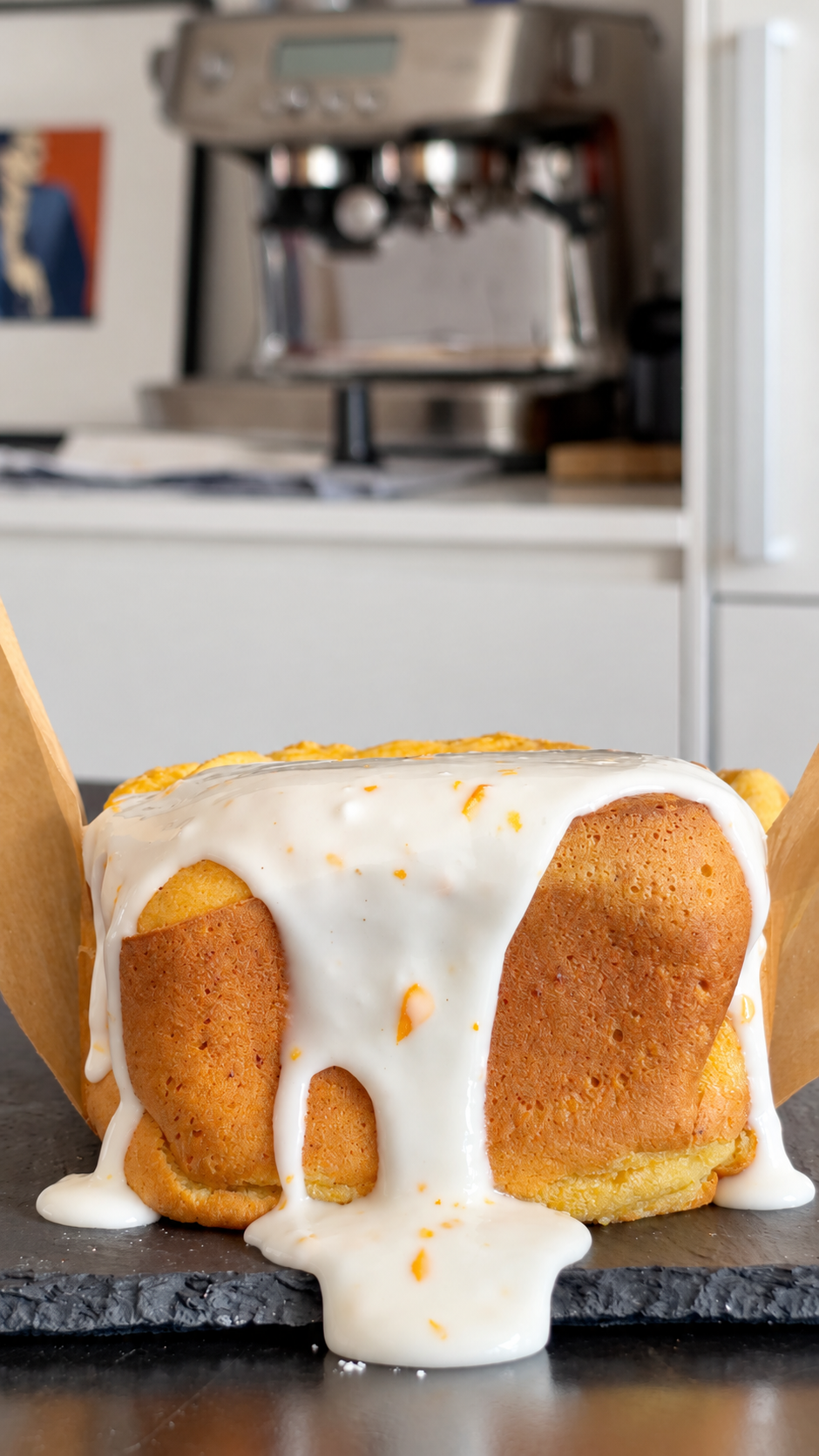
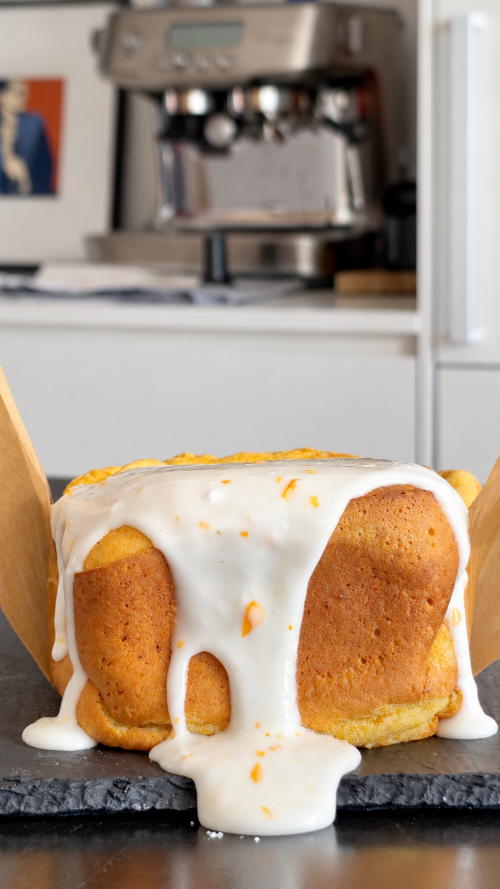
- Glaze, if desired. Whisk the powdered sugar with 1 tablespoon orange juice or milk, adding more liquid a few drops at a time. Drizzle over the completely cooled loaf.
Expert Tips
- Choose a thin-skinned, seedless orange for less bitterness.
- Remove every seed; blended seeds can taste unpleasantly bitter.
- Blend the orange completely before adding flour.
- Pulse the dry ingredients only until combined.
- Use a 9×5-inch loaf pan so the batter has enough room.
- Begin checking at 55 minutes. The loaf will usually need 55–65 minutes; bake until a toothpick inserted into the center comes out clean.
- Cool completely before slicing because the center continues to set.
Frequently Asked Questions
Why does my orange loaf taste bitter?
The peel and white pith are the likely cause. Use a thin-skinned orange or remove half of the peel while keeping all the fruit.
Why is my loaf dense or rubbery?
The batter may have been blended too long after the flour was added, or the protein powder may absorb moisture differently. Use short pulses and finish by hand if needed.
Why is the middle still wet after 55 minutes?
Orange size, pan material, syrup, milk, protein powder, and oven calibration can all affect baking time. This loaf typically needs 55–65 minutes. Cover the top loosely with foil if needed and continue baking in 5-minute increments until a toothpick inserted into the center comes out clean.
Can I make this without a high-powered blender?
Use the half-peel method, or process the wet ingredients in a food processor and fold in the dry ingredients by hand.
Can I use regular maple syrup?
Yes. The flavor and texture may differ slightly, and the estimated calories, carbohydrates, and sugar will increase.
Can I use all-purpose or gluten-free flour?
This formula was developed with self-rising flour. Other flours have not been verified in this version and may require changes to leavening, moisture, and bake time.
Do I need the glaze?
No. The glaze is optional and is not included in the nutrition estimate.
Variations and Suggested Substitutions
- Use only half the peel for a milder flavor.
- Try Cara Cara orange for a sweeter citrus profile.
- Use almond, soy, oat, or another milk, understanding that nutrition and texture may change.
- Add poppy seeds, mini chocolate chips, or chopped cranberries.
- Add a small amount of orange extract for stronger citrus flavor.
These are suggested variations rather than individually tested versions. Results may vary by brand or product, and small changes to moisture, timing, or texture may be needed.
Storage
Let the loaf cool completely before storing it. Keep it in an airtight container at cool room temperature for up to 2 days or refrigerate for up to 5 days. For longer storage, wrap individual unglazed slices tightly and freeze them. Thaw in the refrigerator or at room temperature.
Nutrition
The supplied estimate assumes ten slices, approximately 60 grams of vanilla protein powder, sugar-free maple syrup, fat-free milk, zero-calorie granulated sweetener, and no glaze.
- With sugar-free maple syrup: approximately 132 calories, 10g protein, 19g carbohydrates, and 2g fat per slice.
- With regular maple syrup: approximately 168 calories, 10g protein, 28g carbohydrates, and 2g fat per slice.
Protein powder, syrup, milk, orange size, and slice thickness can change the final values. Recalculate with the exact products used before relying on the estimate.
You Might Also Like
- High-Protein Espresso Loaf Cake
- High-Protein Iced Animal Cracker Loaf Cake
- High-Protein Reese’s Oreo Loaf
Final Thoughts
An entire orange may look unusual in the blender, but it is what gives this loaf its concentrated citrus flavor. Use the full peel for a bold result or remove half for a milder cake. Blend the orange thoroughly, pulse the flour and protein powder briefly, and let the center cool completely before slicing.
Save the recipe, and tag @bakedlean if you make it.
BAKE THIS NEXT
High-Protein Whole Orange Blender Loaf
Ingredients
- 1 medium thin-skinned orange washed, cut into pieces, and seeds removed; use the full peel or discard half the peel for less bitterness
- 3 large eggs
- 1 cup granulated cup-for-cup sugar alternative
- 1/2 cup sugar-free maple syrup or regular maple syrup
- 8 fluid ounces milk of choice 1 cup
- 1 teaspoon vanilla extract or to taste
- 1 1/2 cups self-rising flour approximately 180g
- 1/2 cup vanilla protein powder approximately 55–60g depending on brand
- 1/2 teaspoon baking powder
- 1/2 teaspoon salt
- cooking spray for the loaf pan
- 1/2 cup powdered sugar or powdered sugar alternative
- 1-2 tablespoons fresh orange juice or milk add gradually until thick but pourable
Equipment
- High-powered blender
Method
- Preheat the oven to 350°F. Lightly spray a 9×5-inch loaf pan and line it with parchment paper, leaving enough overhang to lift out the loaf.
- Wash and dry the orange thoroughly. Cut off the stem end, cut the orange into approximately eight pieces, and remove all seeds. For a milder loaf, peel half of the orange while keeping all of the fruit.
- Add the orange, eggs, sugar alternative, maple syrup, milk, and vanilla to a high-powered blender. Blend until the orange is completely broken down and the mixture looks smooth.
- Add the self-rising flour, vanilla protein powder, baking powder, and salt.
- Pulse in short bursts just until no dry flour or protein powder remains. If the blender struggles, stop and finish folding with a silicone spatula rather than continuing to blend.
- Pour the batter into the prepared loaf pan and smooth the top.
- Bake at 350°F for 55–65 minutes, or until a toothpick inserted into the center comes out clean. Begin checking at 55 minutes and continue baking in 5-minute increments if needed.
- Loosely cover the loaf with foil if the top becomes deeply browned before the center finishes baking.
- Let the loaf cool in the pan for 10–15 minutes, then lift it out using the parchment and transfer it to a wire rack. Cool completely before slicing or glazing.
- For the optional glaze, whisk the powdered sugar with 1 tablespoon orange juice or milk. Add more liquid a few drops at a time until thick but pourable, then drizzle over the cooled loaf.


Leave a Reply