
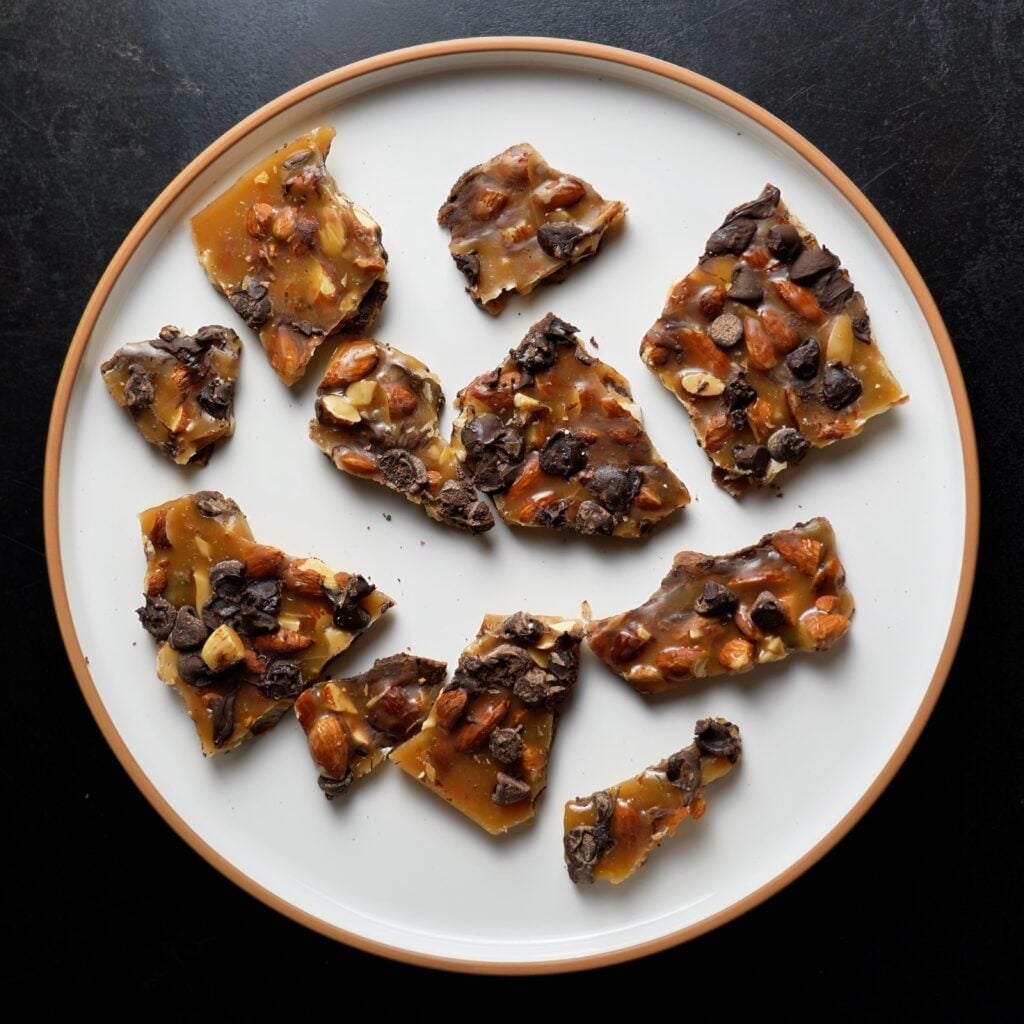
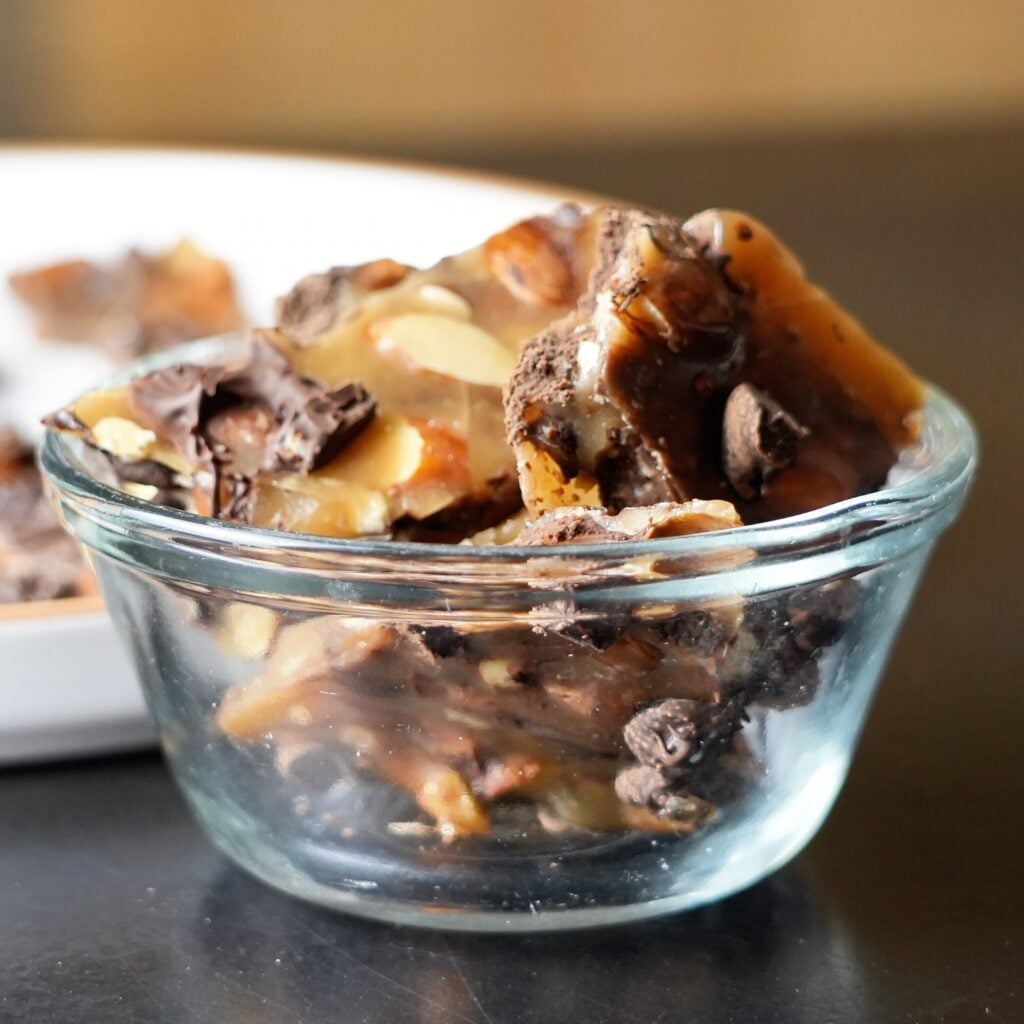
This Salted Almond Brittle is a direct hand-me-down from my great-grandmother's handwritten recipe book. Growing up in a PA Dutch household, candy making wasn't just a hobby; it was a seasonal event that defined the holiday season. This old-fashioned brittle recipe requires precision, patience, and a lot of butter. This is the ultimate holiday dessert—the kind that filled decorative tins on every countertop from late November through New Year's Day.
We kept the core of the vintage method—the classic “Oleo” (though I prefer real butter now) and the Karo syrup technique—but updated the finish with flaky sea salt. By spreading the chocolate both under and over the hot candy, you create a dense, glass-like snap that encapsulates the toasted almonds perfectly. It's a nostalgic, buttery treat that captures the authentic spirit of traditional holiday baking without any of the store-bought fluff. Is almond brittle good? It is the undisputed king of the holiday candy tin.
If you're looking for other Holiday Dessert hits from the archive, try these:
- Old Fashioned Raisin Filled Cookies
- Grandmas Sand Tarts Pa Dutch Style
- Vintage Sour Cream Cutout Cookies The Ultimate Soft Holiday Cookie
The Hard Crack Strategy
Making old-fashioned almond brittle is an exercise in thermodynamics. To get that signature holiday “snap,” you have to push the sugar mixture to the Hard Crack stage, exactly 300°F (149°C). The cook time will vary depending on your stove, but as the mixture begins to bubble rapidly, nearly all the water evaporates. If you pull it too early, the candy will be tacky. If you go too far, the butter solids will burn. Using a candy thermometer is the only way to ensure the sugar crystals reach the specific density needed for a clean, professional break.
Why You'll Love This Recipe
- Authentic Heritage: This brittle recipe is a piece of PA Dutch history, refined for a modern palate with the addition of flaky sea salt.
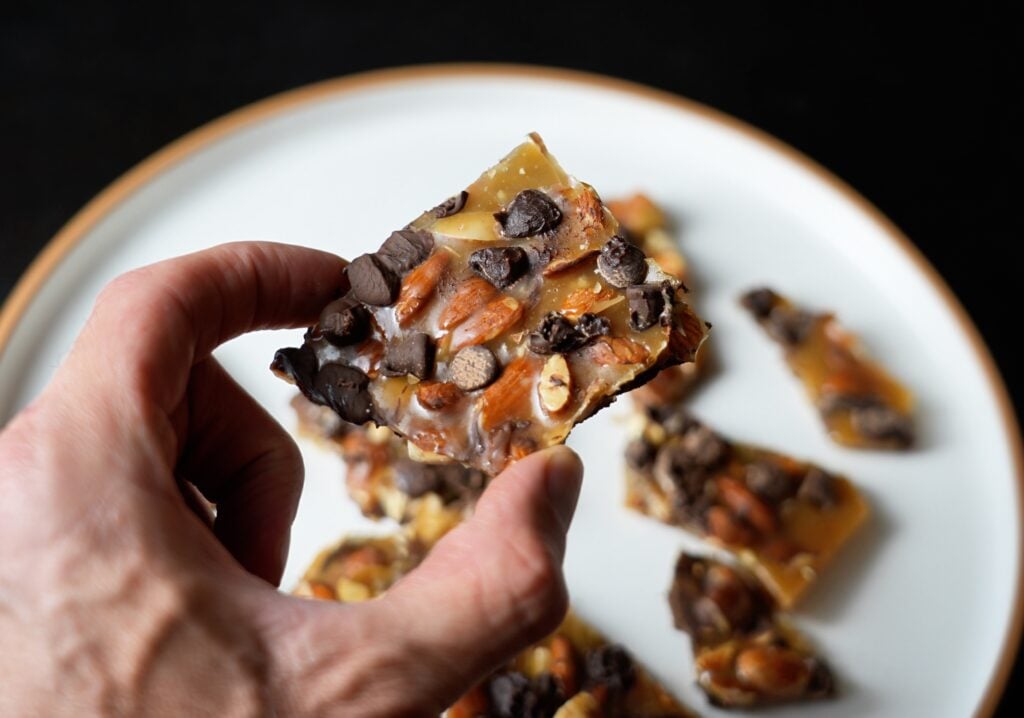
- No Baking Soda Required: Many modern brittles use baking soda to create an aerated, honeycomb texture. This vintage recipe skips it, resulting in a denser, glass-like crunch that is deeply satisfying.
- Double-Layered Chocolate: Most recipes just top the brittle; we put chocolate on the bottom and top to ensure every bite is balanced with semi-sweet richness.
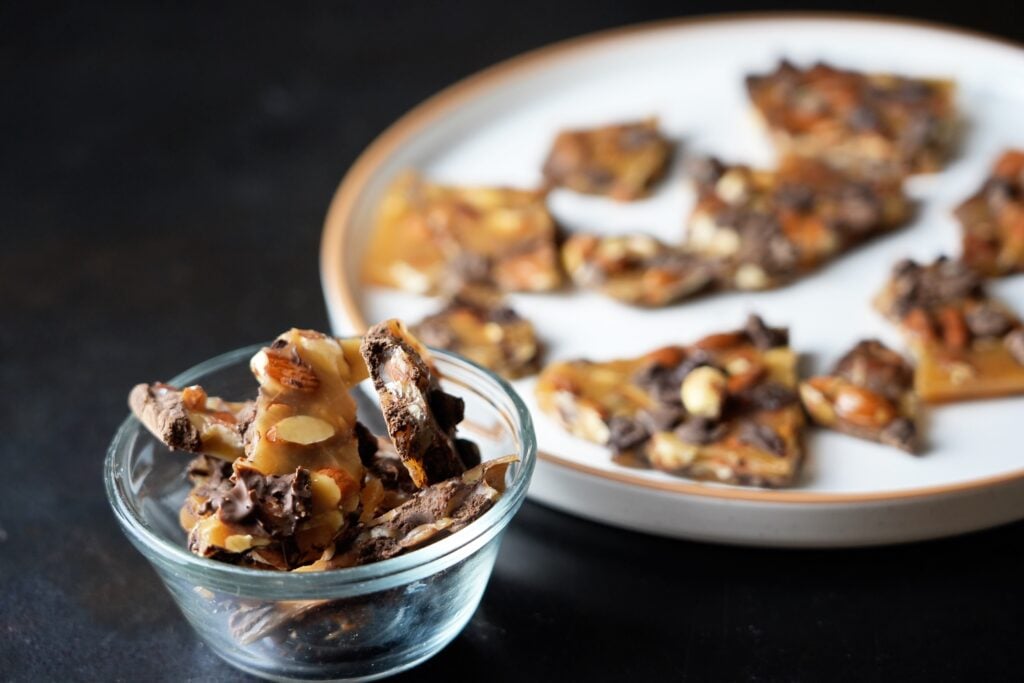
- Perfect for Gifting: This brittle is sturdy, travels well, and looks beautiful in a holiday tin.
What makes Salted Almond Brittle special?
The secret to a real, old-fashioned Salted Almond Brittle is the interaction between the inverted sugar (corn syrup) and the toasted almonds. The corn syrup prevents the granulated sugar from recrystallizing, which is what keeps the brittle smooth and clear rather than grainy. By adding salt into the base and finishing with flaky salt on top, we cut through the intense sweetness of the hard-crack sugar, highlighting the earthy, roasted notes of the almonds that define this holiday classic.
Key Equipment Focus
Heavy Bottom Sauce Pan: This is non-negotiable for candy making. A thin pan will create hot spots that burn the sugar before the entire batch reaches 300°F. A heavy base distributes heat evenly for a consistent melt.
Candy Thermometer: Precision is everything. You must reach 300°F for the brittle to set properly.
13×9-inch baking pan: A high-quality non-stick pan ensures the chocolate on the bottom doesn't seize or stick when you try to break the shards.
Digital Kitchen Scale: While this recipe uses cups, I always recommend weighing your nuts and sugar. Volume measurements for almonds can vary wildly.
Ingredient Deep Dive & Strategy
Granulated Sugar: The structural backbone. When heated, it undergoes caramelization, creating the complex, deep amber flavor profile of the almond brittle.
Light Corn Syrup: An “interfering agent” essential for vintage candy. It prevents the sucrose molecules from bonding into crystals, ensuring the brittle remains clear and glass-like rather than sandy.
Toasted Almonds: Toasting the nuts for 7 minutes isn't optional. It releases the oils, which provides a flavor bridge between the buttery candy and the semi-sweet chocolate.
Flaky Sea Salt: Provides a textural contrast and a sharp “peak” of flavor that prevents the sugar from becoming cloying, giving this old-fashioned treat a modern edge.
Tools I Use for This Recipe

Suggested Taylor Candy and Deep Fry Thermometer
A clip-on option for monitoring the hard-crack temperature; readings may vary by thermometer.

Suggested Cuisinart 2-Quart Stainless Saucepan
A heavy-bottomed saucepan option for more even candy cooking; heat response varies by cooktop.

Suggested Nordic Ware 9×13 Aluminum Pan
A sturdy pan option for spreading and cooling the brittle; thickness and release may vary by pan.
This post contains affiliate links. As an Amazon Associate, I earn from qualifying purchases.
Salted Almond Brittle Step by Step Instructions
1. Prep the pan:
Grease your 13×9-inch baking pan thoroughly with butter or margarine. Sprinkle ½ cup of the semi-sweet chocolate chips evenly across the bottom of the prepared pan.
Pro Tip: Make sure the chocolate chips are in a single, even layer so they melt instantly when the hot syrup is poured over them.
2. Toast the almonds:
Spread your almonds on a baking sheet and toast at 350°F (175°C) for 7 minutes until they are fragrant and slightly golden brown. Set these aside.
3. Boil the candy:
In your Heavy Bottom Sauce Pan, melt the butter. Stir in the sugar, light corn syrup, water, and the ¼ tsp fine kosher salt.
4. Cook to Hard Crack stage:
Cook the mixture over medium heat. Watch as the bubbles become thicker and slower. Scrape the sides of the pan occasionally. Keep cooking until your candy thermometer reaches exactly 300°F (149°C).
Pro Tip: Do not walk away from the stove during this stage; the temperature rises slowly at first but moves very quickly once it passes 250°F.
5. Add nuts and pour:
Remove the saucepan from the heat immediately. Quickly stir in exactly half of your toasted almonds. Carefully pour mixture over the chocolate chips waiting in the pan, spreading it swiftly into a thin layer.
6. Top it off:
Immediately sprinkle the remaining toasted almonds and the remaining 1 cup of chocolate chips over the hot brittle. Finish by lightly scattering a few pinches of flaky sea salt over the top so it sticks to the melting chocolate.
7. Score and cool:
While the candy is still warm but beginning to set, use a knife to score it into squares. Let it cool completely until hardened, then break it apart along the scored lines.
Troubleshooting & FAQ
What are common brittle making mistakes?
The most common brittle-making mistakes include not using a candy thermometer, walking away from the stove, pouring the candy too thick instead of spreading it into a thin layer, and adding extracts like vanilla too early (which causes the boiling sugar to violently spatter).
How to fix chewy brittle, or what causes homemade peanut brittle to be chewy?
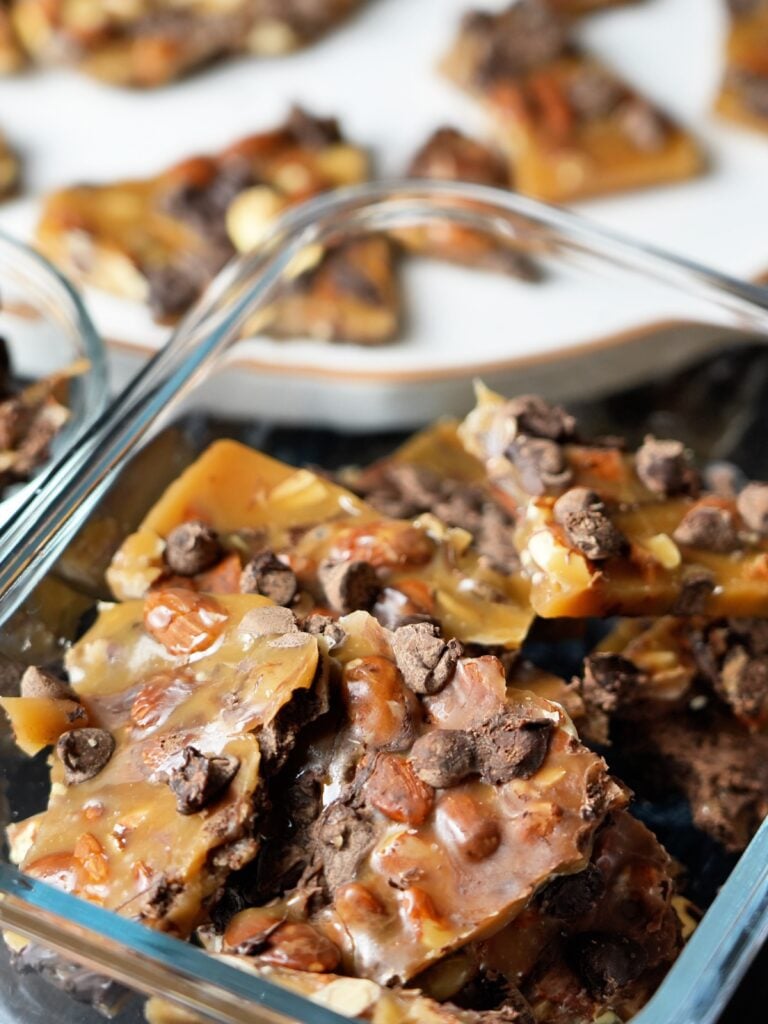
If you are wondering why your toffee is chewy instead of crunchy, the answer is simple: you didn't reach the full 300°F. If the syrup stays in the “soft crack” stage (below 285°F), it will never become brittle. Always use a calibrated thermometer for holiday candy. Unfortunately, once it's poured and cooled, you cannot fix chewy brittle.
Are toffee and brittle the same thing? What is the difference between almond brittle and toffee?
No, they are different. While they share similar ingredients, the difference comes down to the butter-to-sugar ratio. Toffee relies heavily on butter, creating a softer, richer crunch. Brittle is primarily sugar-based, resulting in a harder, glass-like snap.
What do Americans call toffees, and which is the most famous toffee in the world?
Americans typically call traditional hard toffee “English Toffee” or “Buttercrunch” (think of a Heath or Skor bar, which are among the most famous commercially). However, during the holidays, brittle is the dominant American hard candy.
What kind of sugar is best for brittle?
Standard white granulated sugar is the best sugar to use for brittle. It melts evenly and provides a clean caramel flavor without adding extra moisture that brown sugar would introduce.
Can peanut brittle be made without sugar?
No. You need the chemical structure of real sugar reaching the hard crack stage (300°F) to create the physical snap of brittle. Sugar-free alternatives will not crystallize correctly.
Can you add other nuts to almond brittle?
Yes. You can easily convert this into peanut brittle, or use pecans and walnuts. Just ensure you toast them first to golden brown to release their oils.
Can I put brittle in the freezer?
No. Never put brittle in the freezer or the refrigerator. The humidity will immediately make the sugar sticky and ruin the snap. Store it in an airtight tin on the counter.
Substitutions Table
| Component | Swap Options |
| Oleo | Salted Butter or high-quality Margarine |
| Almonds | Roasted Peanuts, Pecans, or Walnuts |
| Semi-Sweet Chips | Dark Chocolate (60%+) or Milk Chocolate |
| Light Karo Syrup | Honey, Brown Rice Syrup, or Golden Syrup |
Storage
Store your holiday brittle in an airtight container at room temperature. Keep it out of the freezer and fridge. This brittle will stay fresh and crisp for up to 3 weeks, making it perfect for early holiday prep.
You Might Also Like
If you love these Holiday Dessert hits as much as I do, these three from the archive are worth checking out next.
- Grandmas 7 Layer Cookies Magic Bars
- Vintage Hedgehog Cookies
- Almond Butter Balls Italian Wedding Cookies Snow Balls
The Final Verdict & Share
This Salted Almond Brittle is proof that the old-fashioned holiday traditions are still the best. It's a simple, honest recipe that rewards a little bit of patience with the perfect, buttery crunch. Make a batch for your holiday tins, break off a shard, and tag me on Instagram to let me know how it turned out!
BAKE THIS NEXT
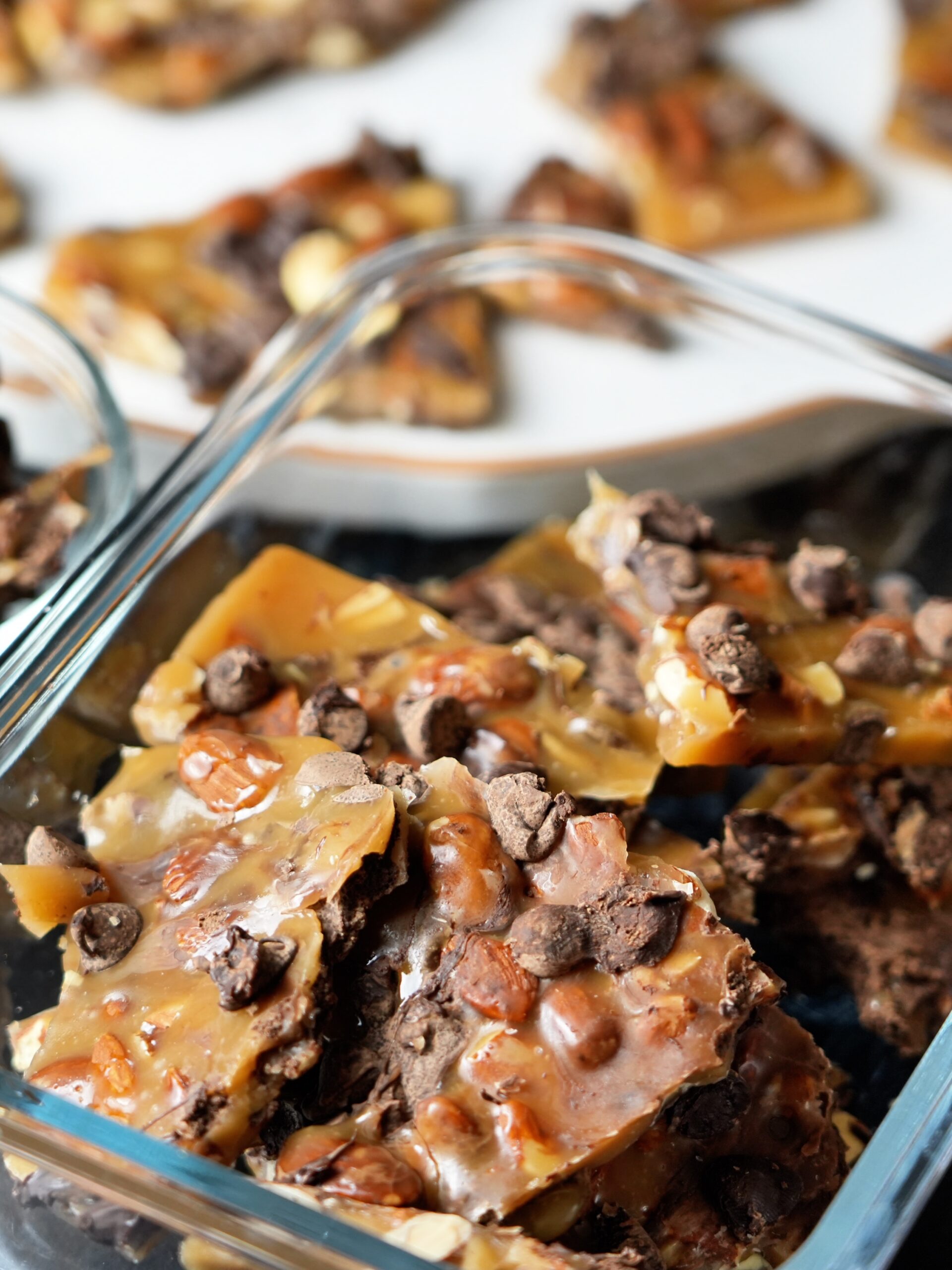
Salted Almond Chocolate Brittle (Vintage Holiday Recipe)
Ingredients
- 1 3/4 cups almonds toasted and divided
- 1/2 cup butter or margarine (Oleo)
- 1 3/4 cups granulated sugar
- 3 Tbsp light corn syrup
- 3 Tbsp water
- 1/4 tsp fine kosher salt
- 1 1/2 cups semi-sweet chocolate chips divided
- 1 pinch flaky sea salt
Method
- Grease a 13×9-inch pan and sprinkle 1/2 cup of chocolate chips across the bottom.
- Toast almonds at 350°F (175°C) for 7 minutes; set aside.
- Melt butter in a heavy saucepan; stir in sugar, corn syrup, water, and kosher salt.
- Boil over medium heat until a candy thermometer reads 300°F (Hard Crack stage).
- Remove from heat, stir in half the almonds, and pour immediately into the prepared pan.
- Top with remaining almonds, remaining chocolate chips, and flaky sea salt. Score and let cool.
Nutrition
Notes
Salted Almond Brittle Tips & Expert Strategy
TEXTURE & SNAP: This holiday brittle must reach exactly 300°F to achieve the proper hard-crack snap. Anything less will result in a tacky, chewy texture that sticks to the teeth. HUMIDITY WARNING: Making candy on a very humid or rainy day can affect the setting process. For the best results, choose a dry day for your holiday candy making. THE MELLOWING EFFECT: While delicious warm, the flavor of the toasted almonds deeply permeates the buttery candy after sitting in a tin for 24 hours. PROFESSIONAL FINISH: Use a high-quality flaky salt like Maldon for the topping. It provides the perfect saline crunch to balance the rich, dark caramel notes of the brittle.Tried this recipe?
Mention or tag @bakedlean!One response to “Salted Almond Chocolate Brittle (Vintage Holiday Recipe)”


addictive and delicous


Leave a Reply